 Save to Pinterest
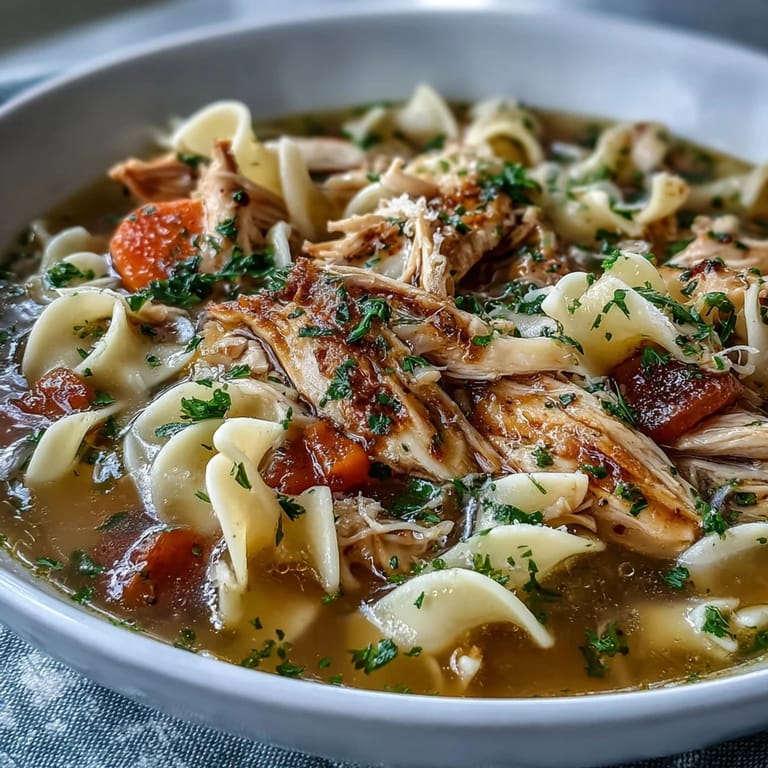
 There's something about the sound of broth coming to a gentle boil that signals comfort is on the way. My neighbor once brought over a pot of chicken and noodle soup on a gray afternoon when I was too tired to think about dinner, and I've been chasing that feeling ever since. What makes this version special isn't complexity—it's the way bone-in chicken thighs surrender their flavor to the broth, creating something that tastes like it's been simmering for hours when it's really just forty-five minutes of gentle heat and patience.
I made this soup for my sister during her first week at a new job, and she called me that evening just to say how much that bowl meant to her. It wasn't fancy or Instagram-worthy, but there's a kind of magic in a simple soup that arrives exactly when you need it—warm, nourishing, and made by someone who cares.
Ingredients
- Bone-in, skinless chicken thighs or breasts (1½ lbs): Thighs render more fat and flavor, while breasts stay lean—a mix of both gives you the best of everything.
- Low-sodium chicken broth (8 cups): This is your foundation, so taste it before you buy; quality broth makes an enormous difference in the final bowl.
- Yellow onion, carrots, and celery (1 onion, 3 carrots, 2 stalks): This classic trio builds the aromatic backbone, and dicing them roughly rather than finely helps them stay intact through the long simmer.
- Garlic cloves (3, minced): Add these after the initial boil to keep their flavor fresh and bright rather than muted.
- Bay leaves, thyme, and rosemary: These dried herbs might seem subtle, but they're what separates homemade comfort from something that tastes flat and one-dimensional.
- Wide egg noodles (6 oz): Wide noodles hold broth better than thin ones and add a pleasant chew without getting mushy.
- Fresh parsley and lemon juice: Parsley adds color and life at the end, while lemon brightens everything without making the soup taste sour.
Tired of Takeout? 🥡
Get 10 meals you can make faster than delivery arrives. Seriously.
One email. No spam. Unsubscribe anytime.
Instructions
- Bring the chicken and broth to a gentle boil:
- Place chicken pieces and broth in a large pot over medium-high heat, watching for foam to rise to the surface—skim it off with a spoon or small ladle as it appears. This takes just a few minutes and makes the broth clearer and more refined.
- Add vegetables and herbs, then simmer:
- Toss in onion, carrots, celery, garlic, bay leaves, thyme, rosemary, salt, and pepper, then lower the heat to a gentle simmer with the lid on. You want just a few bubbles breaking the surface, not an aggressive boil that breaks the chicken apart.
- Shred the cooked chicken:
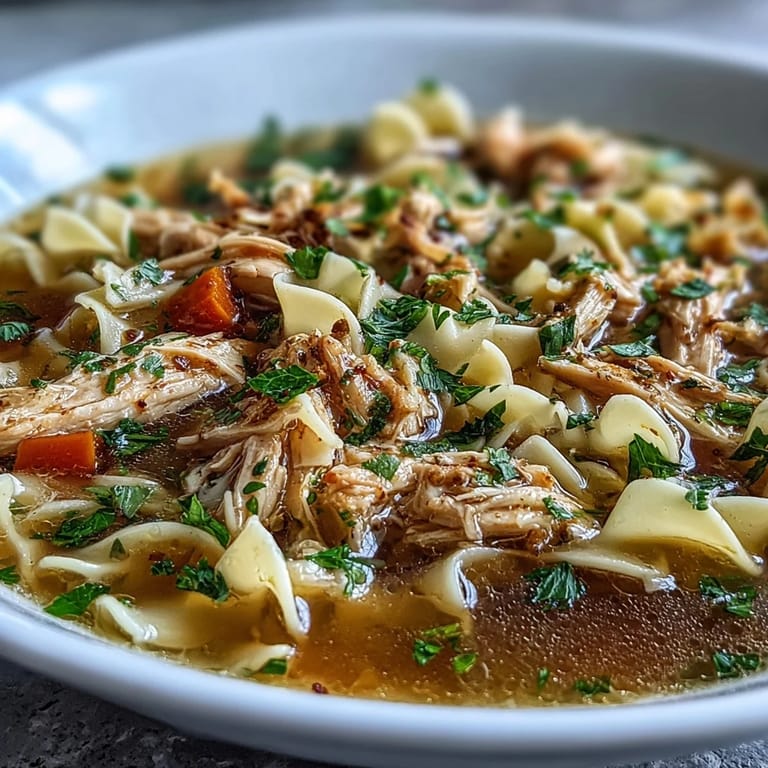
- After 25 to 30 minutes, the chicken will be completely cooked through and pulling away from the bones. Remove it with tongs, let it cool just enough to handle, then use two forks to pull it into tender shreds, discarding bones and any tough bits.
- Return chicken and bring soup to a boil:
- Add shredded chicken back to the pot and increase heat to medium-high until the soup reaches a gentle boil. This is the moment to taste the broth and adjust salt and pepper before the noodles go in.
- Add noodles and cook through:
- Stir in egg noodles and let them cook for 8 to 10 minutes, stirring occasionally so they don't stick to the bottom. They should be tender but still have a slight bite, not soft enough to dissolve into the broth.
- Finish with fresh herbs and lemon:
- Remove the pot from heat, stir in parsley and a small squeeze of lemon juice if you like brightness, then taste one final time and adjust seasoning. Remove bay leaves before serving.
 Save to Pinterest
 My daughter once asked why this soup tasted like it was made with love, and I realized it wasn't an ingredient or technique—it was just the fact that someone took time to make it for her. That's when soup stops being dinner and becomes a small gesture of care.
The Magic of Bone-In Chicken
The decision to use bone-in chicken changes everything about this soup. Bones release collagen into the broth as it simmers, creating a silky mouthfeel that boneless chicken can never quite achieve. I learned this the hard way after years of making this soup with skinless, boneless breasts and wondering why it never tasted quite right.
Making It Ahead
This soup actually improves when made a day or two in advance, as the flavors continue to marry and deepen. Store it in the refrigerator in an airtight container, and the fat will solidify on top overnight—you can easily remove it if you want a lighter version. Reheat gently over medium heat, and add the noodles fresh on the day you serve it to avoid them absorbing too much liquid.
Simple Swaps and Variations
This recipe is forgiving and invites creativity, whether you're working around dietary needs or just want to shift the mood. Spinach, kale, or chard added in the final minutes adds color and nutrition without changing the essential character of the soup. A splash of white wine when you add the vegetables deepens the broth, and a small pinch of chili flakes brings welcome heat on cold nights.
- For a gluten-free version, swap egg noodles for gluten-free pasta or small rice noodles cooked separately.
- Add diced potatoes or parsnips in the first step for extra heartiness and a slightly earthier flavor.
- A handful of fresh dill or tarragon instead of parsley gives the soup a completely different personality.
 Save to Pinterest
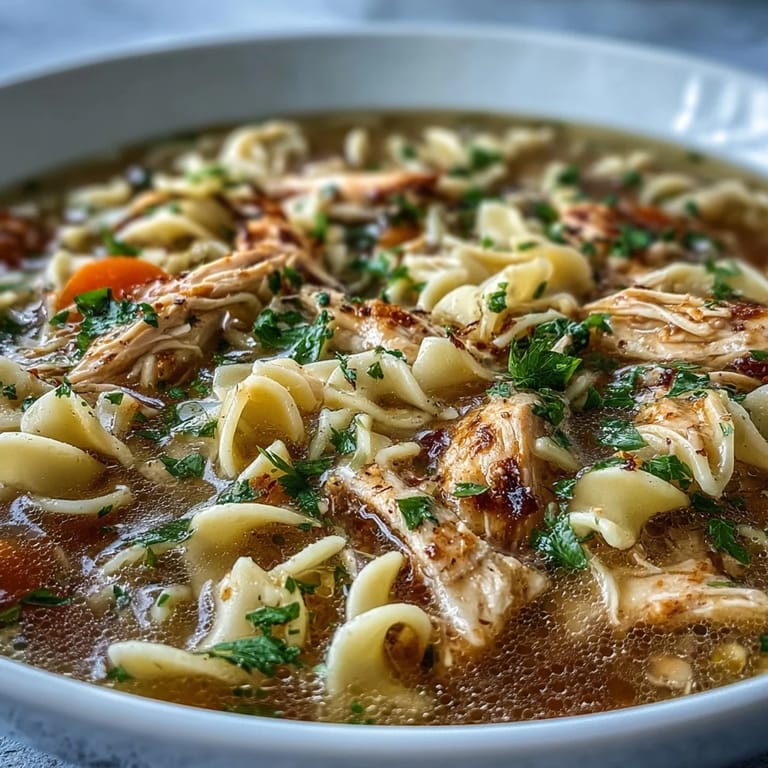
 This is the soup you make when you want to say something without words, the one that tastes like home no matter where you are. Keep it simple, taste as you go, and trust that the best part isn't the recipe—it's the warmth of sharing it.
Questions & Answers
- → How long does homemade chicken noodle soup last in the refrigerator?
Stored in an airtight container, this soup keeps well for 3-4 days in the refrigerator. The noodles may absorb some broth, so you might want to add extra liquid when reheating.
- → Can I freeze this soup for later?
Yes, though the noodles can become soft when frozen. For best results, freeze the soup without noodles and add fresh ones when reheating. If freezing with noodles, expect some texture change.
- → What cuts of chicken work best?
Bone-in chicken thighs or breasts are ideal because they create a richer, more flavorful broth. Thighs add more depth and stay tender, while breasts are leaner. You can also use a whole chicken cut into pieces.
- → How do I make this gluten-free?
Replace the wide egg noodles with gluten-free alternatives like rice noodles, quinoa pasta, or legume-based pasta. Always verify your chicken broth is certified gluten-free as well.
- → Can I make this in a slow cooker or Instant Pot?
Absolutely. For a slow cooker, cook on low for 6-7 hours, then add noodles during the last 15-20 minutes. In an Instant Pot, pressure cook for 10 minutes, quick release, then sauté to cook the noodles separately.