 Save to Pinterest
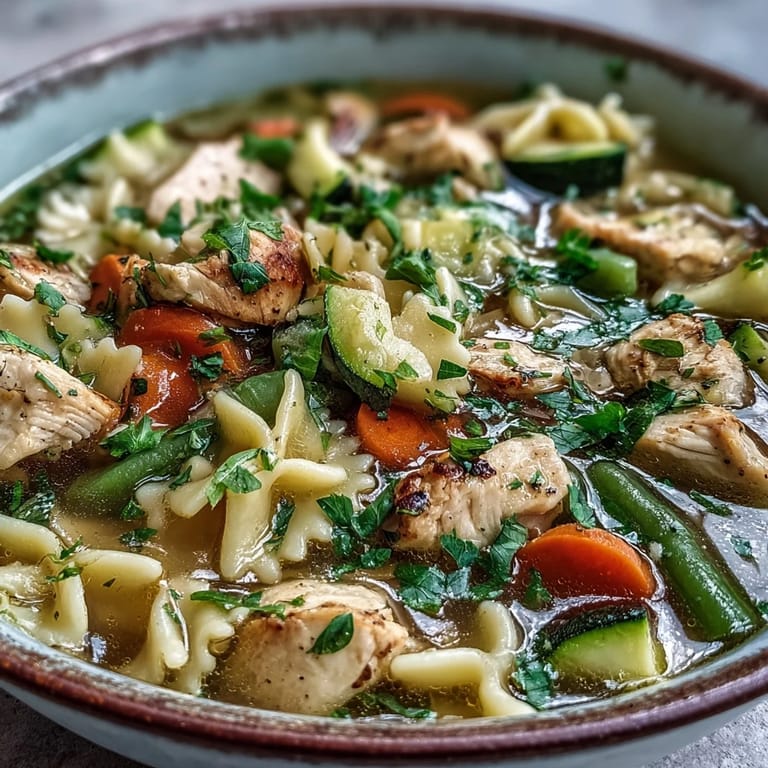
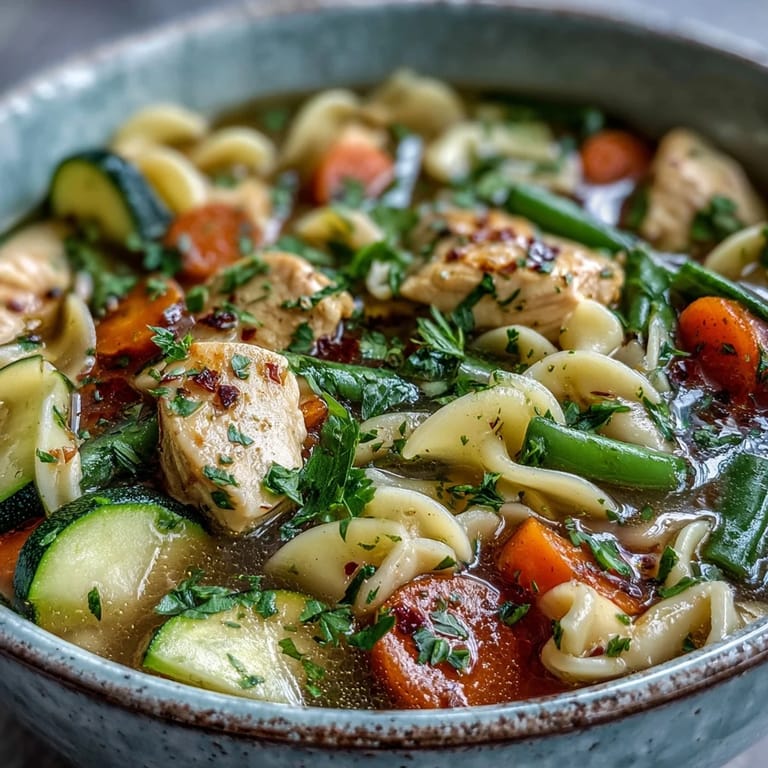
 There's something about a pot of chicken and pasta soup that feels like an embrace on a cold afternoon. My neighbor knocked on the door one November evening with the smell of simmering broth drifting through her kitchen, and she'd made enough to share because that's what she does. I watched her ladle it into bowls, the pasta still tender, the chicken impossibly soft, and I realized I'd been overcomplicating soup my whole life. Now this is what I make when someone needs feeding, when the weather turns, when simple is exactly what's called for.
I made this for my daughter's school fundraiser lunch, tripling the batch and arriving at 6 a.m. with my biggest pot. By the time the doors opened, parents were hovering around the soup station, and I overheard one man say it tasted like his grandmother's cooking. That small moment made me understand why comfort food matters so much—it's not just nourishment, it's a quiet conversation between the person cooking and the person eating.
Ingredients
- Boneless, skinless chicken breasts: Cutting them into half-inch cubes keeps them from becoming tough, and they cook just through in the broth without drying out if you don't overcrowd the pot.
- Carrots and celery: These are your flavor foundation, so don't skip the sauté step—it brings out their sweetness and builds the base the entire soup sits on.
- Onion and garlic: Finely chopped onion dissolves into the broth almost invisibly while the garlic blooms in the hot oil, creating depth you can't fake with shortcuts.
- Zucchini and green beans: Choose ones that feel firm when you squeeze them lightly, as they'll hold their texture better than softer specimens that have been sitting around.
- Frozen peas: These are a secret weapon—they add sweetness and color without any extra work, and frozen actually means they were picked at their peak.
- Diced tomatoes: Use the canned kind with the juice included; they're reliable, they work year-round, and the acidity brightens the whole bowl.
- Small pasta shapes: Ditalini or elbow macaroni are perfect because they nestle into the broth rather than overwhelming each spoonful, but any small shape will do.
- Low-sodium chicken broth: I learned the hard way to taste before you salt, because broth already carries sodium and you want control over the final seasoning.
- Dried thyme and basil: These hum quietly in the background rather than shouting; they're the reason the soup tastes like it's been simmering for hours when it's only been thirty minutes.
- Bay leaf: Fish it out before serving—I learned this by nearly serving someone a surprise bitter leaf when I got distracted plating.
- Fresh parsley: Stir it in at the very end so it keeps its color and fresh taste instead of turning sad and dark from the heat.
Tired of Takeout? 🥡
Get 10 meals you can make faster than delivery arrives. Seriously.
One email. No spam. Unsubscribe anytime.
Instructions
- Start with your aromatic base:
- Heat olive oil in a large soup pot over medium heat and add your chopped onion, sliced carrots, and celery. Let them soften for about five minutes, stirring occasionally—you'll know they're ready when the onion starts turning translucent and the whole kitchen smells like home.
- Wake up the garlic:
- Add your minced garlic and cook for just one minute until it becomes fragrant and golden. Don't let it brown, because burnt garlic tastes bitter and will haunt the whole pot.
- Brown the chicken gently:
- Stir in your chicken cubes and let them cook for four to five minutes, stirring often so they brown lightly on all sides but stay moist inside. This step creates flavor without cooking them through, which happens later in the broth.
- Build the soup:
- Add your zucchini, green beans, the tomatoes with all their juice, and your thyme, basil, bay leaf, salt, and pepper. Stir everything together so the seasonings distribute evenly and nothing sticks to the bottom.
- Bring it to life:
- Pour in your chicken broth and turn the heat up until the whole pot reaches a gentle boil. Once it bubbles, reduce the heat, cover partially, and let it simmer for fifteen minutes so all the flavors get acquainted.
- Add the pasta:
- Stir in your uncooked pasta and the frozen peas, then continue simmering uncovered for ten to twelve minutes until the pasta tastes tender but still has a tiny bit of resistance when you bite it. The chicken should be completely cooked through at this point.
- Finish with freshness:
- Remove and discard the bay leaf, then stir in your fresh parsley and taste the whole thing. Adjust salt and pepper if it needs it—sometimes a crack more pepper is all it takes.
 Save to Pinterest
 My son asked for this soup three times in one week last winter, which meant I was doing something right. There's a moment when he's finishing a bowl and reaches for bread to soak up the last of the broth where I realize this soup has become part of our family's rhythm, the thing we make without thinking when someone's feeling worn down or the evening needs grounding.
The Magic of Simplicity
What strikes me most about this soup is how it proves that restraint can be its own kind of abundance. You're not doing anything fancy or unexpected—you're sautéing vegetables, adding chicken, pouring in broth—yet somehow the result tastes considered and intentional. The trick is patience and attention: not rushing the softening of the base vegetables, not crowding the pot so the chicken browns instead of steams, not abandoning it while the pasta cooks. These small acts of presence transform ordinary ingredients into something people remember.
When to Make This Soup
This soup lives in that perfect middle ground where it's humble enough for a busy Tuesday night but substantial enough to serve when you're hosting people. It's warming without being heavy, fast without feeling rushed, and it tastes even better the next day when the flavors have settled and deepened. I've made it for potlucks, sick friends, quiet family dinners, and random Wednesday nights when the refrigerator was telling me what needed using.
Variations and Occasions
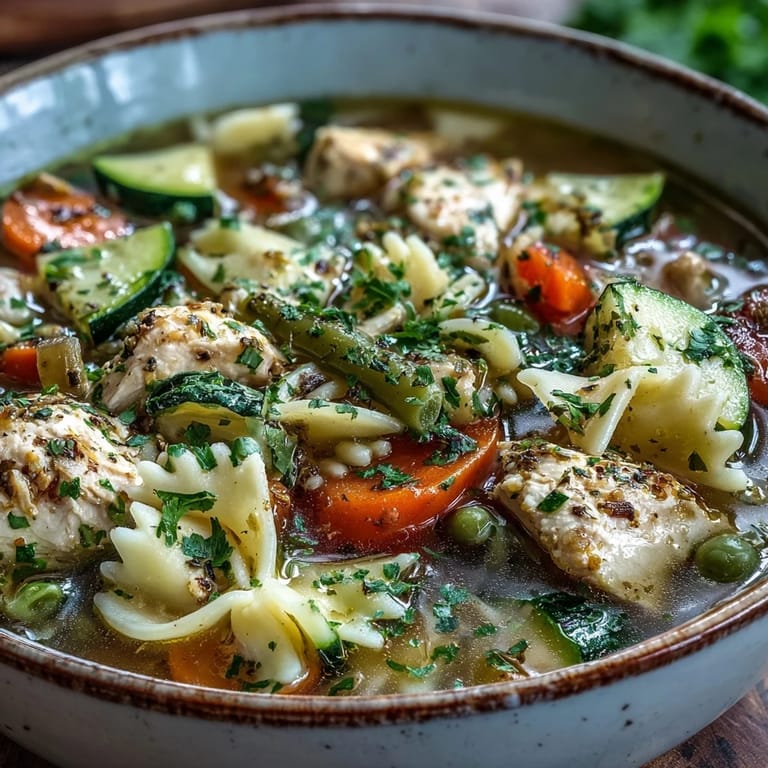
The beauty of this soup is how it bends to what you have on hand or what you're craving. I've swapped green beans for spinach stirred in at the very end, replaced zucchini with yellow squash, and sometimes added diced bell peppers right alongside the celery. You could use rotisserie chicken if you want to skip browning the raw chicken—just shred it and add it with the pasta so it warms through without drying out further. One friend uses gluten-free pasta without hesitation, and another adds fresh herbs like oregano or a pinch of crushed red pepper. The foundation is strong enough to support your imagination.
- Rotisserie chicken works beautifully and saves you a step, though you'll lose that gentle browning flavor from cooking raw chicken.
- Corn, spinach, bell peppers, or even diced sweet potato swap in seamlessly for any of the vegetables already listed.
- A splash of fresh lemon juice or a handful of torn basil at the finish can brighten the whole bowl if it feels like it needs lifting.
 Save to Pinterest
 This soup has become my answer to so many questions: What do I make on a hurried night, what do I bring to someone struggling, what do I cook when I want to feel capable and generous without exhausting myself. That's the real magic of it.
Questions & Answers
- → Can I make this soup ahead of time?
Yes, you can prepare the soup up to 3 days in advance. Store it in an airtight container in the refrigerator. Note that the pasta will absorb some liquid, so you may need to add extra broth when reheating.
- → Can I freeze this soup?
For best results, freeze the soup without the pasta. The pasta can become mushy when frozen and reheated. Add freshly cooked pasta when serving. The soup base freezes well for up to 3 months.
- → What other pasta shapes work well?
Small pasta shapes like ditalini, elbow macaroni, small shells, or orzo work perfectly. These shapes hold up well in liquid and are easy to scoop with a spoon. Avoid long pasta varieties.
- → Can I use rotisserie chicken instead?
Absolutely. Using a store-bought rotisserie chicken is a great time-saver. Simply shred the meat and add it during the last 5 minutes of cooking, just before adding the pasta, to prevent it from becoming dry.
- → How can I make this soup gluten-free?
Substitute regular pasta with gluten-free pasta made from rice, corn, or quinoa. Also ensure your chicken broth is certified gluten-free, as some brands contain gluten-based additives.
- → What vegetables can I substitute?
Feel free to swap zucchini or green beans for corn, spinach, bell peppers, butternut squash, or kale. This makes the soup versatile and adaptable to what you have on hand or seasonal availability.