 Save to Pinterest
 There's something about arranging vegetables in a bowl that feels like creating edible art. I discovered these Buddha bowls during a phase when I was trying to eat better without sacrificing flavor, and the first time I made one, my kitchen smelled like toasted sesame and fresh lemon—the kind of smell that makes you actually excited about lunch. The beauty of it is that everything comes together in under an hour, and you end up with something so vibrant it almost feels wrong to eat it.
I made this for a friend who'd just started eating more plant-based, and watching her face light up when she took that first bite—realizing vegetables could taste this good and feel this satisfying—reminded me why I keep coming back to this bowl. She texted me the recipe request within the hour, and now it's become our standing Tuesday lunch whenever we can coordinate schedules.
Ingredients
- Quinoa, rinsed: The grain that actually feels complete as a protein base; rinsing removes the bitter coating nobody tells you about until you skip it once.
- Water: Use good filtered water if you have it—it sounds fussy but the quinoa absorbs it all, and quality matters here.
- Cooked chickpeas: Canned ones work perfectly fine and save time; drain and rinse them thoroughly so the dressing doesn't get diluted.
- Red cabbage, thinly sliced: The crunch factor that keeps this from feeling mushy, and it's stunning to look at while you're eating.
- Carrots, julienned: Cut them into matchsticks rather than coins so they feel delicate and absorb the dressing better.
- Cherry tomatoes, halved: Pick ones that actually smell like tomatoes if possible—it changes everything.
- Yellow bell pepper, sliced: The sweetness balances the earthiness of the grains and greens beautifully.
- Cucumber, sliced: Adds coolness and hydration; use seedless if you prefer less watery texture.
- Fresh baby spinach: This wilts slightly under the warm quinoa, creating a gentle texture contrast.
- Ripe avocado, sliced: Add this last and assemble bowls right before eating so it doesn't brown.
- Toasted pumpkin seeds: Toast your own if you can—they're nuttier and crunchier than pre-toasted versions.
- Sesame seeds: A little goes a long way for both flavor and visual pop.
- Tahini: The secret to making this dressing creamy without dairy; quality tahini tastes less bitter and blends smoother.
- Lemon juice, fresh squeezed: Bottled works in a pinch but fresh makes the dressing taste bright instead of flat.
- Maple syrup or honey: This softens the tahini's earthiness and balances the lemon's acidity.
- Garlic, minced: Just one clove keeps things subtle rather than aggressive.
- Salt and black pepper: Taste as you go with the dressing—tahini needs more salt than you'd expect.
Tired of Takeout? 🥡
Get 10 meals you can make faster than delivery arrives. Seriously.
One email. No spam. Unsubscribe anytime.
Instructions
- Toast your grains:
- Bring water to a rolling boil, add quinoa and salt, then immediately lower the heat to a gentle simmer and cover it. You'll hear the water settle into a quiet bubbling after a minute—that's when you know the heat is right.
- Let it breathe:
- After 15 minutes, all the water will be absorbed and you might see little spirals popping out of the grains; that's the germ separating, which means it's cooked perfectly. Let it rest covered for 5 minutes, then fluff it with a fork so it doesn't clump.
- Prep your rainbow while grains cook:
- Arrange your cutting board like an assembly line and slice everything thin enough that it feels delicate in your mouth. The thinner your vegetables, the better they'll absorb the dressing.
- Make a dressing worth the effort:
- Whisk tahini, lemon juice, maple syrup, garlic, and a pinch of salt together first—it'll seize up slightly and look broken, which is normal. Add water a tablespoon at a time, whisking constantly, until it flows like heavy cream; it should taste bright and slightly sweet with a subtle garlic warmth.
- Assemble with intention:
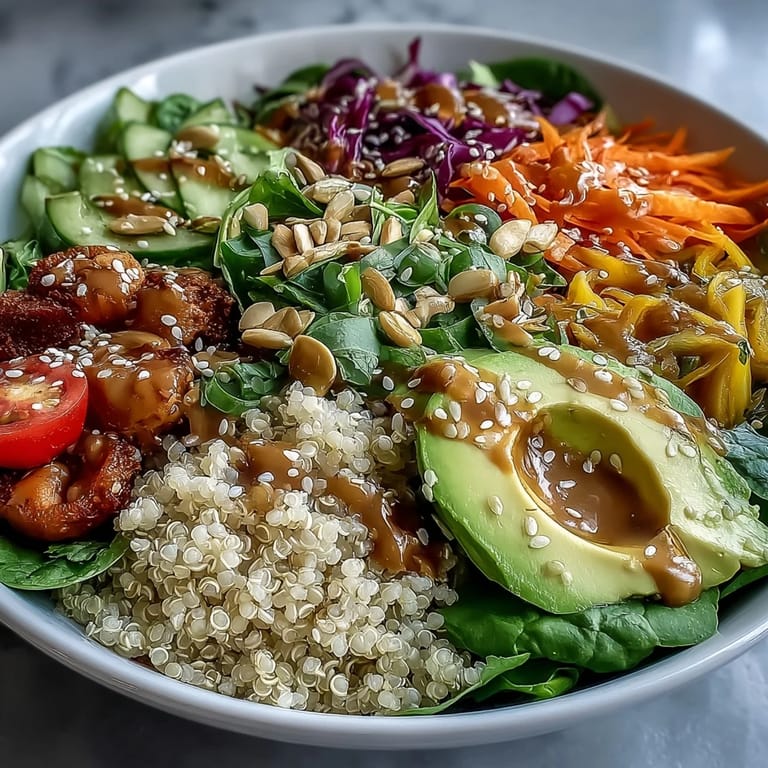
- Divide the warm quinoa among bowls first so it creates a bed, then arrange your vegetables in sections like you're painting—it matters less than you think for flavor but so much for how you feel about eating it. The warm grains will slightly soften the raw vegetables and allow the spinach to wilt just enough.
- Dress and garnish right before serving:
- Drizzle the dressing generously over everything, then scatter seeds on top so they stay crispy and catch the light. Serve immediately while the quinoa is still warm and the vegetables are still crisp.
 Save to Pinterest
 There was a moment when someone told me they'd started eating vegetables because they looked forward to this bowl instead of dreading salads, and something clicked about how presentation and flavor work together to change habits. Food that looks beautiful tastes better because you're genuinely excited to eat it, not because you're checking a nutrition box.
The Magic of Color and Texture
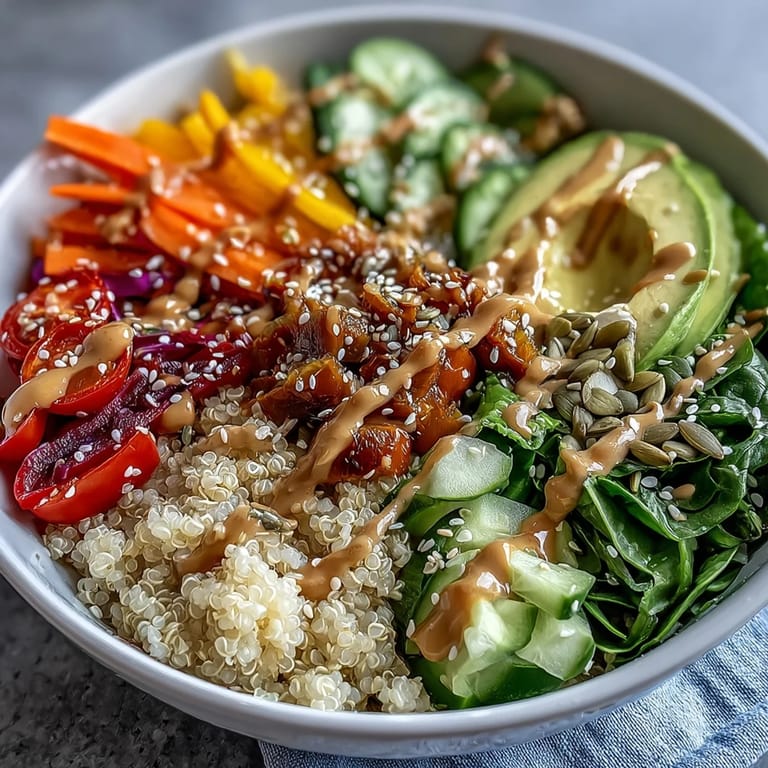
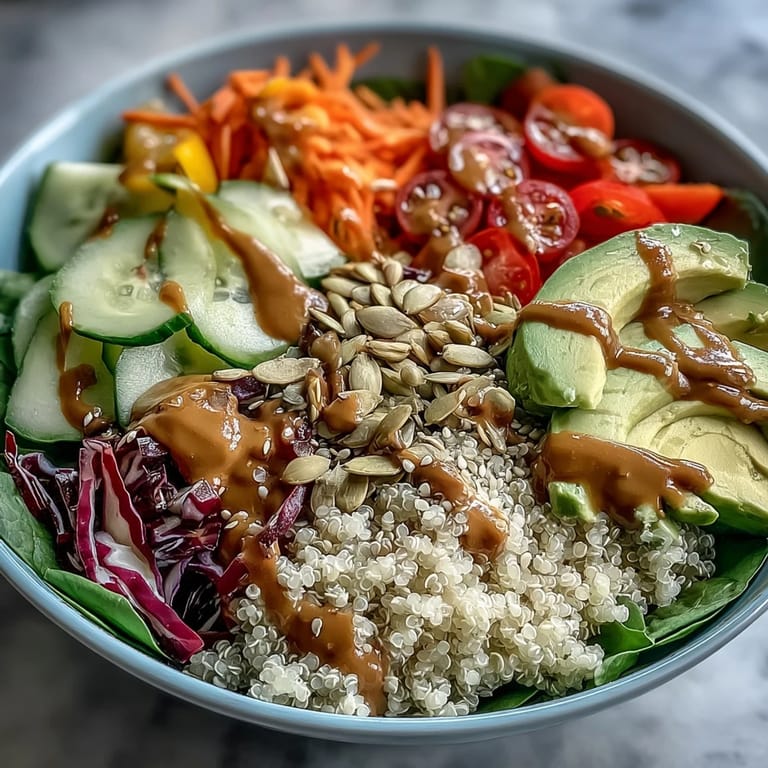
Every vegetable in this bowl serves a purpose beyond nutrition—the red cabbage provides a slight peppery crunch, the yellow pepper adds natural sweetness, the spinach creates a soft base under the warm quinoa, and the cucumber keeps everything feeling fresh and cool. When you eat it, you get a different texture with each bite depending on which vegetables you happen to pick up, and that variety is what keeps it interesting rather than monotonous. The avocado ties everything together with creaminess while the tahini dressing acts as a flavor bridge that makes all the separate elements feel intentional rather than random.
Making It Your Own
The beauty of this bowl is that it's a template rather than a strict recipe—I've made versions with roasted sweet potato instead of some of the raw vegetables, swapped the chickpeas for crispy baked tofu when I wanted something different, and added sriracha to the dressing when I was in the mood for heat. Some days I load it with more greens and less starch, other days I add roasted broccoli or steamed snap peas because that's what I bought at the market. The tahini dressing works with basically any vegetable combination, so you can build this bowl around whatever's in your fridge and what you're craving that day.
Storage and Meal Prep Strategy
These bowls actually work beautifully for meal prep because the quinoa, chickpeas, and most vegetables keep for two to three days in the refrigerator—just assemble them in containers without the avocado, dressing, or seeds. Pack those components separately and add them right before you eat, which keeps everything from getting soggy or brown while maintaining that satisfying contrast between textures. I've built entire work weeks around making four of these on Sunday and feeling proud of myself for eating well without much effort.
- Store assembled bowls in glass containers without avocado, dressing, or seeds, and they'll keep for up to two days in the refrigerator.
- Pack the tahini dressing in a separate small container and shake it well before pouring, as it separates slightly when it sits.
- Slice avocado fresh right before eating to prevent browning, or toss slices in a bit of lemon juice if you're prepping ahead.
 Save to Pinterest
 This bowl became my answer to the question of how to eat well without it feeling like a sacrifice—it's colorful enough to make you smile when you open the container, satisfying enough to actually keep you full, and tasty enough that you'll genuinely want to make it again. That's the whole point, really.
Questions & Answers
- → What makes a buddha bowl different from regular grain bowls?
Buddha bowls typically feature grains as a base with various vegetables arranged in sections on top, resembling a full, rounded belly. They emphasize balance between proteins, healthy fats, and colorful produce, often with a complementary dressing drizzled over everything.
- → Can I prepare the components ahead of time?
Absolutely. Cook quinoa and chop vegetables up to 2 days in advance. Store components separately in airtight containers in the refrigerator. Keep avocado and dressing separate until serving to maintain freshness and prevent sogginess.
- → What other grains work well in this bowl?
Brown rice, farro, millet, or bulgur make excellent alternatives to quinoa. For a grain-free option, use cauliflower rice or spaghetti squash. Adjust cooking times accordingly and ensure grains are cooled slightly before assembling.
- → How do I customize the protein source?
Beyond chickpeas, try grilled tofu, tempeh, black beans, lentils, or edamame. For non-vegetarian options, add grilled chicken, shrimp, or baked salmon. Aim for about 1 cup protein per serving to keep the bowl satisfying.
- → What other dressings pair well with these ingredients?
A miso-ginger dressing adds depth, while avocado-lime creates extra creaminess. Try a simple balsamic vinaigrette for brightness, or peanut sauce for richness. Spicy sriracha-mayo also complements the fresh vegetables beautifully.
- → How can I add more crunch to the bowl?
Toast nuts like almonds or cashews, add roasted chickpeas, or include crushed tortilla strips. Pickled red onions and radishes provide both crunch and tang. Thinly sliced snap peas or jicama also offer excellent texture contrast.