 Save to Pinterest
 The first time I made borscht wasn't by choice—my neighbor knocked on the door with a tired smile and a heap of beets from her garden, asking if I knew what to do with them. I didn't, not really, but she mentioned her mother's recipe, and something in the way she said it made me want to try. That soup, dark and jewel-toned, became the thing I made whenever someone needed comfort, whenever the kitchen felt too quiet, whenever I wanted to remember that some dishes carry stories older than my own.
I made this for my brother when he came home exhausted from a long winter drive, and he ate two bowls without saying much of anything, which meant everything. That's when I understood that borscht isn't really about the vegetables or even the beef—it's about the moment you sit down and someone's put time into feeding you.
Ingredients
- Beef chuck or brisket, 400g: Use a tougher cut that breaks down into tenderness over time—it's what gives the broth its savory depth.
- Water, 1.5 liters: This becomes your foundation; don't skimp on it or rush the simmering.
- Bay leaves and black peppercorns: These quiet additions are what separate homemade from forgettable.
- Beets, 3 medium: The soul of the soup—peel them over a cutting board, not your clothes, or accept the stains as a badge of honor.
- Carrots and onion: Grate the carrots and chop the onion fine; this texture matters more than you'd think.
- Potatoes and cabbage: The potatoes thicken the broth naturally, while cabbage adds a gentle earthiness that rounds everything out.
- Tomato paste, sugar, and vinegar: This trio is the secret—tomato paste deepens, sugar balances the vinegar's sharp edge, and vinegar brightens what might otherwise taste flat.
- Garlic, oil, and sour cream: Fresh garlic goes in at the end so it stays lively, oil carries flavor without overwhelming, and sour cream is non-negotiable.
Tired of Takeout? 🥡
Get 10 meals you can make faster than delivery arrives. Seriously.
One email. No spam. Unsubscribe anytime.
Instructions
- Start the broth:
- Put beef, water, bay leaves, peppercorns, and salt into your largest pot and bring it to a rolling boil—you'll see gray foam float to the surface, skim it off with a spoon. Lower the heat and let it simmer gently for 45 minutes; this isn't a race.
- Make the vegetable base:
- While beef simmers, heat oil in a skillet and soften the onions until they turn translucent and smell sweet. Add grated carrots and beets, stirring often, and when they've been in there about 5 minutes, stir in tomato paste, sugar, and vinegar—the pan will smell intense and wonderful.
- Finish the vegetables:
- Keep stirring occasionally for another 7 to 8 minutes until the vegetables soften and the raw tomato smell fades, replaced by something more rounded.
- Build the soup:
- Remove the beef from its broth (set it aside to cool), strain the broth if you like, then return it to the pot. Add potatoes and let them cook for 10 minutes until just starting to soften.
- Bring it together:
- Pour the entire sautéed beet mixture into the pot, add cabbage, and simmer for 10 minutes more. Shred or cube the beef once it's cool enough to handle, add it back, then stir in the fresh garlic and taste—adjust salt and pepper until it tastes like home to you.
- Let it rest:
- Turn off the heat and let the pot sit for 15 to 20 minutes; the flavors will deepen and marry in ways that rushing can't achieve.
 Save to Pinterest
 My hands were stained purple for three days after making this last winter, and somehow I didn't mind—it felt like the soup had marked me, claimed me as its cook. There's something quietly satisfying about a dish that doesn't just disappear into you, but leaves evidence of the care you took.
Why This Soup Stays in Rotation
Borscht isn't trendy or Instagram-friendly, but it's resilient in a way that matters. It tastes better the next day, keeps for days in the fridge, and actually improves if you freeze it—which means you can make it when you have time and energy, then pull it out when you need it most. It's also remarkably affordable, since it relies on humble vegetables and a modest amount of beef, so you can feed people without it feeling like a special occasion, which somehow makes it more special.
Serving and Pairing
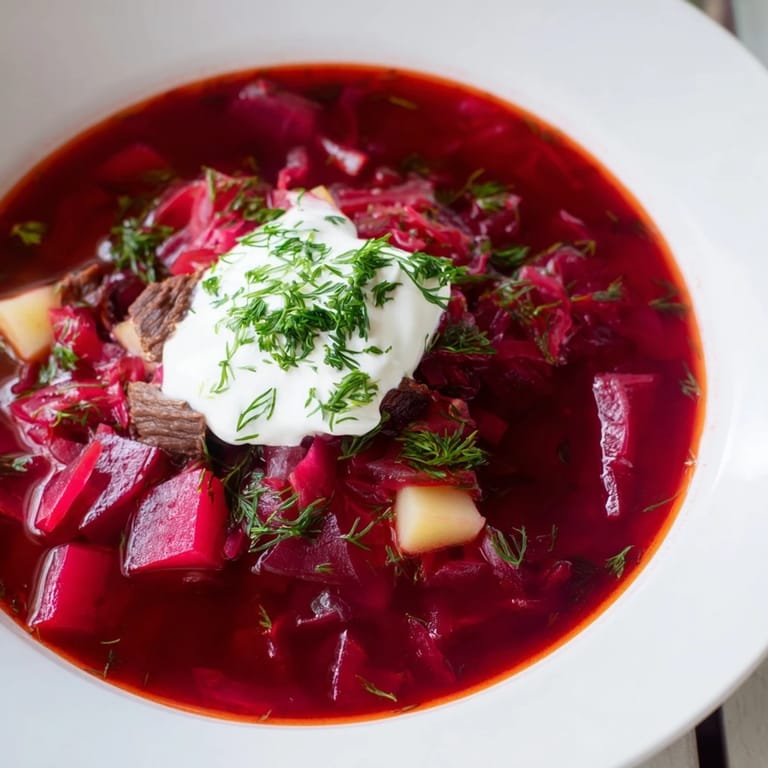
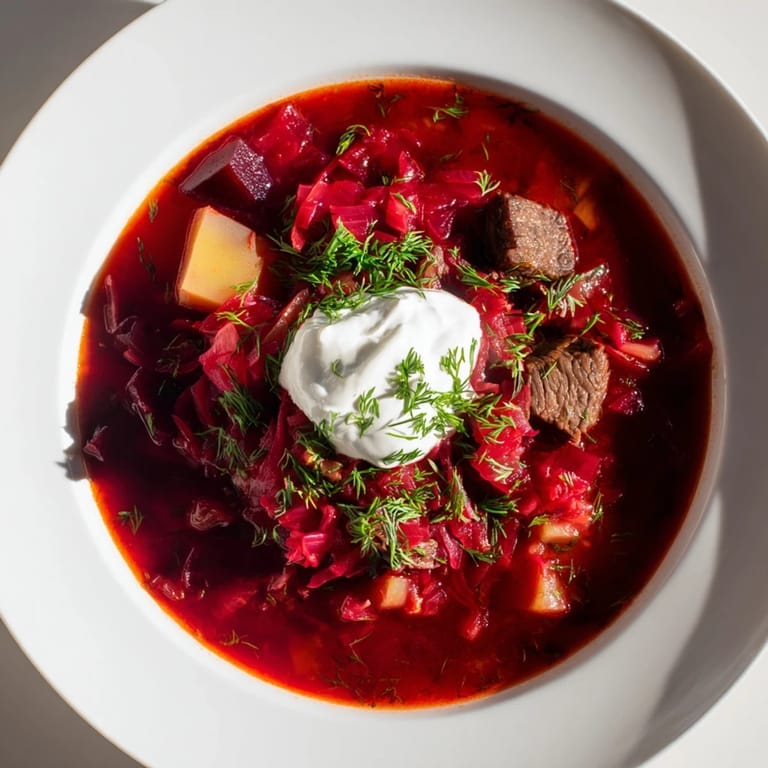
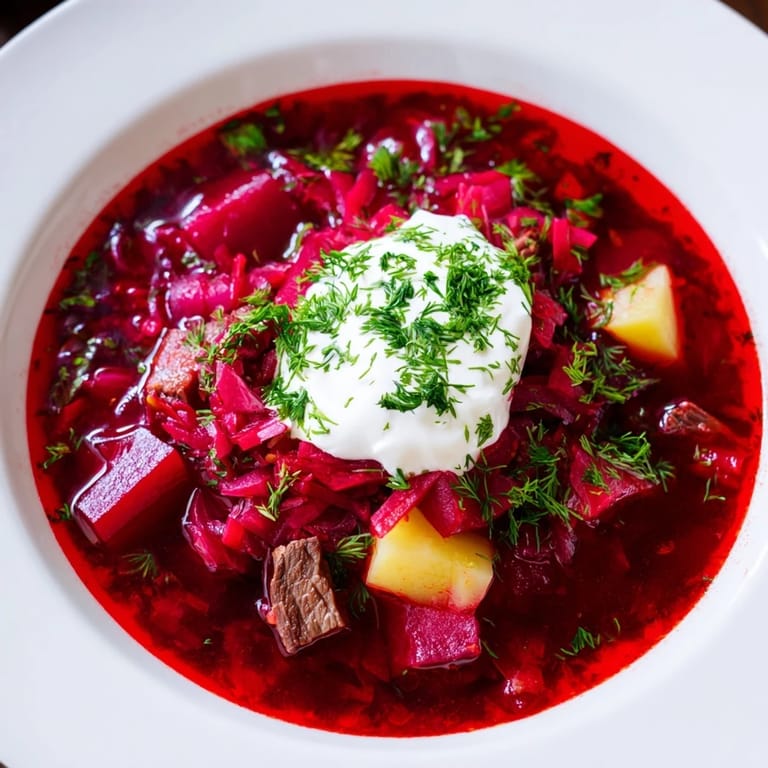
The sour cream isn't decoration—swirl it in just before eating, and it cools the soup slightly while adding richness that balances the vinegar's brightness. If you have fresh dill, use it generously; if you only have parsley, that works too. Serve with dark rye bread if you can find it, or any sturdy bread that can hold up to a wet spoon. Some people add a final squeeze of lemon juice, and I won't argue with that.
Variations and Flexibility
This recipe bends without breaking, which is part of its charm. If beef isn't your thing, swap it for vegetable broth and extra vegetables—mushrooms work beautifully, and so does a handful of kidney beans for protein. You can make it less sweet by using less sugar, or more vinegary by adding extra at the end. Some cooks add a splash of ketchup instead of tomato paste, or include a spoonful of horseradish for sharpness. The core is solid enough that your instincts will probably be right.
- For vegetarian borscht, use vegetable broth and double the root vegetables for depth.
- Add borscht to your freezer and it keeps for three months, tasting even better when thawed and reheated.
- If the color seems too dark or muddy, brightness from lemon or vinegar will fix it fast.
 Save to Pinterest
 Make this soup when you want to feed someone something that tastes like it took effort but doesn't feel fussy, something that warms from the inside and lingers in the best way. It's not complicated, but it's real.
Questions & Answers
- → What cut of beef works best for the soup?
Beef chuck or brisket are ideal as they become tender when simmered, infusing the broth with rich flavor.
- → Can I prepare the beet and vegetable mix in advance?
Yes, sautéing the grated beets, carrots, and onions ahead saves time and helps deepen the flavors in the final dish.
- → How does vinegar affect the soup’s flavor?
Vinegar adds a subtle tanginess that balances the sweetness of the beets and enhances overall complexity.
- → What herbs pair well as garnish?
Fresh dill or parsley complement the earthy flavors with bright, herbaceous notes.
- → Is this dish suitable for gluten-free diets?
When served without bread and using gluten-free tomato paste, it is suitable for gluten-free eating.