 Save to Pinterest
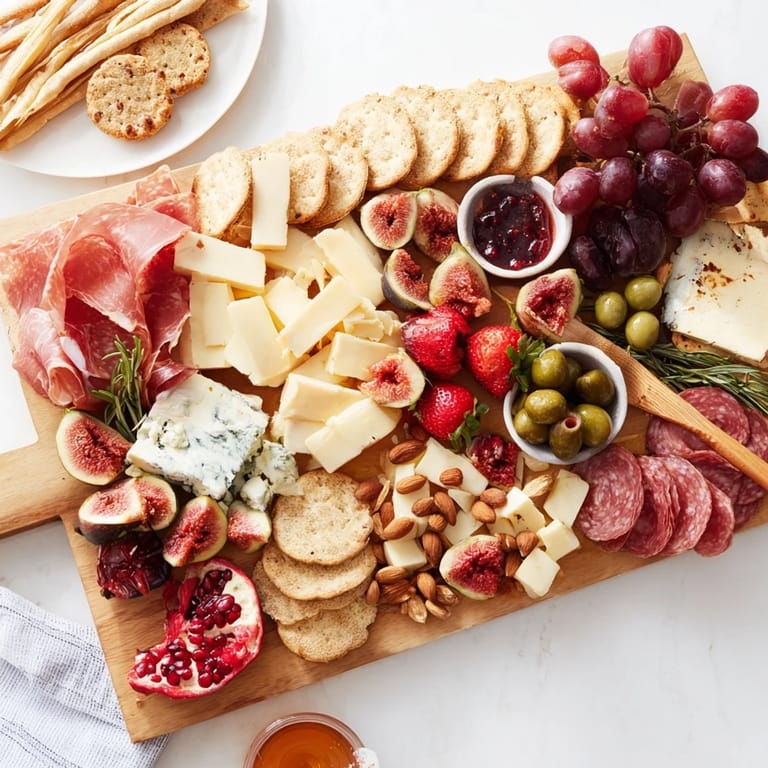
 The first time I built a grazing board that actually stopped people mid-conversation was on a rainy October evening when I realized presentation could be just as important as taste. I'd arranged everything neatly that first attempt, everything in its place, and honestly it felt a bit flat. Then something clicked—what if I let things spill and cascade like they belonged partially off the board, like fabric tumbling from a stage? That one small shift turned an appetizer into theater, and suddenly guests weren't just eating; they were experiencing.
I made this for my sister's birthday dinner, and what struck me most wasn't the compliments on the flavors—it was watching my nephew carefully select a fig, some blue cheese, and a almond, then tell me it was the best thing he'd ever eaten. He was seven. The board had somehow made him feel like a sophisticated guest instead of a kid picking at food, and honestly, that moment changed how I think about feeding people.
Ingredients
- Brie: Buy it whole and slice just before serving—warmth softens it into something irresistible.
- Aged Cheddar: The sticks create visual interest and give guests something substantial to hold onto.
- Blue Cheese: Crumble it by hand rather than cutting; the irregular pieces look more inviting and feel less precious.
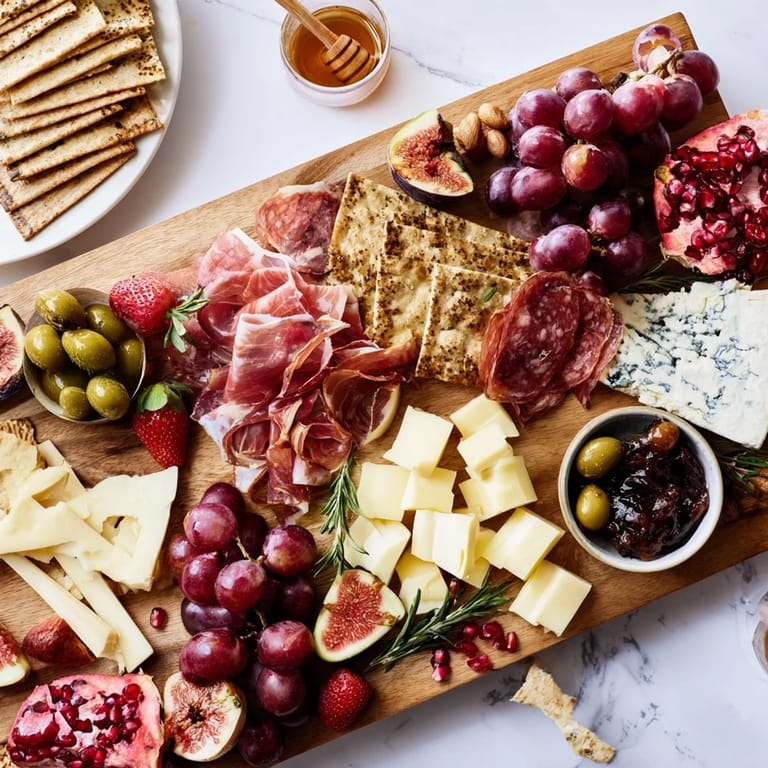
- Prosciutto: Let it drape loosely—the wrinkles and folds are what create that curtain effect.
- Soppressata: Fold each slice rather than laying flat; you need that sculptural quality.
- Red Grapes: Keep them on the stem for visual height and so people can grab a small bunch without overthinking it.
- Fresh Figs: Halve them just before arranging; cut figs oxidize quickly and lose their jewel-like appearance.
- Strawberries: Halve lengthwise to show off that perfect interior, and arrange cut-side up.
- Pomegranate Seeds: These are your color accent—use them generously wherever you need a pop of crimson.
- Baguette: Slice it the day of, or it dries out; slightly warm bread tastes better anyway.
- Seeded Crackers: These add earthiness and texture without competing for attention.
- Fig Jam: Quality matters here—it's the bridge between sweet and savory.
- Honey: Drizzle it directly over cheese for a warm, luxurious touch.
- Marcona Almonds: These are buttery and almost caramel-like compared to regular almonds; they're worth seeking out.
- Olives: Mix green and black for visual contrast; pit them beforehand so guests aren't fumbling.
- Fresh Herbs: Rosemary and thyme aren't just garnish—they add aroma and a hint of earthiness that ties everything together.
Tired of Takeout? 🥡
Get 10 meals you can make faster than delivery arrives. Seriously.
One email. No spam. Unsubscribe anytime.
Instructions
- Set Your Stage:
- Choose a large wooden or marble board—something with weight and presence. Position it near the table's edge so pieces can cascade intentionally without anyone worrying they'll tumble to the floor. The board itself is part of the drama.
- Anchor with Cheese:
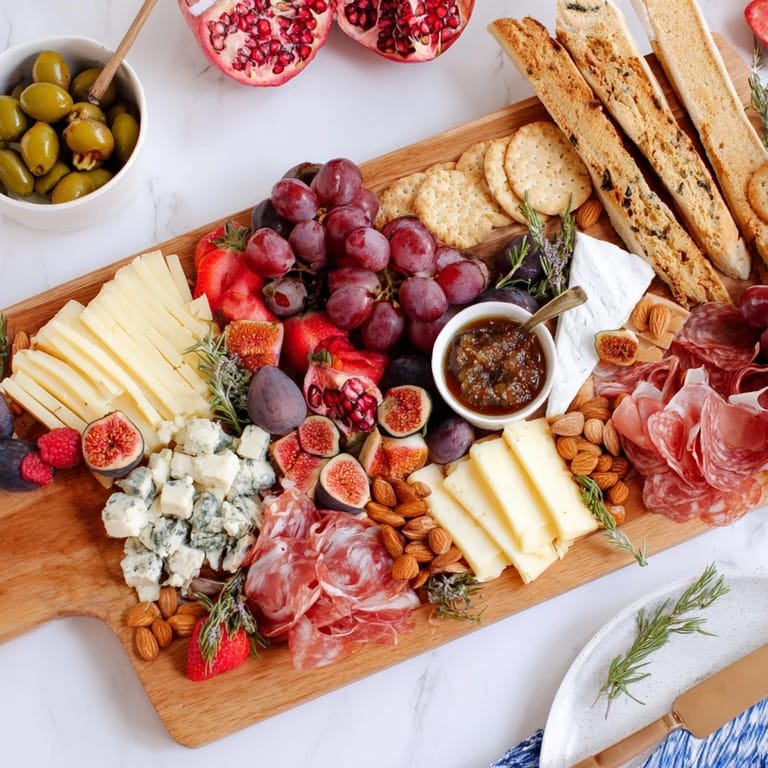
- Arrange the brie wedges, cheddar sticks, and blue cheese chunks so some pieces tip slightly over the edge. Think of them as the first fold of velvet curtains. Leave gaps; you're not covering every inch.
- Layer the Cured Meats:
- Drape prosciutto in loose waves and fold soppressata into thirds or quarters. Let them billow and overlap across the cheese and down the sides. This is where the curtain effect really comes alive.
- Scatter the Fruit:
- Tuck grape clusters, figs, and strawberries into the gaps, letting some trail over the edge. Sprinkle pomegranate seeds wherever you see empty space—they catch light like garnets. Step back and look for balance, not symmetry.
- Add Bread and Crackers:
- Fan the baguette slices and prop the crackers at angles so they look casually placed rather than arranged. Let a few lean against the cheese or hang slightly off the board.
- Nestle the Bowls:
- Place small serving bowls of fig jam, honey, olives, and almonds among the other ingredients. They should feel like they belong, not like afterthoughts. A small ceramic bowl holding olives is part of the composition.
- Finish with Greenery:
- Tuck sprigs of fresh rosemary and thyme throughout, tucking them between ingredients and along the edges. The herbs add fragrance and soften the entire presentation. Step back one more time.
- Serve with Intention:
- Bring it to the table and watch faces light up. Encourage people to graze—to start with something sweet, then savory, then back again. Let them discover their own combinations.
 Save to Pinterest
 I'll never forget the moment a guest turned to me and said, "This looks too beautiful to eat," right before loading a cracker with brie and fig jam. That hesitation, then that decision to indulge—that's the magic of a board done right. It's permission to be a little bit fancy, a little bit playful, all at once.
Building Your Own Drama
The secret to making a grazing board feel special isn't expensive ingredients; it's intentional arrangement. Think about texture contrasts: creamy cheese against crispy bread, soft fruit against crunchy almonds. Think about color pockets: the deep purple of grapes next to the bright red of pomegranate seeds, the cream of brie balanced by the intensity of blue cheese. Every element should speak to at least one sense before anyone takes a bite. The anticipation is half the meal.
Timing and Temperature
I learned the hard way that a board assembled too early becomes sad—the cheese firms up, the fruit loses its gleam, the bread stales slightly. Assemble it as close to serving as possible, ideally within 30 minutes. If you're hosting a longer event, prepare components separately and assemble fresh halfway through. Cheese tastes better when it's not cold from the fridge, so pull everything out about 15 minutes before arranging. These small decisions create the difference between a board people remember and one they forget before dessert.
Scaling and Variations
This formula scales beautifully for different occasions. For a smaller gathering, use a large cutting board and reduce quantities by half. For a crowd, build two boards so everything stays within arm's reach. In spring, swap strawberries for asparagus wrapped in prosciutto; in winter, add roasted nuts and dried fruit. The framework stays the same—creamy, cured, fresh, and crunchy elements in visual layers. Vegan versions work wonderfully with plant-based cheeses, roasted vegetables, and quality crackers; the cascading effect doesn't care about the ingredients, only the intention.
- For a themed board, let the colors guide you—an autumn version might emphasize golds and deep reds, while summer could be all berries and whites.
- Edible flowers scattered throughout add an unexpected delicate touch that makes guests pause.
- A small handwritten card naming a few flavor combinations gives people confidence to experiment.
 Save to Pinterest
 A grazing board is an invitation to slow down, to combine flavors on your own terms, to feel a little luxurious on an ordinary Tuesday. That's all it needs to be.
Questions & Answers
- → How do I achieve the draped curtain effect on the board?
Arrange cheeses and charcuterie so they hang slightly over the edges, mimicking folds and layers to create a cascading visual impact.
- → Can this be adapted for a vegan preference?
Yes, substitute dairy cheeses with plant-based alternatives and omit charcuterie for a fully vegan variation without losing flavor harmony.
- → What types of breads work best with this spread?
Crunchy baguette slices and seeded crackers provide texture and structure, balancing smooth cheeses and juicy fruits elegantly.
- → How should the fresh herbs be used?
Garnish with sprigs of rosemary and thyme tucked among ingredients to add aromatic freshness and enhance presentation.
- → What drink pairs well with this grazing board?
A crisp rosé or sparkling wine complements the rich cheeses and fruity accents, enhancing the overall tasting experience.