 Save to Pinterest
 I'll never forget the afternoon I wandered into a SoHo gallery and stood before a Jackson Pollock painting that completely arrested me. The chaos, the energy, the way colors seemed to dance and collide without apology—it stirred something in me. Later that week, I found myself at the farmers market staring at the most impossibly vibrant produce: ruby tomatoes, golden beets, watermelon so pink it looked almost unreal. That's when it hit me: I could paint with food. This salad was born from that moment, a deliberate rejection of neat rows and careful arrangements in favor of pure, celebratory abundance.
I made this for my friend Maya's gallery opening last spring, and I'll never forget watching people set down their wine glasses to actually look at what was on their plates. One woman told me it was the first time she'd ever thought of salad as art. That moment made me realize this dish does exactly what it's meant to do: it celebrates colors and textures with the same reverence we give to paintings.
Ingredients
- Cherry tomatoes (red and yellow), 1 cup halved: The foundation of your color story. I always buy them a day ahead so they're at peak sweetness, and halving them (rather than leaving them whole) helps them nestle into the greens and absorb the dressing.
- Golden beet, 1 small peeled and shaved: A mandoline makes this effortless, and those paper-thin ribbons catch the light beautifully. Use a vegetable peeler if you don't have one—it's more work but creates a lovely rusticity.
- Cucumber, 1 small sliced into ribbons: Ribbon it the same way as the beet for visual consistency. Use a mandoline or vegetable peeler to create those long, elegant strands.
- Red radishes, 1/2 cup thinly sliced: They stay crisp for hours, making this salad forgiving if you prep ahead. Their peppery bite is essential for keeping every bite interesting.
- Watermelon, 1 cup cut into irregular cubes: The wild card that makes people pause. Cut it into uneven chunks so some pieces are large and assertive, others small and surprising. Peak watermelon matters more than you'd think.
- Ripe avocado, 1 cubed: Add this last, literally moments before serving, or it will darken. The creaminess is your textural anchor in the chaos.
- Mixed baby greens, 1 cup (arugula, baby spinach, frisée): This blend is crucial because each green brings different texture and flavor. The peppery arugula, tender spinach, and frilly frisée create visual and gustatory complexity.
- Fresh mint, 2 tbsp torn: Tearing rather than cutting prevents bruising and releases the oils more gently. Mint gives brightness that ties all the colors together.
- Toasted pumpkin seeds, 1/4 cup: Toast them yourself if possible—the aroma alone is worth it. They add crunch that stays crisp even after the dressing hits.
- Pomegranate seeds, 1/4 cup: These jewels burst on your tongue and add a subtle tartness. Save them for last so they don't stain everything pink.
- Crumbled feta, 1/4 cup: The salty anchor. I use aged feta because it crumbles better and doesn't disappear into the greens.
- Extra-virgin olive oil, 3 tbsp: Quality matters here because it's one of five ingredients in the dressing. Taste it first to make sure it's grassy and good.
- White balsamic vinegar, 1 tbsp: The white version is crucial because it doesn't muddy your colors. It's subtle, almost shy, which is the whole point.
- Honey, 1 tsp: Just enough to round the edges of the vinegar and add a whisper of sweetness.
- Dijon mustard, 1/2 tsp: An emulsifier and a flavor anchor that helps the dressing cling to the leaves.
- Salt and freshly ground black pepper: Taste as you go. The amount depends on how salty your feta is.
Tired of Takeout? 🥡
Get 10 meals you can make faster than delivery arrives. Seriously.
One email. No spam. Unsubscribe anytime.
Instructions
- Mise en place: Build your palette:
- This is where the magic actually starts. Prep every single vegetable and fruit and arrange them in separate bowls in front of you. This is the artist's step—you're organizing your colors before you splash them onto the canvas. It takes maybe 15 minutes and changes everything about how confident you feel with the actual assembly.
- Create your base with greens:
- Scatter the mixed baby greens and torn mint loosely across your largest platter or shallow bowl. Don't press them down or create any sense of order. Think of this as your white canvas—it should look slightly chaotic and full of air. The point is to have peaks and valleys where the other ingredients can nestle.
- Begin the artistic splash:
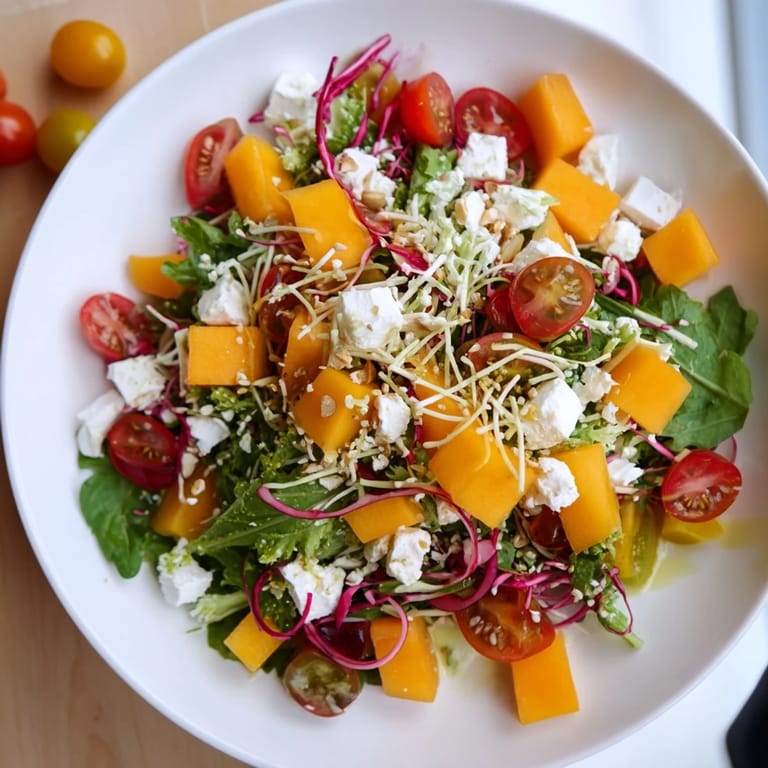
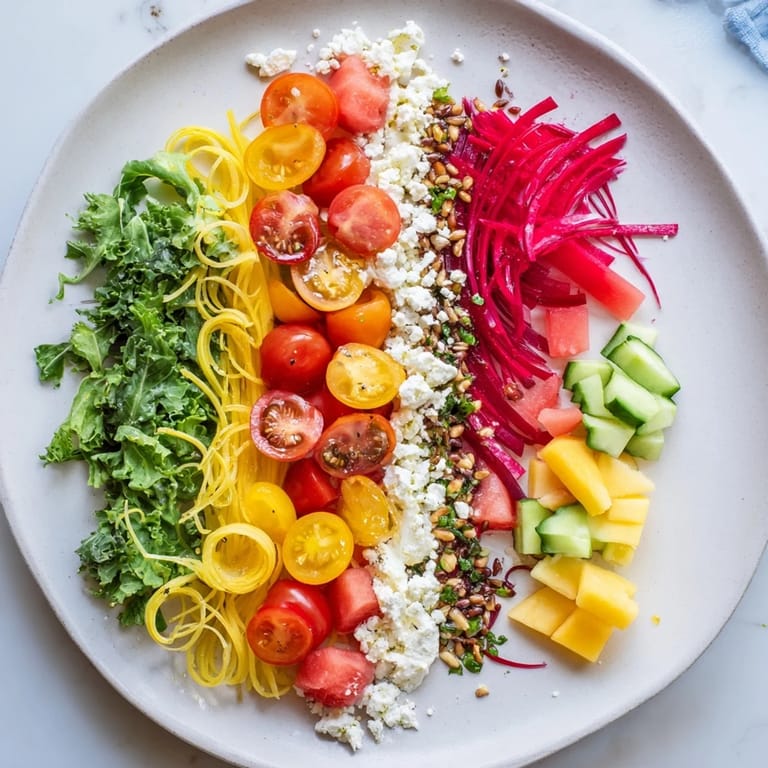
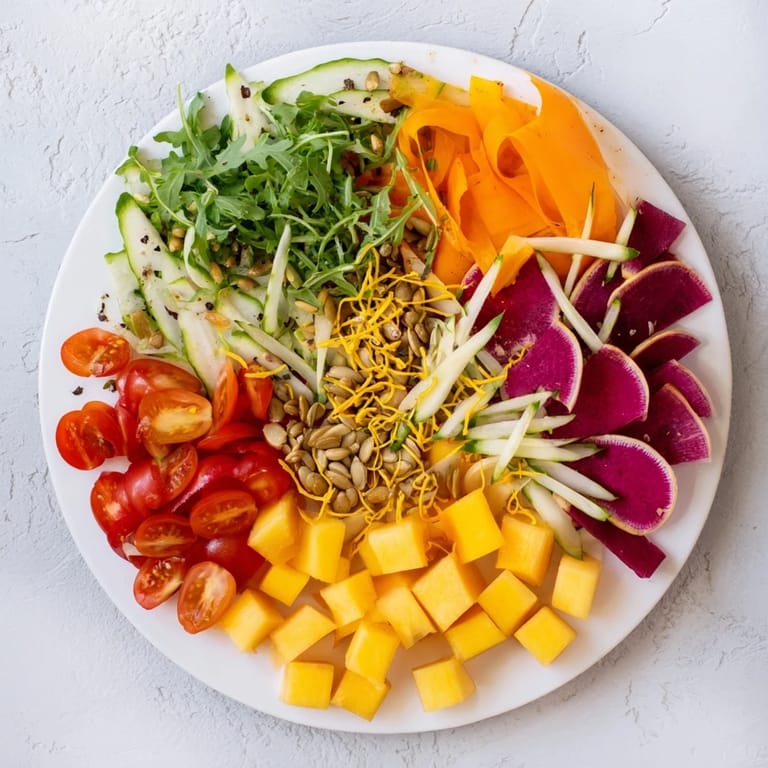
- Now comes the moment where cooking becomes play. Take the tomatoes, beet ribbons, cucumber ribbons, radish slices, watermelon cubes, and avocado and distribute them across the greens without any plan. Let colors overlap and touch each other. Some clusters should be dense, others sparse. You're aiming for controlled chaos—think of Pollock, but with intention. The avocado especially should be scattered in pockets so every bite has potential.
- Add texture and sparkle:
- Sprinkle the pumpkin seeds, pomegranate seeds, and feta across the top in an intentionally irregular pattern. Some areas should be seed-heavy, others should have pockets of just cheese. Don't distribute evenly—that's the whole point. The seeds should catch the light and the feta should look almost randomly scattered.
- Emulsify your dressing:
- In a small bowl, combine the olive oil, white balsamic vinegar, honey, and Dijon mustard. Whisk for about one minute, and you'll see it transform from separated and oily to cohesive and glossy. This is the emulsion doing its job. Taste it and adjust salt and pepper. It should feel balanced—not too sharp, not too sweet, with just enough mustard to let you know it's there.
- Paint with dressing:
- This is the final brushstroke. Drizzle the dressing across the salad in zigzags, splatters, and swooshes. Don't try to cover everything evenly. Some areas should glisten, others should be nearly dry. You're creating visual rhythm and ensuring that people will discover different ratios of dressing in different bites.
- Present and invite:
- Bring the salad to the table and let people admire it for a moment. Then encourage them to mix it as they eat—the salad is meant to evolve with every bite, the organized chaos becoming more chaotic, more delicious, more personal.
 Save to Pinterest
 What struck me most about making this salad for people was watching them hesitate before digging in. In a world of perfectly plated food that's almost too beautiful to eat, there's something rebellious about a salad that celebrates mess and abundance. It gave everyone permission to make their own chaos.
The Story Behind Abstract Expressionism on a Plate
The term 'abstract expressionism' was born in the 1940s and 50s as artists threw off the constraints of representational painting. Jackson Pollock didn't paint objects—he painted movement, energy, emotion. There's a parallel in how we approach food. We've been taught that food should be organized, controlled, garnished with precision. But what if food could be expressive? What if dinner could celebrate the beauty of unplanned combinations and happy accidents? This salad started as that question: Could a dish on a table feel as alive as a painting on a wall? The answer, it turned out, was yes.
Flavor Architecture: Why This Combination Works
There's a reason every ingredient in this salad exists. The sweet pop of cherry tomato is grounded by peppery radish. The creamy avocado softens the sharp brightness of the mint. The watermelon brings an unexpected sweetness that makes people pause and wonder what they're tasting. The bitter edges of frisée and arugula keep everything from becoming one-dimensional. The pumpkin seeds and pomegranate seeds add crunch and subtle tartness. It's not random at all—it's just dressed up to look that way. Every element was chosen to create layers of flavor that unfold as you eat.
Making It Your Own: Variations and Seasons
The beauty of this salad is that it changes with the seasons and with what moves you. In summer, I add edible flowers—pansies and violas add whimsy and an almost champagne-like delicacy. In early fall, I roast purple sweet potato cubes and toss them in. In late fall, I add thinly sliced raw Brussels sprouts for a nuttier undertone. For dairy-free celebrations, crumbled tofu (pressed and seasoned) or vegan cheese works beautifully. Some people add grilled chicken or shrimp if they want protein, though I find the salad complete as-is. Change the dressing too—swap the white balsamic for fresh lemon juice, or add a touch of sesame oil for earthiness. The template is just a starting point.
- Add edible flowers or microgreens for extra visual drama and delicate flavor.
- Toast the pumpkin seeds with a tiny pinch of cumin or smoked paprika for deeper complexity.
- Make the dressing ahead, but dress the salad only when you're ready to serve.
 Save to Pinterest
 This salad taught me that cooking doesn't always have to mean following orders. Sometimes the most nourishing meals come from throwing open the refrigerator, honoring what you have, and celebrating its beauty exactly as it is.
Questions & Answers
- → What are the main vegetables used in this salad?
Cherry tomatoes, golden beet, cucumber, red radishes, and watermelon cubes compose the colorful vegetable base.
- → How is the dressing prepared and applied?
The dressing is made by whisking olive oil, white balsamic vinegar, honey, Dijon mustard, salt, and pepper, then drizzled over the salad in zigzag patterns for an artistic touch.
- → Can this dish accommodate dietary restrictions?
Yes, it is naturally gluten-free and vegetarian. Feta cheese can be swapped with vegan alternatives for dairy-free needs.
- → What textures are featured in this salad?
Crunchy seeds, crisp radishes, creamy avocado, and tender greens combine to create a varied texture profile.
- → What tools are required to prepare this dish?
A sharp knife, vegetable peeler or mandoline, large serving platter, mixing bowl, and whisk are recommended.
- → Are there any suggested pairings for serving?
This salad pairs well with crisp Sauvignon Blanc or sparkling water with a splash of citrus.