 Save to Pinterest
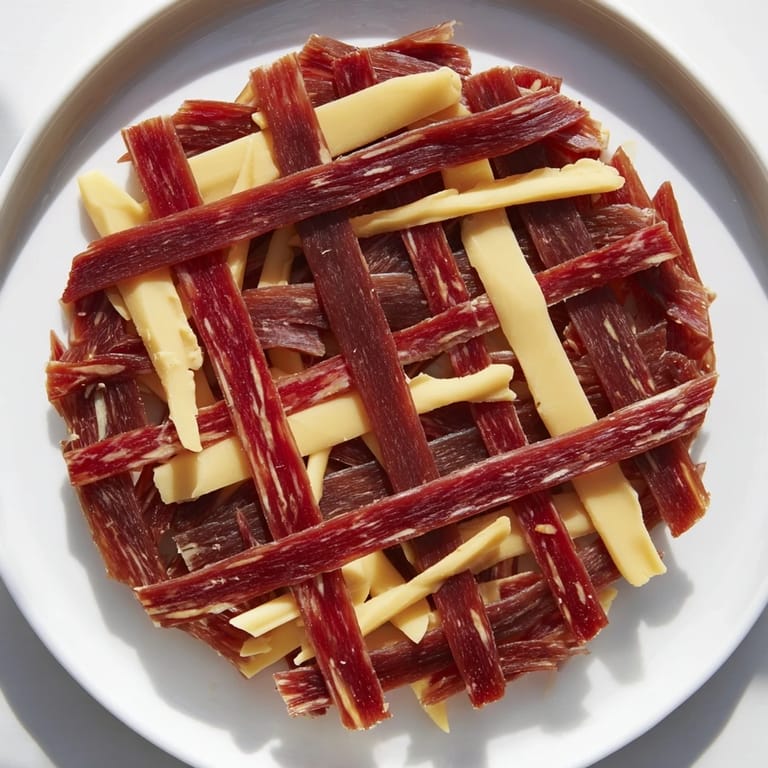
 I discovered this idea at a friend's dinner party where someone had arranged a charcuterie board so carefully that it looked almost too beautiful to eat. Watching guests hesitate before breaking into that perfectly styled arrangement gave me an idea: what if we made something intentionally playful and geometric that begged to be deconstructed? That's when The Tartan Plaid was born—a woven appetizer that looks like it belongs in a design magazine but tastes like pure savory satisfaction.
My sister made this for her book club last month, and I watched four different people try to photograph it before eating it. One of them asked if it was too pretty to bite into, which made us all laugh—that's when you know you've created something memorable. By the end of the evening, not a single piece was left on the platter.
Ingredients
- Beef jerky: 60 g (2 oz), cut into thin strips—the deep mahogany color is your anchor for the pattern and brings a bold, smoky note.
- Turkey jerky: 60 g (2 oz), cut into thin strips—lighter in color and milder in flavor, it creates visual contrast and keeps things from feeling too heavy.
- Pork jerky: 60 g (2 oz), cut into thin strips—this is your wild card, adding a slightly sweet undertone that balances the sharper cheeses.
- Sharp cheddar cheese: 60 g (2 oz), sliced into thin strips—the bite of aged cheddar cuts through the saltiness of the jerky beautifully.
- Monterey Jack cheese: 60 g (2 oz), sliced into thin strips—creamier and milder, it softens the overall intensity and creates pale golden lines in your pattern.
- Smoked gouda: 60 g (2 oz), sliced into thin strips—this is the secret weapon, adding a subtle smokiness that echoes the jerky without overwhelming it.
- Fresh parsley or chives: Finely chopped, optional—a handful of green at the end transforms this from savory to garden-fresh.
Tired of Takeout? 🥡
Get 10 meals you can make faster than delivery arrives. Seriously.
One email. No spam. Unsubscribe anytime.
Instructions
- Prep your pieces:
- Slice everything into thin, even strips about the width of a pencil. The more uniform they are, the cleaner your pattern will look and the easier the weaving becomes.
- Build your base:
- Lay your jerky strips vertically on a clean platter, alternating the three types to create color variation. Think of it like the foundation of a building—take a breath and make this first row count.
- Start weaving cheese:
- Begin at the top edge and gently weave your first cheese strip horizontally, going over one jerky strip and under the next. Alternate your cheese types as you go, so the pattern builds naturally.
- Layer and alternate:
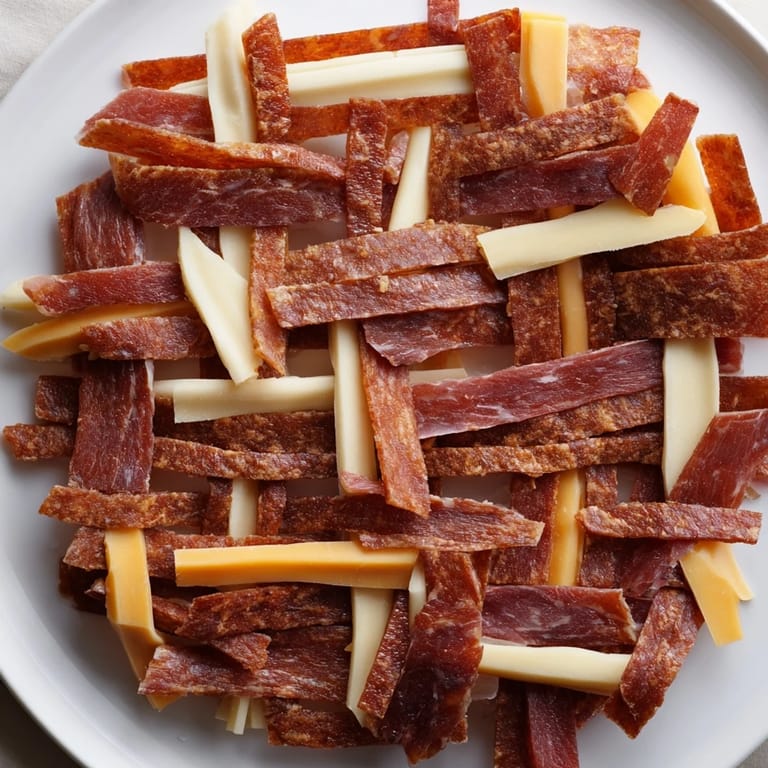
- Continue adding jerky and cheese strips, always switching direction and changing your cheese type. The magic happens when you step back and see the pattern emerging like a real tartan.
- Set and trim:
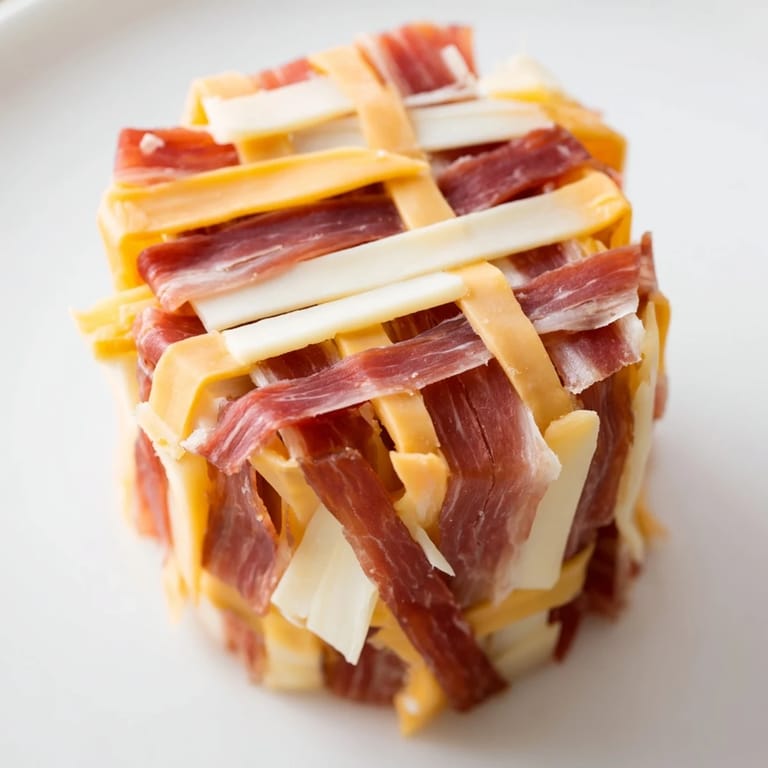
- Once everything is woven, press down gently with your fingertips to help the arrangement hold its shape. Trim the ragged edges with a sharp knife if you want a polished look, or leave them rustic—both are beautiful.
- Finish and serve:
- Scatter your chopped herbs over the top if using them, and get it to the table while everything is still at its most visually striking. Slice into squares or serve it whole for guests to break apart.
 Save to Pinterest
 The first time someone told me they'd made this for their kids and the whole family got involved in the weaving, I realized this isn't just food—it's an activity that brings people together. There's something about creating something beautiful with your own hands that changes how you experience eating it.
Playing With Patterns
Once you understand the basic weaving technique, you can experiment endlessly. Try using different jerky types or finding new cheese combinations based on what's in your market that day. I've made versions with white cheddar and wild mushroom jerky, and another time with teriyaki strips and fresh mozzarella—each one told a different story on the board.
Making It Your Own
Don't feel locked into the tartan idea either. Some people I know have arranged their pieces into stripes, checkerboards, or even abstract designs. The structure is just a framework; your creativity is what makes it feel personal.
Timing and Storage
The window for this appetizer is pretty forgiving if you plan ahead. Assemble it up to 2 hours before guests arrive, cover it loosely with plastic wrap, and refrigerate. The cold actually helps the cheese stay firm and makes the whole thing easier to handle and slice.
- If the pieces start to relax and lose definition, pop it back in the fridge for 15 minutes.
- Let it sit at room temperature for 5 minutes before slicing so the cheese isn't too brittle.
- Leftover pieces keep in an airtight container for a quick snack the next day, though the pattern sadly doesn't survive.
 Save to Pinterest
 This recipe proves that the most memorable dishes don't need hours in the kitchen—sometimes they just need a little intention and a willingness to play. Serve it with good wine and watch your guests forget all their manners.
Questions & Answers
- → What types of jerky work best for this appetizer?
Beef, turkey, and pork jerky all contribute unique flavors and colors, making them ideal for the woven tartan pattern.
- → Can I substitute the cheeses used in the layering?
Sharp cheddar, Monterey Jack, and smoked gouda provide contrasting textures and flavors, but similar semi-hard cheeses can be swapped in.
- → How do I achieve the woven plaid effect?
Arrange jerky strips vertically and weave cheese strips horizontally over and under, alternating colors to replicate a tartan pattern.
- → Is it possible to prepare this in advance?
Prepare ahead by wrapping tightly in plastic wrap and refrigerating up to 2 hours before serving to maintain freshness.
- → What garnishes enhance the presentation and flavor?
Finely chopped fresh parsley or chives add color and a mild herbal brightness to complement the layers.