 Save to Pinterest
 I still remember the first time I arranged a cheese board like a landscape—it was for my sister's art opening, and I wanted the appetizer to match the creative energy in the room. Instead of a typical flat arrangement, I started stacking hard cheeses vertically, and suddenly the board transformed into something three-dimensional, almost architectural. Guests didn't just eat from it; they explored it, discovering new flavor combinations as they navigated the edible terrain. That night, I realized that cheese boards could be more than sustenance—they could be conversation starters, edible art that told a story of craftsmanship and care.
I made this board for my best friend's dinner party, and what started as me nervously arranging cheeses turned into her guests literally gathering around it like it was a centerpiece sculpture. One guest asked if she could take a photo before eating, and suddenly everyone's phones came out. In that moment, I understood the magic of making food that people want to admire before they taste it.
Ingredients
- Aged Manchego (150g, cut into tall irregular chunks): This Spanish cheese has a firm, slightly crumbly texture that holds its shape beautifully when cut into dramatic wedges. I learned to cut it at slight angles to catch the light differently, making the mountains feel more three-dimensional.
- Parmigiano-Reggiano (150g, broken into rugged shards): Rather than neat cuts, break this one with your hands—the irregular edges look more natural and mountainous. Its salty, nutty character adds depth to every bite.
- Aged Cheddar (150g, sliced into tall triangles): Choose a really good aged version; the flavor complexity transforms the entire board. The tall triangles become your most dramatic peaks.
- Brie (100g, cut into thick wedges): This creamy soft cheese fills the valleys beautifully and provides those moments of pure indulgence between sharper flavors.
- Gorgonzola (100g, broken into rustic pieces): The blue-veined intensity here is essential—it's the dramatic surprise that makes people pause and savor.
- Red grapes (1 cup, halved): Halving them makes them nestle better into the landscape and creates visual pockets of ruby color throughout the terrain.
- Cherry tomatoes (1 cup, halved): These add unexpected brightness and a touch of freshness that balances the richness of the cheeses.
- Cucumber (1 small, sliced into rounds): The cool, crisp rounds offer palate-cleansing relief and a green accent to the composition.
- Apple (1 small, thinly sliced): I've learned to slice these just before serving and toss them lightly with lemon juice to prevent browning—they're your most delicate element.
- Dried apricots (1/2 cup): These jewel-like pieces add a chewy sweetness and fill gaps in the landscape while contributing natural color harmony.
- Roasted almonds (1/2 cup): Their toasted crunch becomes those scattered boulders, and they're essential for texture contrast against creamy cheeses.
- Walnuts (1/2 cup): Similar textural purpose as almonds, but with a slightly deeper, earthier flavor that enriches the overall composition.
- Thin baguette slices (12): These become the pathways guests follow through the landscape—serve them on the side or arranged along the board's edges for easy access.
- Assorted crackers (12): Mix shapes and textures here; some thin and delicate, some hearty and seeded. They're the plateaus in your terrain.
- Honey (2 tbsp): Drizzle this strategically over harder cheeses to add sweetness and visual shimmer—it's the final touch that makes everything feel intentional.
- Fresh rosemary sprigs: These aren't just garnish; they're your forest elements. Brush them gently as you're arranging to add height and an herbal aroma that invites people to lean in.
Tired of Takeout? 🥡
Get 10 meals you can make faster than delivery arrives. Seriously.
One email. No spam. Unsubscribe anytime.
Instructions
- Build Your Mountain Range:
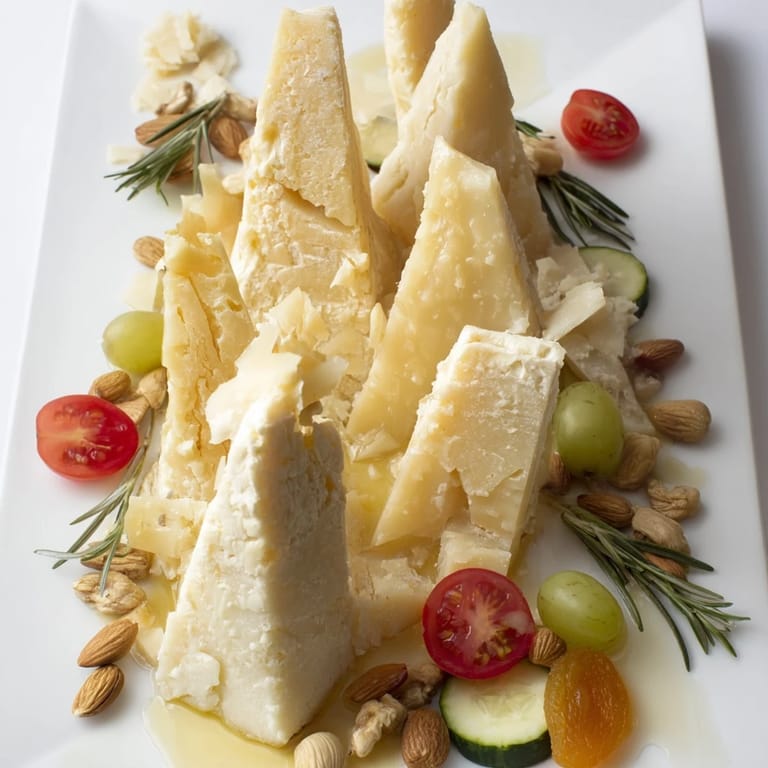
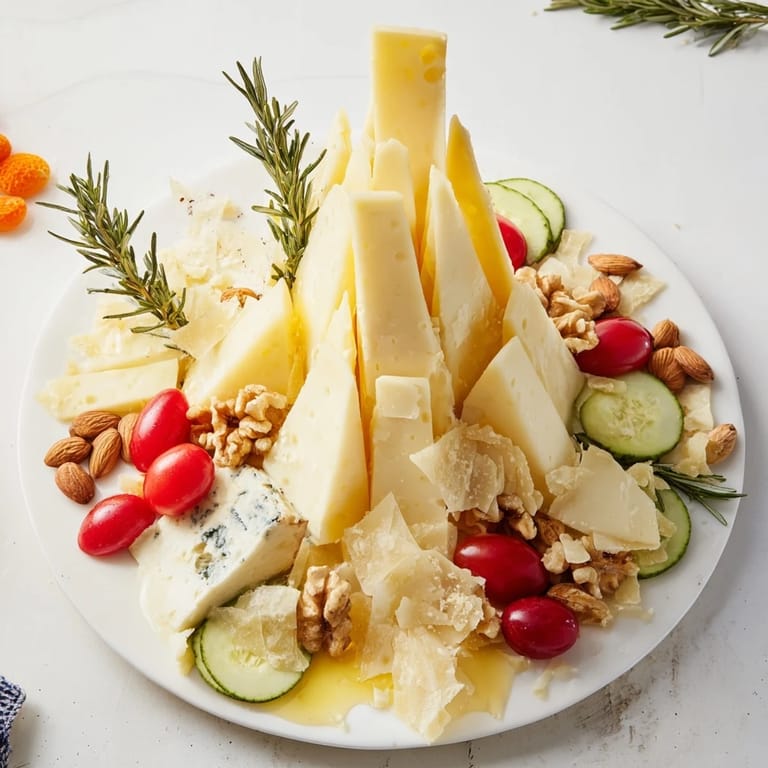
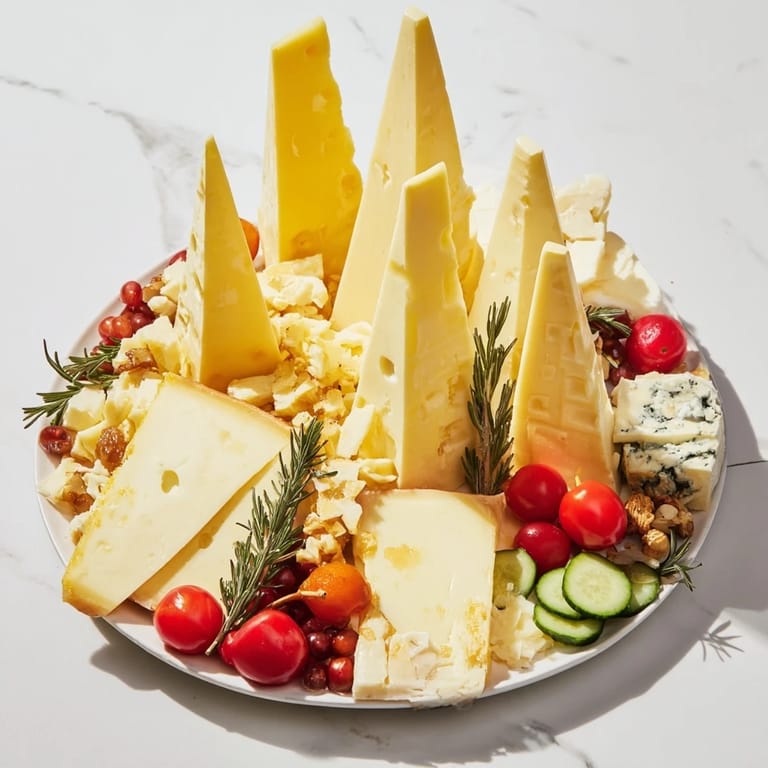
- Start with your largest wooden board or platter laid out in front of you. This is your landscape canvas. Now take those hard cheese chunks—the Manchego, Parmigiano-Reggiano, and aged Cheddar—and arrange them vertically at varying heights. Think of them as peaks on a mountain range. Some tall and dramatic, some slightly shorter. Let them lean against each other naturally; they don't need to be perfectly straight. This is where the magic happens—these irregular, standing wedges catch light and create actual shadows on your board. Step back and look. Adjust one piece here, another there. You're creating a topographical map of flavor.
- Create the Foothills with Soft Cheeses:
- Now around the base of these hard cheese mountains, nestle your softer companions. The Brie and Gorgonzola become gentle hills that fill the spaces. Cut the Brie into thick wedges so they maintain their shape and presence. Break the Gorgonzola naturally into rustic pieces—its blue veining becomes part of the visual story. These softer cheeses should look inviting, like they're cradling the harder peaks above them. Leave small gaps; you're not filling every inch with cheese.
- Fill the Valleys with Color:
- This step is where color enters your landscape. In the lower areas and valleys between your cheese formations, start clustering your fruits and vegetables. Scatter the halved grapes like little rubies. Tuck the cherry tomato halves nearby, their bright red creating warmth. Arrange cucumber rounds in neat little circles where you see space. Layer in those thinly sliced apple pieces—they should look fresh and pale against the deeper hues. Fill some gaps with dried apricots, their golden sweetness adding another note of color. You're not randomly placing; you're creating visual pockets of interest that guide the eye and invite exploration.
- Scatter Your Texture Boulders:
- Now for the almonds and walnuts. Rather than contained piles, scatter them across the board as if they've naturally accumulated in the landscape. Some rest against the cheese mountains, some sit in the fruit valleys, some perch on the edges. Their irregular shapes add visual complexity and promise textural variety. As you scatter, you'll notice the board starting to feel complete, three-dimensional.
- Create the Pathways:
- Arrange your baguette slices and crackers along the edges and across the board, creating obvious pathways for your guests. These aren't hidden; they're part of the design. I like to arrange them so they guide people naturally around the landscape, almost like trails inviting them to explore. They're the practical element that makes the whole creation actually functional.
- Add the Finishing Elements:
- This is the moment when everything comes together. Drizzle honey in small pools—over some of the harder cheeses, perhaps pooling near the Gorgonzola where it will glisten. Don't make it uniform; make it look like honey has collected naturally in certain places. Now tuck your rosemary sprigs throughout the landscape. Let them stand tall in some places, lay gracefully across others. They add height, fragrance, and that final element of natural beauty. Step back. Breathe. Your edible landscape is ready.
- Invite the Exploration:
- Serve immediately while everything is fresh and at perfect temperature. Encourage your guests to build their own combinations as they navigate the board. Hand them small cheese knives and small serving spoons for the honey. Tell them there's no wrong way to enjoy it—some will follow the pathways, others will climb the mountains. Watch how they interact with it. That's when you'll know this wasn't just about cheese; it was about creating an experience.
 Save to Pinterest
 At my friend's party, I watched a little child—probably six years old—navigate that board like she was actually exploring terrain, asking which 'mountain' tasted the sweetest, which 'valley' had the crunchiest path. Her grandmother stood beside her, smiling, selecting pieces to go with her wine. That's when this board stopped being a recipe and became a memory we'd all share.
Customizing Your Landscape
The beautiful part about this approach is its flexibility. Don't have Gorgonzola? Use a different blue cheese, or swap it for a semi-soft like Taleggio. Vegetarian cheeses work beautifully here—honestly, your guests probably won't notice the difference, and you've just made this accessible to more people. The Manchego, Parmigiano-Reggiano, and Cheddar form the backbone, but everything else is negotiable. In winter, I've used pomegranate seeds instead of grapes, added candied pecans, included dried figs. In summer, fresh stone fruits and berries transform the entire feel. The principle remains: tall dramatic elements, softer fills, colorful accents, textural variety. Your landscape is uniquely yours.
Pairing and Presentation
This board deserves beverage companions that respect its complexity. A crisp white wine—something like Sauvignon Blanc or Albariño—cuts through the richness beautifully. If you prefer red, go light and slightly chilled, like a young Pinot Noir. Even sparkling wine works wonderfully; the bubbles cleanse your palate between bites. The honey drizzle can handle a slightly sweet Riesling if that's your preference. I've learned that the landscape itself becomes part of your table setting, so choose your board with care. A wooden board with good grain, or even a slate platter, elevates the presentation. Make sure your guests have access to small plates, napkins, and cheese knives—presentation extends to making the experience smooth and enjoyable.
The Stories Your Board Tells
Cheese boards are stories in edible form. Each cheese represents regions and traditions—Manchego from La Mancha, Parmigiano-Reggiano from Emilia-Romagna, aged Cheddar from producers who understand that time transforms milk into something extraordinary. When you arrange them this way, standing tall and proud, you're honoring those traditions while creating something entirely new. I've started thinking about my boards as conversations between cultures, between flavors, between the people gathering around them. That perspective has changed how I build them.
- Arrange your board at eye level on a small table or stand during parties—it changes how people interact with it and makes the landscape feel even more like an actual place to explore.
- If you're making this ahead, keep uncovered components separate and assemble no more than 30 minutes before serving to maintain freshness and visual appeal.
- Consider your guests' dietary preferences when selecting cheeses and accompaniments; this flexibility is actually one of the board's greatest strengths.
 Save to Pinterest
 This board is proof that the most impressive food doesn't require cooking, just intention. It's about seeing ingredients as elements in a larger composition and trusting that when you create something beautiful, people will gather around it and create memories.
Questions & Answers
- → How can I create the mountain effect with hard cheeses?
Cut aged Manchego, Parmigiano-Reggiano, and Cheddar into tall chunks and shards. Arrange these vertically to mimic mountainous peaks.
- → What fruits work best to complement the cheese landscape?
Red grapes, cherry tomatoes, sliced cucumber, apple slices, and dried apricots add color and fresh contrast, filling the valleys and slopes naturally.
- → How do nuts enhance the overall presentation?
Roasted almonds and walnuts scattered around resemble boulders, adding both texture and visual interest to the board.
- → What's a simple way to add accents without overpowering flavors?
Drizzle honey lightly over select cheeses and tuck fresh rosemary sprigs to provide subtle sweetness and an herbal aroma.
- → Can this platter accommodate dietary preferences?
Yes, using vegetarian cheeses makes it suitable for vegetarians. Adding or omitting cured meats can adjust for other diets.