 Save to Pinterest
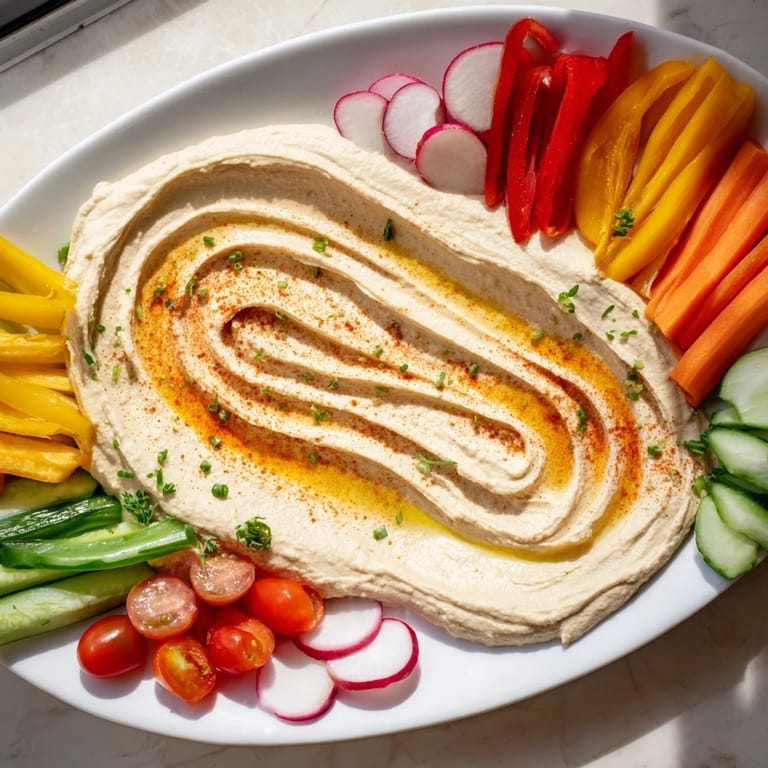
 I'll never forget the first time I saw a river delta from above—those intricate waterways branching and merging in endless patterns, nature's own masterpiece. Years later, while planning an appetizer spread for a dinner party, that image came flooding back. I wanted to create something that captured that same sense of wonder, something guests could admire before even taking a bite. That's when River Delta Flow was born—a vegetable platter that transforms a simple arrangement into edible art.
I remember my sister's face when she walked into my kitchen and saw the platter arranged for the first time. She gasped—actually gasped—and immediately grabbed her phone to take a photo. That's when I knew this wasn't just appetizer; it was an experience. Watching guests lean in closer, commenting on the arrangement before reaching for vegetables, made me realize that presentation and flavor can dance together beautifully.
Ingredients
- Hummus or Greek yogurt dip (1.5 cups): This becomes your river, the anchor of the entire platter. Hummus brings earthiness and richness, while Greek yogurt keeps things lighter and tangier. I've learned that the smoother and creamier you make this base, the more dramatic your river looks when you drizzle it down the center.
- Cherry tomatoes, halved (1 cup): Their jewel-like appearance catches light beautifully and adds natural sweetness. Halving them lets them nestle into your vegetable tributaries perfectly.
- Cucumber, sliced into sticks (1 cup): These pale green batons provide cooling contrast and a refreshing crunch that balances richer dips. They stay crisp for hours if you slice them just before serving.
- Colorful bell peppers, sliced into strips (1 cup): Red, yellow, and orange peppers are nature's confetti. Each color tells its own story in your delta, and the sweetness is undeniable.
- Carrots, peeled and cut into thin sticks (1 cup): Their natural sweetness and bright orange hue are essential for visual drama. Cutting them thin ensures they're tender enough to dip comfortably.
- Radishes, thinly sliced (0.5 cup): Don't skip these—their peppery bite and pink-and-white pattern add sophistication and unexpected flavor. They're what separates a good platter from a memorable one.
- Snap peas, trimmed (0.5 cup): These little green jewels provide delicate curves and a satisfying snap. Their natural sweetness reminds me why simple vegetables need no cooking.
- Fresh parsley, chopped (2 tablespoons): Scattered across the finished platter, this brings a final flourish of green and fresh herbaceous notes that tie everything together.
- Olive oil for drizzling (1 tablespoon): A thin golden stream across your dip adds richness and makes it glisten like water catching sunlight.
- Smoked paprika or zaatar (1 teaspoon, optional): This is where you add personality. The warm spice transforms the dip from simple to sophisticated without overwhelming the fresh vegetables.
Tired of Takeout? 🥡
Get 10 meals you can make faster than delivery arrives. Seriously.
One email. No spam. Unsubscribe anytime.
Instructions
- Create Your River:
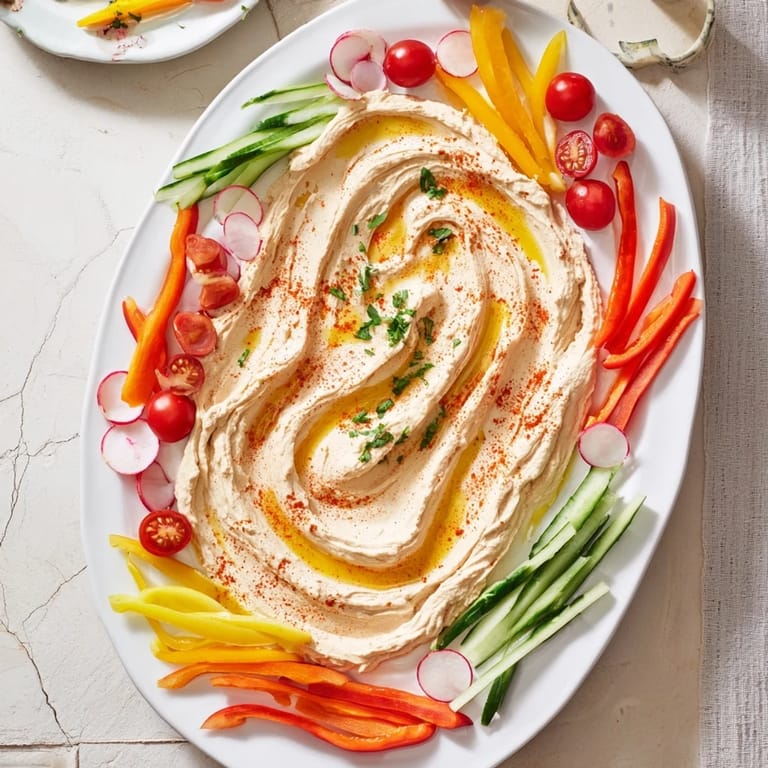
- Start with your largest, flattest platter—the bigger the canvas, the more dramatic your delta becomes. Spoon your hummus or yogurt dip down the center in a winding line, letting it curve and flow naturally like an actual river might. Use the back of a small spoon to shape and smooth it, making the edges organic rather than rigid. Don't worry about perfection; rivers aren't straight, and neither should yours be. As you work, you'll feel the dip respond to the spoon, becoming smoother and more inviting.
- Map Your Tributaries:
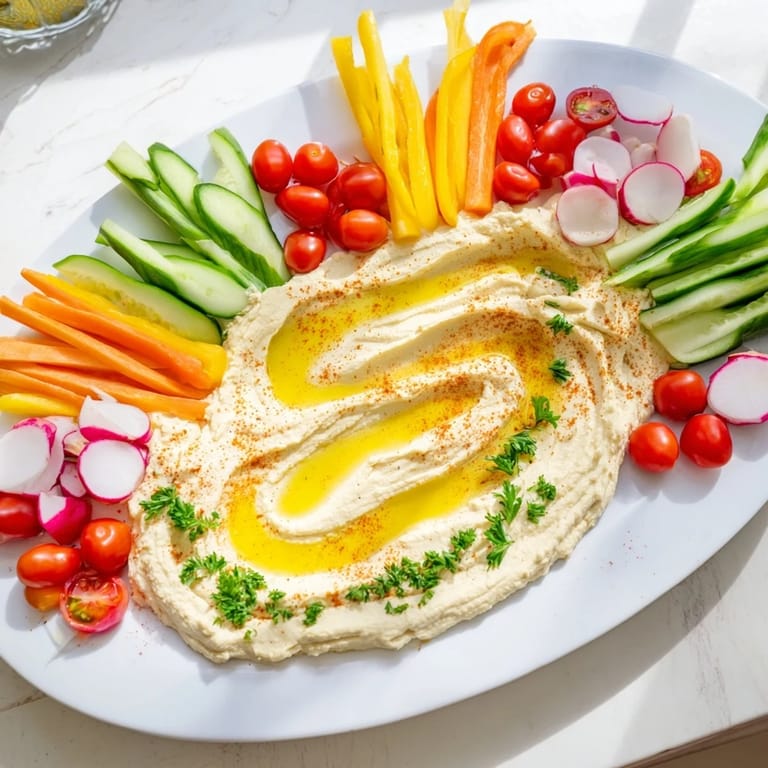
- Now comes the meditative part. Starting from the outer edges of the platter, arrange your vegetable sticks and slices in branching lines that flow toward your central river. Think of these as tributaries merging into the main waterway. Alternate your colors and shapes as you go—a few carrot sticks, then some bell pepper, then radish slices, creating natural rhythm and visual interest. Step back occasionally to see the overall pattern emerging. The beauty is in the variety and how each vegetable catches light differently.
- Add Your Golden Details:
- Drizzle that olive oil across the surface of your dip, watching it create small golden pools and streaks. The oil not only adds richness but also gives your river that luminous, reflective quality. If you're using smoked paprika or zaatar, sprinkle it now—just enough to add color and a hint of spice without overwhelming.
- Finish with Flourish:
- Scatter your chopped parsley across the platter, particularly around the vegetables and over the dip. This final green garnish adds life and movement to the entire arrangement, making it feel fresh and alive rather than static.
- Serve with Intent:
- Bring the platter to your table and watch people's faces. Serve immediately while everything is at its crispest, with extra vegetables or pita chips on the side for those who want more vehicles for dipping. The beauty of this presentation is that it invites people to participate—to break the arrangement as they eat, making it interactive and engaging.
 Save to Pinterest
 Last summer, I brought this platter to a potluck where I didn't know many people. Within minutes, it became the gathering point. Strangers leaned in together, admiring the arrangement before dipping, and something magical happened—that platter became permission to slow down, to really look at and appreciate food before eating it. It reminded me that cooking isn't just about nourishment; it's about creating moments of beauty that bring people together.
Making This Your Own
The magic of River Delta Flow is that it's endlessly customizable while remaining true to its original concept. I've learned through experimentation that you can swap dips without changing the soul of the dish. Try beet hummus for a deep magenta river, baba ghanoush for a smoky brown waterway, or tzatziki for a cool white current. Each dip tells a different story and pairs beautifully with different vegetable combinations. Once you understand the core concept—a central dip anchoring radiating vegetables—you're free to paint with whatever's in your market.
The Art of the Arrangement
What surprised me most about this recipe was discovering that the arrangement itself is a form of meditation. There's no rushing through it—you're arranging, stepping back, adjusting, observing. I started thinking of it like creating a still life painting, where color theory and composition matter. The key is alternating not just colors but shapes and textures. A row of carrot sticks feels different visually and texturally than a line of bell pepper strips, and when you alternate them, you create rhythm. The platter becomes something people want to photograph, to admire, to remember.
Timing and Storage Wisdom
Because there's no cooking involved, River Delta Flow is a gift for the host who's already managing a dozen other dishes. Assemble it up to 4 hours before serving, then cover loosely with plastic wrap and refrigerate. The vegetables stay crisp, the dip stays cool and fresh, and you've removed a major stress from your party timeline. I've learned that keeping the platter cool actually helps vegetables stay firm longer and makes the dip more inviting. When you're ready to serve, simply bring it out, drizzle with olive oil, add your garnish, and let people know they're looking at edible art.
- Prepare all vegetables 2-3 hours ahead and store them separately in sealed containers to maintain crispness
- Assemble the final platter no more than 4 hours before serving for the best visual impact and texture
- Keep the finished platter refrigerated until serving time, then bring to the table just as guests are arriving
 Save to Pinterest
 Every time I make River Delta Flow, I'm reminded that food can be art, sustenance, and conversation starter all at once. It's taught me that sometimes the simplest preparations create the most memorable moments.
Questions & Answers
- → What dips work best for the central river?
Hummus and Greek yogurt dip are ideal, but beet hummus, baba ghanoush, or tzatziki can add unique flavors and vibrant colors.
- → How can I enhance the presentation?
Alternate colors and shapes of vegetables and add edible flowers or microgreens for extra visual appeal.
- → Can this be prepared ahead of time?
For best freshness, assemble shortly before serving, though dips and vegetable prep can be done in advance.
- → Are there common allergens to consider?
Traditional hummus contains sesame and yogurt dip has dairy. Pita chips often contain wheat, so check ingredients carefully.
- → What tools are recommended for assembling?
A large serving platter, chef’s knife, vegetable peeler, and a small spoon for shaping the dip help create the desired presentation.