 Save to Pinterest
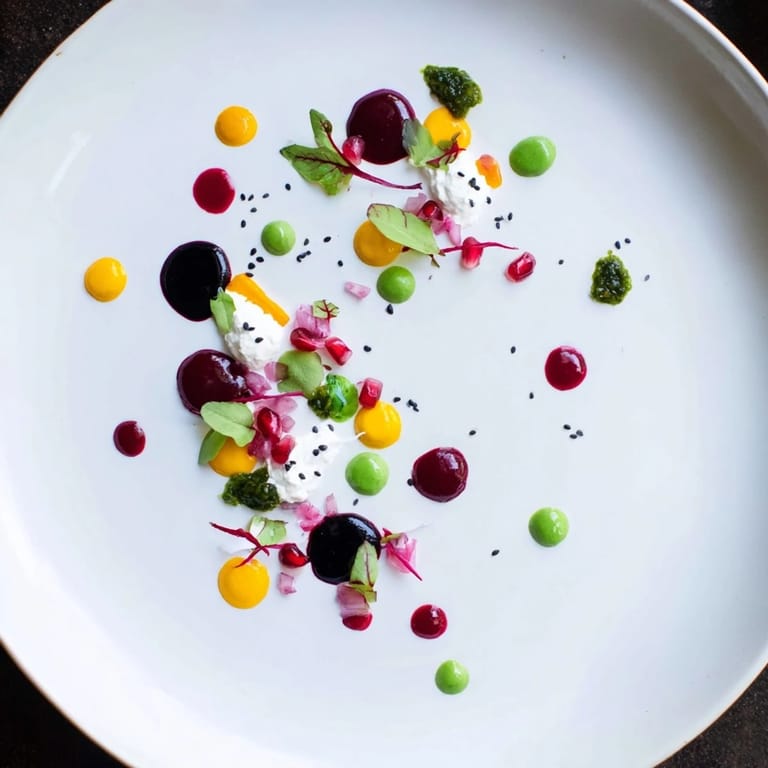
 I first encountered The Pointillism Dot Matrix at a small art gallery's culinary event, where a chef was creating edible paintings on white plates. Watching her carefully pipe tiny dots of vibrant vegetable purees reminded me of sitting in a museum, studying Seurat's work and how individual dots of color merged into something beautiful from a distance. That evening, I realized that food could be art in the most literal sense, and I've been obsessed with recreating that magic ever since. This dish transformed the way I think about plating—it's not just about taste anymore, it's about the conversation between colors, textures, and the joy of discovery with every bite.
I made this for my sister's birthday dinner, and I'll never forget the moment she sat down at the table. Her face lit up before she even tasted anything—she said it looked like edible confetti, like someone had thrown a party right onto her plate. We ended up spending an extra thirty minutes just talking about flavors and laughing at how differently each of us experienced the dish depending on where we took our bites.
Ingredients
- Beetroot puree (80 g): Deep crimson and earthy, this is your anchor color and richest flavor. The sweetness pairs beautifully with acidic elements, so don't skip this one
- Carrot puree (80 g): Bright orange and naturally sweet, it brings warmth and a gentle sweetness that balances the green
- Green pea puree (80 g): This one surprised me—it's fresher and more vegetal than you'd expect, adding a living quality to the plate
- Yellow bell pepper puree (80 g): Light and almost delicate in flavor, it adds visual brightness without overwhelming
- Greek yogurt (60 g): Your creamy white canvas. Use full-fat for the richest texture; it holds its shape better when piped
- Crème fraîche (40 g): Tangier and silkier than yogurt, this adds a subtle richness that elevates the entire composition
- Basil pesto (1 tbsp): A verdant green accent that should smell intensely aromatic—it's not just flavor, it's a fragrance on the plate
- Red pepper coulis (1 tbsp): This silky, slightly sweet sauce provides depth and a beautiful gradient against the other reds
- Balsamic reduction (1 tbsp): Dark, glossy, and concentrated—use this sparingly as it's intense and becomes a visual anchor point
- Pickled red onions (20 g, finely diced): Their sharp bite cuts through richness and adds a textural crunch that surprised me the first time
- Microgreens: These aren't just garnish; they add a peppery freshness and visual delicacy that grounds the composition
- Toasted black sesame seeds (1 tbsp): Nutty and rich, these small dark dots echo the pointillist technique itself
- Pomegranate seeds: Jewel-like bursts of tart sweetness that add both visual pop and textural contrast
- Edible flower petals: If you can find them, they transform this from beautiful to unforgettable—nasturtiums and pansies work wonderfully
- Sea salt flakes and freshly ground black pepper: These finish the composition with a final adjustment of flavor and a reminder that even art needs seasoning
Tired of Takeout? 🥡
Get 10 meals you can make faster than delivery arrives. Seriously.
One email. No spam. Unsubscribe anytime.
Instructions
- Prepare Your Canvas of Flavors:
- Blend each vegetable separately with a pinch of salt and just a few drops of olive oil until completely smooth. This is where patience pays off—any chunks will disrupt the visual flow. As you blend, think about the colors deepening. Transfer each puree to its own piping bag or squeeze bottle. I like to stand them up in a row so I can see the full spectrum of what I'm working with.
- Compose Your Creams and Sauces:
- Place the yogurt and crème fraîche in separate piping bags—these white elements will be your breathing room on the plate. The pesto, coulis, and balsamic go into squeeze bottles where you can control the flow more precisely. Test each one on a spare plate first; you want to know exactly how much pressure creates the dots you envision.
- Create the Pointillist Foundation:
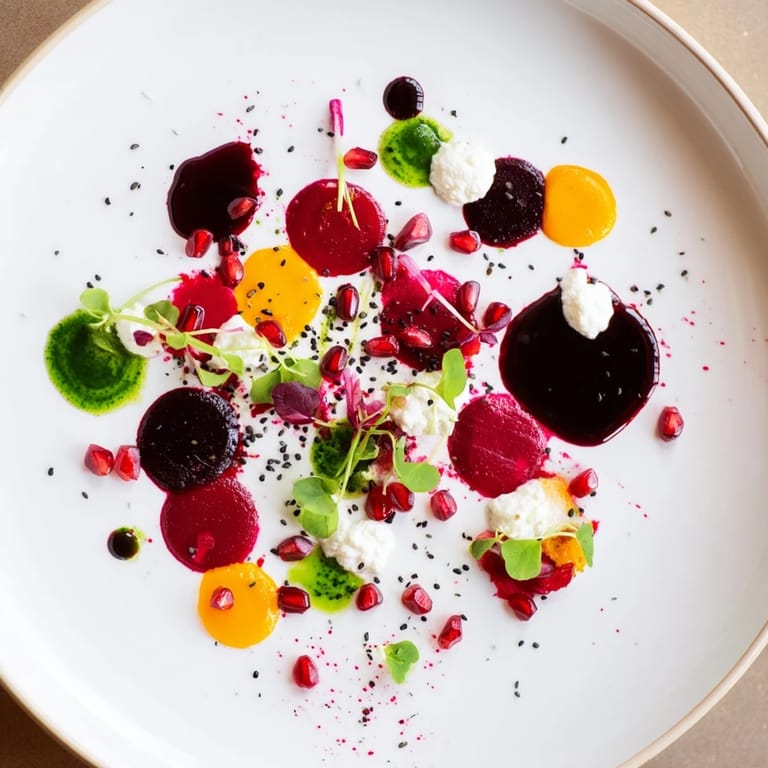
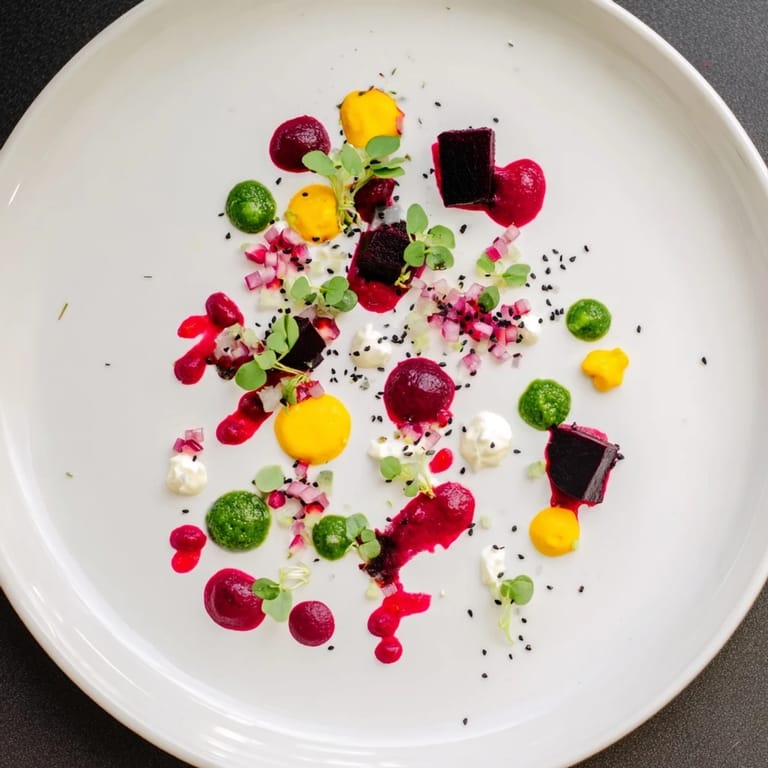
- This is the moment where you become the artist. Start with your white elements—small, confident dots of yogurt and crème fraîche scattered across the plate in a non-touching pattern. Step back. Look. Now add your vegetable purees, varying the sizes slightly so some dots are the size of a pea and others are a small mound. Think of Seurat—dots placed with intention, creating an optical experience rather than visual chaos. The key is white space; your plate should never feel crowded.
- Layer the Accents and Textures:
- Now sprinkle the pickled red onions with precision, using a small spoon or even tweezers if you're feeling fancy. Add the microgreens next, positioning them to echo the colors beneath. The sesame seeds add tiny black punctuation marks, while pomegranate seeds become ruby jewels. If using edible flowers, place them last—they're delicate and they're the final signature on your edible artwork.
- Season and Serve:
- A light scatter of sea salt flakes and a few grinds of black pepper finish the piece. Serve immediately—this dish is about the visual experience as much as the taste, and every minute counts before the colors start to blur together.
 Save to Pinterest
 I served this to a food critic friend who said it was the first time she'd eaten with her eyes first and her mouth second, and somehow that made the dish taste even better. That's when I understood—this isn't just a recipe, it's permission to play with your food, to make something that looks impossible, and to discover that the best meals are the ones that make you pause before you eat.
The Art of Vegetable Purees
Making smooth, vibrant purees is the foundation of this entire dish, and it's easier than you might think. The secret is using cooked vegetables—raw versions often have too much water and won't achieve that silky texture. I learned to cook each vegetable just until tender, then puree immediately while still warm, as the heat helps break down the fibers more effectively. Add your salt while pureeing because it seasons throughout rather than just sitting on the surface. The few drops of olive oil aren't optional; they add a subtle richness and help achieve that glossy finish that catches the light on the plate. If your puree is too thick, add water one teaspoon at a time, not cream—we want pure vegetable flavor.
Mastering the Piping Technique
The magic of this dish lives in the precision of piping, and it's a skill that improves with practice. Hold your piping bag at a forty-five-degree angle and apply gentle, consistent pressure—aggressive squeezing creates irregular blobs instead of intentional dots. For dots, use a quick pulse of pressure; for mounds, hold slightly longer. I discovered that practicing on parchment paper for five minutes before plating saved me from countless mistakes on the actual plates. Different piping tips create different effects; a round tip gives you clean dots, while a star tip adds texture. The key is being deliberate—each dot should feel placed with purpose, like you're composing a melody rather than randomly hitting notes.
Plating Philosophy and Color Theory
Understanding how colors interact transformed my approach to this dish. Complementary colors—like the deep red of beetroot against the bright green of peas—create visual excitement and make each color appear more vivid. The white of the yogurt and crème fraîche act as rest points for the eye, preventing visual fatigue. I learned that asymmetrical arrangements feel more natural and intentional than geometric patterns, so avoid rigid lines or perfect circles. The scattered, organic feel is what makes this feel like art rather than decoration. Think about the journey your eye takes across the plate and arrange your dots to guide that movement.
- Balance warm colors (beetroot, carrot, pepper) with cool colors (peas, herbs) for visual harmony
- Use white space strategically—it's not empty space, it's part of the composition
- The balsamic reduction should appear sparingly, like punctuation rather than prose
 Save to Pinterest
 This dish taught me that cooking isn't always about feeding people—sometimes it's about creating an experience, a moment of beauty that lingers long after the plate is cleared. Serve it with confidence and watch your guests discover that every bite is a conversation between color, flavor, and texture.
Questions & Answers
- → What vegetables are used for the purees?
Beetroot, carrot, green peas, and roasted yellow bell pepper are pureed separately for vibrant colors and fresh flavors.
- → How is the dot pattern created on the plate?
Purees and sauces are piped or squeezed onto plates in scattered dots and mounds, varying sizes and colors to mimic Pointillism art.
- → Can this dish be adapted for vegan diets?
Yes, by substituting dairy components with plant-based yogurt and omitting crème fraîche, it becomes vegan-friendly.
- → What garnishes enhance the dish’s texture and appearance?
Pickled red onions, microgreens, toasted black sesame seeds, pomegranate seeds, and edible flower petals add texture and vibrant accents.
- → What tools are helpful for plating this dish?
Blenders, piping bags or squeeze bottles, and optional tweezers or small spatulas help achieve precise dot placement and clean presentation.