 Save to Pinterest
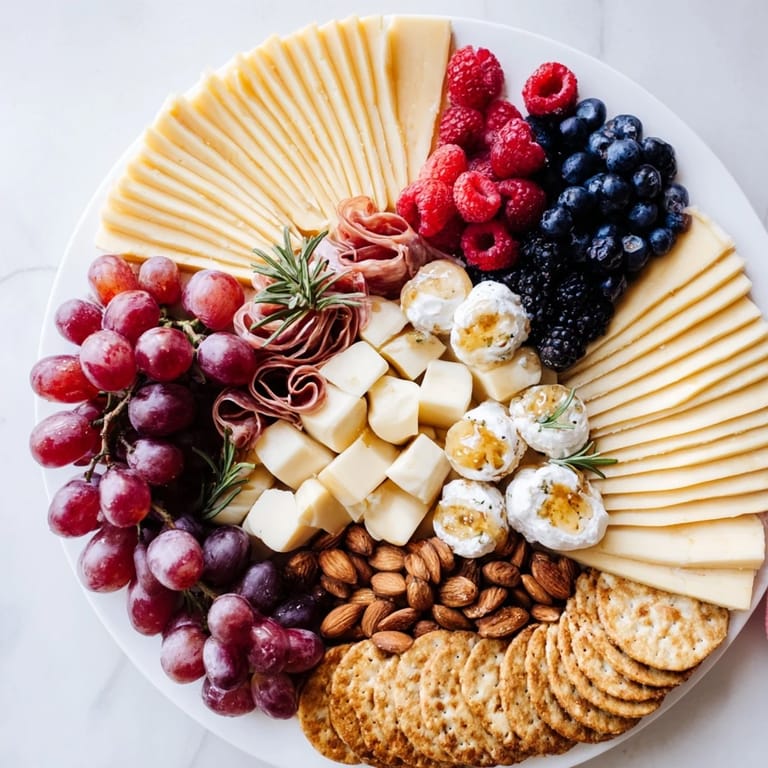
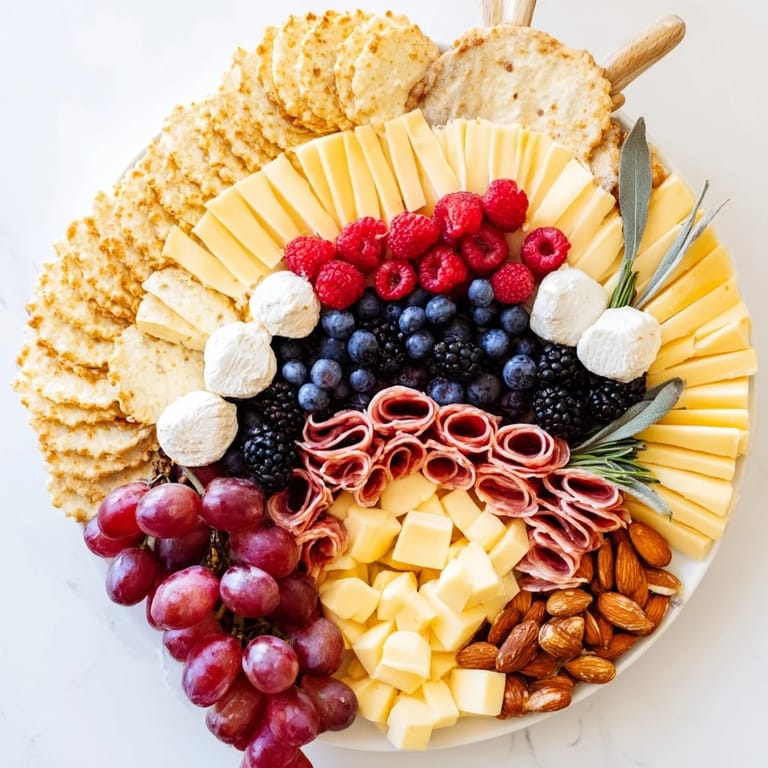
 I'll never forget the dinner party where a friend brought this stunning circular platter—it was so visually captivating that no one wanted to be the first to break the ring. Watching everyone gather around, hesitating just long enough to admire the artful arrangement before diving in, I realized I'd discovered something magical. That evening, I learned that food isn't just about taste; it's about the moment of wonder before the first bite. Now, whenever I create The Ouroboros Circle, I'm recreating that same sense of anticipation and beauty that transforms a simple appetizer into theater.
The first time I made this for my sister's book club, I watched her face light up when she walked into the kitchen and saw it waiting on the board. She called everyone in before they even sat down, and suddenly the appetizer became the main event. That's when I understood the power of this dish—it's not just food, it's a conversation starter and a moment of connection.
Ingredients
- Brie, sliced (100 g): The creamy, buttery foundation that melts slightly under the warmth of the platter, making it irresistible against the crackers. Slice it just before assembly so it stays fresh and glistening.
- Aged cheddar, cubed (100 g): Sharp and dependable, these golden cubes add visual contrast and a satisfying bite that keeps things interesting around the circle.
- Goat cheese, rolled into small balls (80 g): The elegant showstopper that deserves its honey and rosemary crown. Rolling them by hand feels luxurious and ensures they stay picture-perfect.
- Prosciutto, thinly sliced (80 g): Drape it loosely between sections so it catches light and adds that sophisticated salt note everyone craves.
- Salami, folded (80 g): Keep these folded rather than flat—it gives them dimension and makes the platter feel more abundant.
- Artisanal crackers, fanned (1 handful): These form the dramatic head of your Ouroboros. Choose ones sturdy enough to hold cheese but refined enough to feel intentional.
- Small baguette slices (6): The delicate bridges that curve around your ring, connecting flavors and filling awkward gaps with elegance.
- Red grapes, in small clusters (1 cup): Your tail, arranged at the opposite point from the crackers, creating that complete serpentine circle that defines the whole concept.
- Mixed berries (1 cup): Blueberries, raspberries, and blackberries fill the spaces between cheeses with color and provide refreshing, palate-cleansing moments between bites.
- Sliced fig (optional): If you can find fresh figs, their jewel-like beauty and subtle sweetness elevate the entire arrangement.
- Roasted almonds (1/3 cup): These earthy anchors ground the sweetness of the berries and honey, adding crunch and texture.
- Marcona almonds (1/3 cup): Slightly buttery and delicate compared to their roasted cousins, these feel more luxurious scattered throughout.
- Honey (2 tbsp): The golden finishing touch that catches light and creates a visual beacon pointing to your most elegant components.
- Fresh rosemary sprigs (1 tbsp): More than garnish, these aromatic needles signal to your guests that thought and intention went into every detail.
Tired of Takeout? 🥡
Get 10 meals you can make faster than delivery arrives. Seriously.
One email. No spam. Unsubscribe anytime.
Instructions
- Choose your stage:
- Select a large, round platter or wooden board that feels substantial—this piece of dishware is part of the presentation. The scale matters; you want enough room for the circle to breathe without looking sparse or overcrowded.
- Begin with the head:
- At one point on your platter, fan out the artisanal crackers like a peacock's tail opening. Arrange them so they lean slightly outward, creating a dramatic focal point that says 'this is where the story begins.' This is your anchor, your cracker crown.
- Build the body:
- Moving clockwise around the circle, alternate sections of cheese and meat. Place the brie slices to catch light, then the aged cheddar cubes in their own zone, then folded salami draped with intention. This isn't random; you're creating rhythm and visual variety as the eye travels.
- Weave in the bread:
- Tuck the small baguette slices into the curves of your ring, letting them follow the circular path like stepping stones. They should seem to curve naturally with the board's shape, not fight it.
- Crown with clusters:
- Opposite the cracker head, place your grape clusters to form the tail. These should be substantial enough to feel like a true counterbalance, a visual anchor point that closes the circle. You're creating a serpent that swallows its own tail.
- Fill the negative space:
- Now comes the intuitive part. Scatter the mixed berries into the gaps, letting blueberries nestle next to almonds, raspberries finding their place near the brie. Tuck fig slices where they'll create pockets of deep purple-red. This is where the arrangement transforms from assembled to curated.
- Crown the goat cheese:
- Place those delicate goat cheese balls in prominent positions around the circle—typically a few should be visible from above. Now drizzle the honey over them, letting it pool slightly and glisten under the light. Finish with a whisper of fresh rosemary on top, pressing gently so it adheres.
- Complete the circle:
- Step back and examine your creation. The crackers at top, the grapes at bottom—or wherever your head and tail meet. Ensure the ring is continuous, with no awkward gaps that break the serpentine flow. Adjust a berry here, a nut there, until it feels complete and alive.
- Present with reverence:
- Carry this to your gathering with care. Set it down and let a moment of silence fall as people absorb what they're seeing. Then invite them to enjoy, to break the circle, to be the ones who complete the ritual by savoring each component.
 Save to Pinterest
 There was a moment at a gallery opening where someone asked if I'd made this dish as an art installation rather than just food. I laughed, but something clicked—this recipe is exactly that, a small sculpture you can eat, a temporary artwork that exists in that perfect space between nourishment and beauty. That's the magic I chase every time I make it.
The Art of Composition
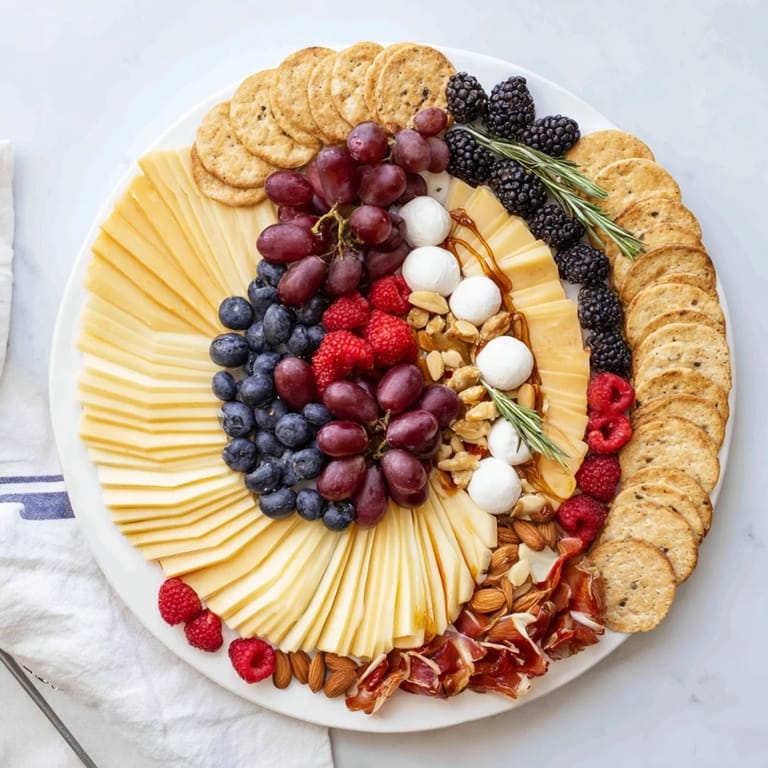
Creating The Ouroboros Circle taught me that plating and presentation are languages of their own. When you arrange food with intention, you're telling your guests that they matter, that the experience you're creating for them is worth more than convenience. Think of your platter as a canvas, and each ingredient as a brushstroke. The colors should dance together—jewel-toned berries against pale cheese, golden nuts catching the light, ruby-red grapes and salami creating warmth. This isn't fussy; it's communicative. Every choice says something.
Scaling and Seasonal Variations
The Ouroboros Circle is beautifully flexible, which is why it's become my go-to for gatherings of any size. Need to feed twelve people instead of six? Use a larger platter and double the quantities, maintaining the same proportional balance around the ring. As seasons change, I adapt—summer brings fresh berries and figs, fall introduces sliced pears and dried apricots, winter allows for pomegranate arils and candied nuts. The structure stays the same; the story of the seasons simply changes which ingredients you feature. This adaptability means you can make this dish again and again without it ever feeling repetitive.
Pairing and Serving Suggestions
I learned early on that wine matters with this dish. A crisp Sauvignon Blanc plays beautifully against the salty meats and rich cheese, while a sparkling rosé adds elegance to the visual presentation. For non-alcoholic options, a sparkling elderflower or a bright apple cider complements the fresh fruits wonderfully. If you're feeding vegetarians, simply omit the prosciutto and salami without apologizing—the cheese and nuts provide all the richness anyone needs. And here's a secret I discovered: edible flowers, when scattered sparingly, elevate the entire composition to something almost ethereal.
- Serve at room temperature, about thirty minutes after assembly, when everything reaches peak flavor and visual appeal.
- Have small plates and forks nearby—this is an appetizer meant for standing and mingling, so people need something to hold their selections.
- Consider placing a small bowl of extra honey near the platter, in case guests want more of that golden luxury drizzled on their crackers and cheese.
 Save to Pinterest
 Every time I make The Ouroboros Circle, I'm reminded that cooking is as much about creating moments as it is about creating flavors. This simple appetizer has become the beginning of countless conversations and connections. I hope it becomes the same for you.
Questions & Answers
- → What cheeses work best for this platter?
Soft cheeses like brie and goat cheese, combined with aged cheddar, provide a balance of creamy and sharp flavors that complement the fruit and nuts.
- → Can the platter be made vegan?
Yes, substitute plant-based cheeses and omit meats. Focus on fresh fruits, nuts, and artisanal crackers for texture and flavor.
- → How should I arrange the crackers for the 'head'?
Fan artisanal crackers tightly at one point on the platter to create a visually distinctive head that flows into the rest of the circle.
- → Are there pairing suggestions for drinks?
This platter pairs beautifully with crisp white wines like Sauvignon Blanc or light, refreshing sparkling rosé.
- → Can I add other ingredients for variety?
Yes, seasonal fruits, edible flowers, or different nuts can be included to enhance color, texture, and taste.