 Save to Pinterest
 I discovered this dish by accident while reorganizing my kitchen and noticing how a mandoline had slipped behind the counter—suddenly I was thinking about all those vegetables I'd been meaning to use, and what if I arranged them not in neat rows but in a way that suggested movement? The idea of a kinetic blur, where density becomes sparsity, felt like capturing motion on a plate. It was the kind of playful experiment that usually ends up messy, but this one actually worked, and now I make it whenever I want to remind myself that cooking can be as much about composition as about flavor.
I made this for my sister's dinner party last spring when she mentioned she was tired of predictable salads, and watching everyone lean in to look at the plate before tasting it—that pause, that moment of appreciation—reminded me why I love cooking. One guest asked if it was too beautiful to eat, and someone else immediately said no, absolutely not, and dug in, which felt like the highest compliment.
Ingredients
- Golden beet: It adds sweetness and a buttery color that catches the light beautifully; I learned to slice mine paper-thin with a mandoline because thicker slices can taste a bit earthy.
- Red beet: The jewel tone here, deep and dramatic; raw beets have a mineral sweetness that cooked ones lose, so resist the urge to cook them.
- Watermelon radish: If you can find it, the pale flesh with hot pink rings is where the real visual magic happens; if not, a regular radish works but tastes spicier and needs a lighter hand.
- Persian cucumber: Thinner-skinned and less watery than English cucumbers, which means the slices stay delicate and absorb the dressing without getting soggy.
- Baby carrots: The bias cut catches light differently than straight slices and makes them look more intentional; I slice them thin enough that they're almost translucent at the edges.
- Goat cheese: It needs to be at room temperature so it's soft enough to dollop naturally, not stiff; I learned this the hard way by trying to use cold cheese and ending up with little lumps instead of creamy clouds.
- Toasted hazelnuts: The toasting brings out a deeper flavor that raw nuts can't touch, and the rough chop means some bits are almost powder-fine while others have texture.
- Black sesame seeds: They add an earthiness that feels almost umami-like, completely different from regular sesame; they're also tiny enough that they fill the visual gaps without overwhelming.
- Microgreens: They're delicate and peppery, the kind of thing that wilts if you breathe on it, so add them last and serve immediately.
- Fresh dill: Just the fronds, not the stems; they're soft and feathery and taste like spring.
- Extra virgin olive oil: This is where you splurge a little because it's doing most of the flavor work; cheap oil tastes thin and flat against these delicate vegetables.
- Lemon juice and honey: The brightness of lemon against the earthiness of the vegetables, with honey adding just enough sweetness to make everything taste more like itself.
Tired of Takeout? 🥡
Get 10 meals you can make faster than delivery arrives. Seriously.
One email. No spam. Unsubscribe anytime.
Instructions
- Make your dressing first:
- Whisk together the olive oil, lemon juice, honey, salt, and pepper in a small bowl, tasting as you go; I usually need more lemon than I think and less salt than my instinct tells me.
- Arrange the vegetables with intention:
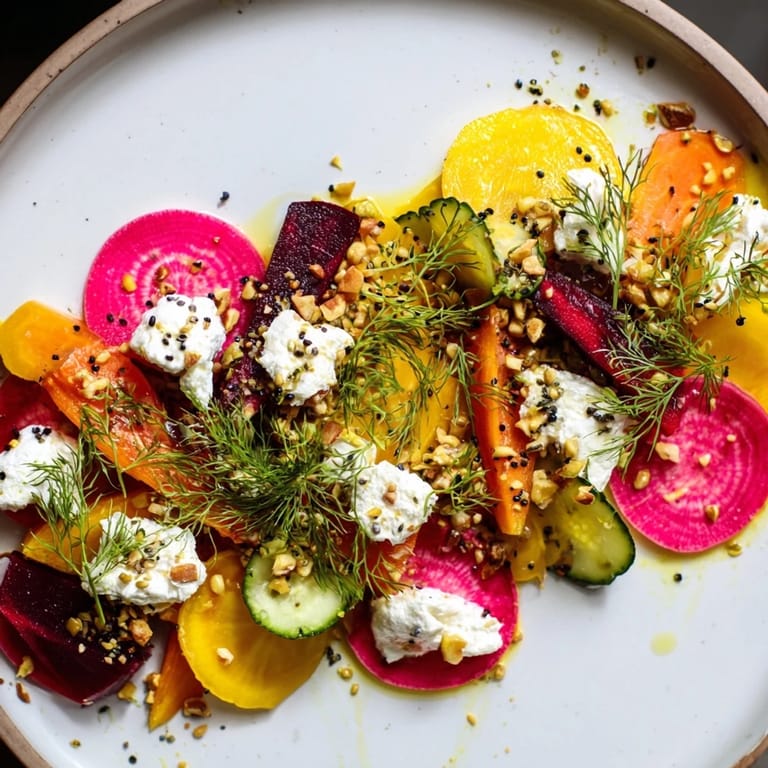
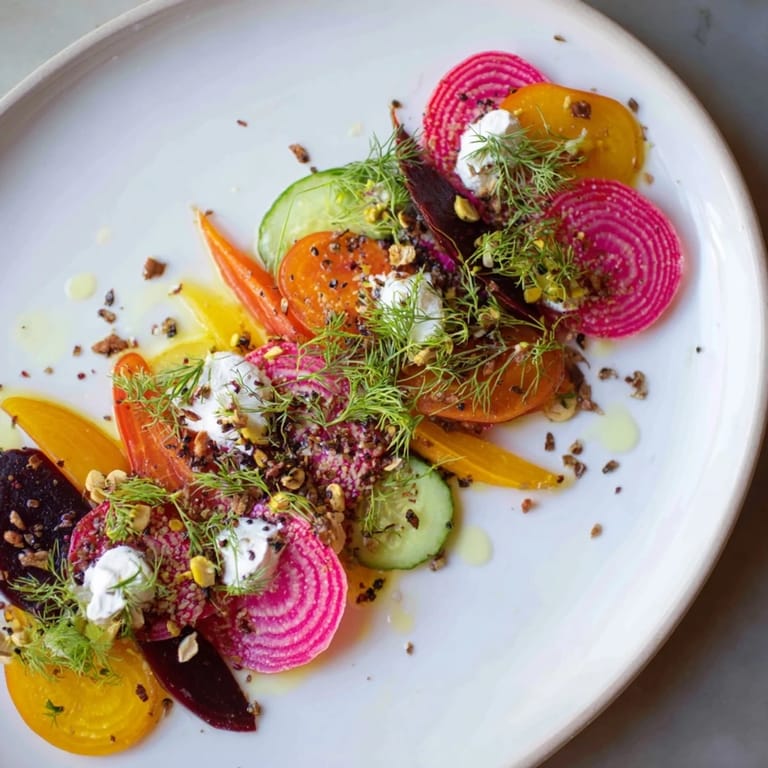
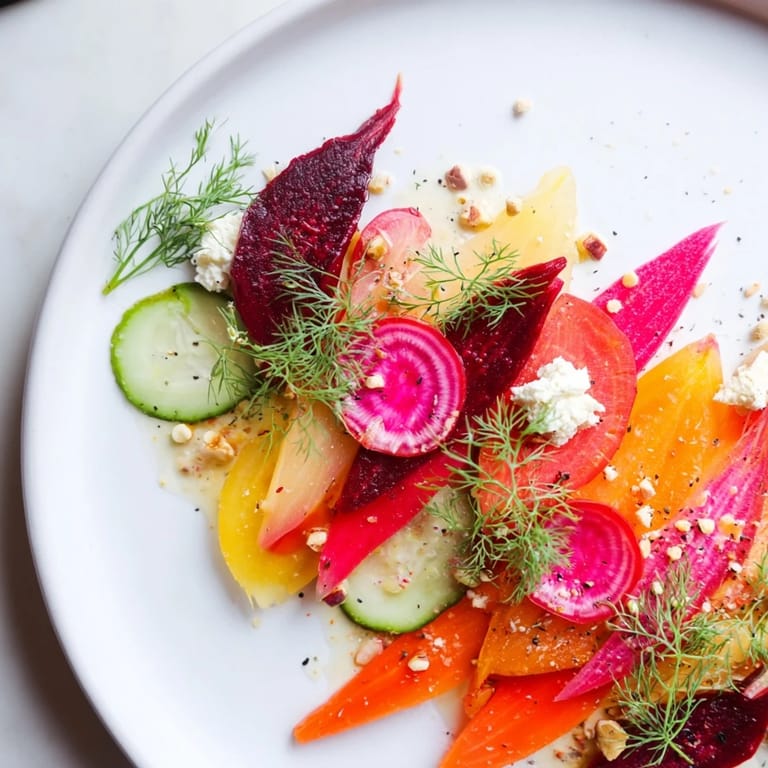
- Start on one side of your platter with the slices overlapping tightly, almost shingled like roof tiles, then gradually spread them out toward the opposite edge so they become more scattered and sparse. Think of it like someone ran through the vegetables with a wind machine.
- Dot in the goat cheese:
- Place small spoonfuls among the densest cluster where the vegetables are overlapping, then use fewer dollops as you move toward the sparse side; the cheese catches the eye and anchors the composition.
- Add hazelnuts and sesame seeds:
- Sprinkle these more heavily on the dense side where there's more surface area, then let them trail off toward the edges like they're being blown away; some will nestle between vegetables and others will sit on top.
- Scatter microgreens and dill:
- This is the last moment before serving, so don't do this step until you're ready to eat; concentrate them on the dense side and let just a few fronds drift toward the sparse area.
- Drizzle the dressing:
- Pour it across the whole platter but use a lighter hand on the sparse side so those delicate vegetables don't get overwhelmed; some dressing pooling in the negative space actually enhances the motion effect.
- Serve immediately:
- Those microgreens will start to wilt within minutes, and the vegetables taste best when they're still cool and crisp from the cutting board.
 Save to Pinterest
 The first time I served this, I was nervous that it was all style and no substance, but then I watched people eat it and realize the flavors were just as thoughtful as the presentation. It became the kind of dish I reach for when I want to cook something that feels special without any of the heaviness.
Why This Arrangement Actually Matters
The kinetic blur isn't just pretty—it changes how you eat the dish. When vegetables are densely packed, you get multiple flavors and textures in each bite, almost like a composed salad. As you move toward the sparse side, the bites become more minimal and delicate, each flavor more distinct. Your palate resets as you move across the plate, and that sense of motion is what makes it feel less like an appetizer and more like an experience.
Choosing and Prepping Your Vegetables
I spend more time selecting vegetables for this dish than I do cooking them. I want beets that are small and tender, a watermelon radish that's crisp all the way through, and a cucumber that hasn't started to soften. The age of a vegetable is everything here because they're raw and the texture has nowhere to hide. When I bring them home, I trim them the day I'm planning to serve and keep them wrapped in damp paper towels in the coldest part of my refrigerator so they stay firm and vibrant.
Building Flavor Through Texture and Balance
The hazelnuts bring a nutty warmth, the sesame seeds add an almost savory depth, and the microgreens provide a peppery snap that wakes everything up. The goat cheese is creamy and slightly tangy, a counterpoint to the sweet earthiness of the vegetables. It's a dish where every element earns its place, and nothing is there for decoration alone. The dressing ties it all together with brightness, but never drowns the vegetables or turns the plate into a sad puddle—that's the real secret, knowing exactly how much liquid this composition can take.
- Taste your dressing before drizzling to make sure the lemon and honey are balanced the way you like them.
- If you're worried about wilting, you can arrange everything except the microgreens and dill an hour ahead, then add those at the last second.
- This dish is best served at room temperature, not cold from the refrigerator, so take it out a few minutes before you plan to eat.
 Save to Pinterest
 This is the kind of dish that reminds me why I love cooking for people—it's beautiful, it's fresh, and it tastes like intention. Serve it with something crisp to drink and watch your guests remember why they came to dinner.
Questions & Answers
- → What vegetables are used in this dish?
Thinly sliced golden beet, red beet, watermelon radish, Persian cucumber, and baby carrots form the base layers.
- → How is the dressing prepared?
A simple mixture of extra virgin olive oil, fresh lemon juice, honey, salt, and freshly ground black pepper is whisked together to enhance the flavors.
- → Can the cheese be substituted for a vegan option?
Yes, plant-based cheese can be used in place of goat cheese to accommodate vegan preferences.
- → What nuts and seeds are included?
Toasted hazelnuts and black sesame seeds provide added crunch and nutty notes to the dish.
- → How is the visual motion blur effect achieved?
By layering ingredients densely on one side and gradually spacing them towards the opposite edge, the dish creates a dynamic fading effect that resembles motion blur.
- → What herbs complement the flavors?
Fresh dill fronds and microgreens, such as arugula or radish greens, add bright, fresh herbal notes.