 Save to Pinterest
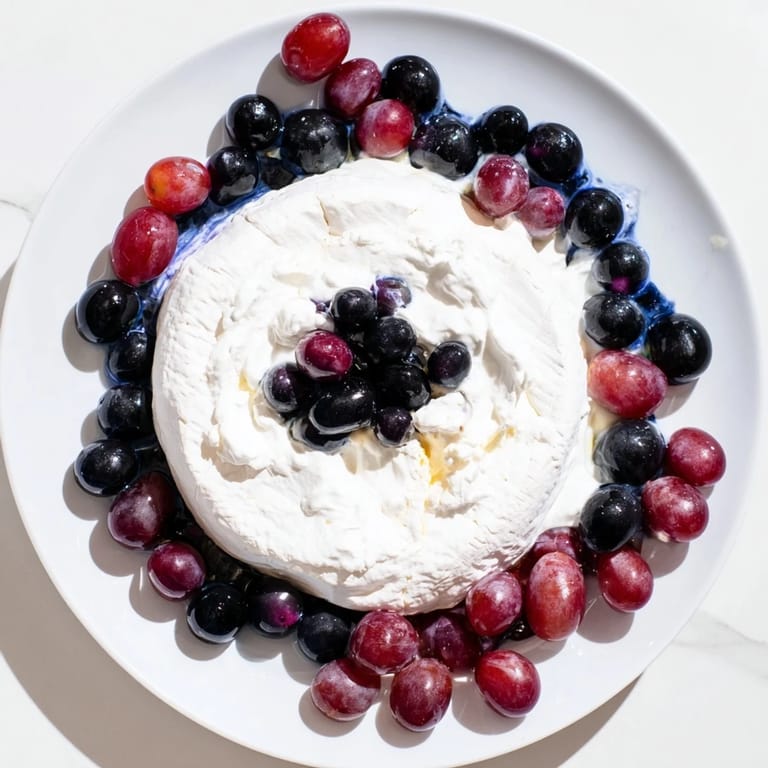
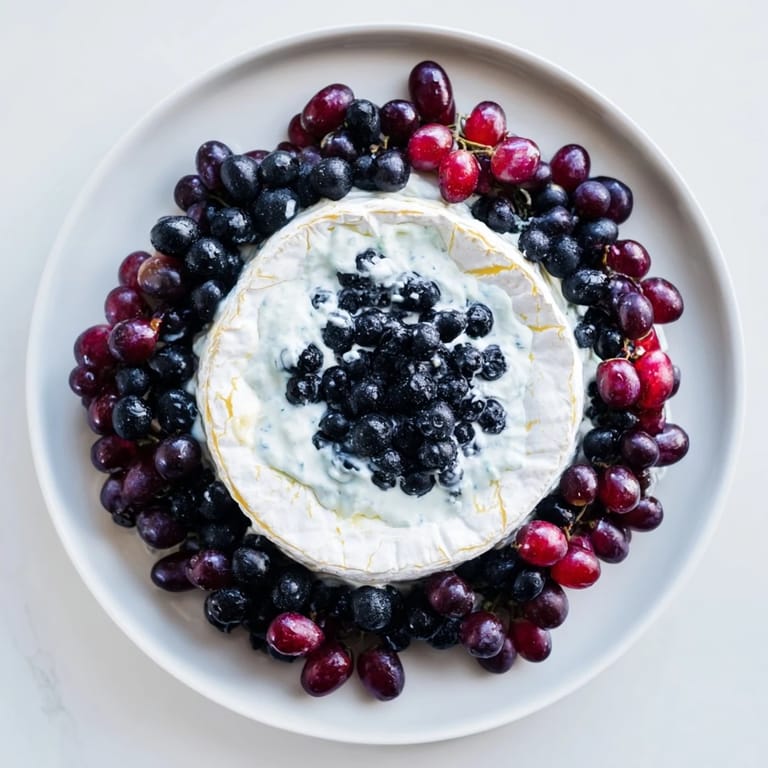
 I discovered this dish at a dinner party where someone had arranged a wheel of Brie in the center of a platter with the most unexpected blue yogurt surrounding it like a lake. The visual stopped everyone mid-conversation, and I remember thinking how something so simple could feel like an edible art installation. That night, I watched people gravitate toward it before anything else, and I realized it wasn't just about taste—it was about the moment of wonder when you see it. I went home and recreated it for my own gathering, and now it's become my secret weapon for making any table feel a little more special.
I made this for a friend's engagement party, and what I didn't expect was how it became a conversation starter. People were taking photos, comparing the color of their grapes, debating whether it looked more like an island or a dreamscape. Someone's partner asked if they could have the recipe for their book club, and I realized this wasn't just appetizer nostalgia—it was a moment people actually remembered and talked about afterward. That's when I knew this deserved a permanent spot in my entertaining rotation.
Ingredients
- 1 large wheel of soft-ripened cheese (Brie or Camembert, about 500 g): This is the star, so choose one with a creamy interior and a thin edible rind that feels slightly yielding when you press it gently. Let it sit at room temperature for thirty minutes before serving so the inside becomes almost liquid.
- 400 g plain Greek yogurt: The tanginess balances the richness of the cheese perfectly, and the thickness means it won't run everywhere when you spoon it around the wheel.
- 1 tbsp lemon juice: This brightens everything and prevents the yogurt from tasting flat or one-dimensional.
- 1 tsp garlic powder: Fresh garlic can be too aggressive here, but the powder dissolves smoothly and gives you that savory whisper.
- 1/2 tsp salt: Taste as you go because the cheese itself brings saltiness to the party.
- Blue food coloring (gel or natural): Start with less than you think you need because the color deepens as it sits, and you want that lake effect, not neon.
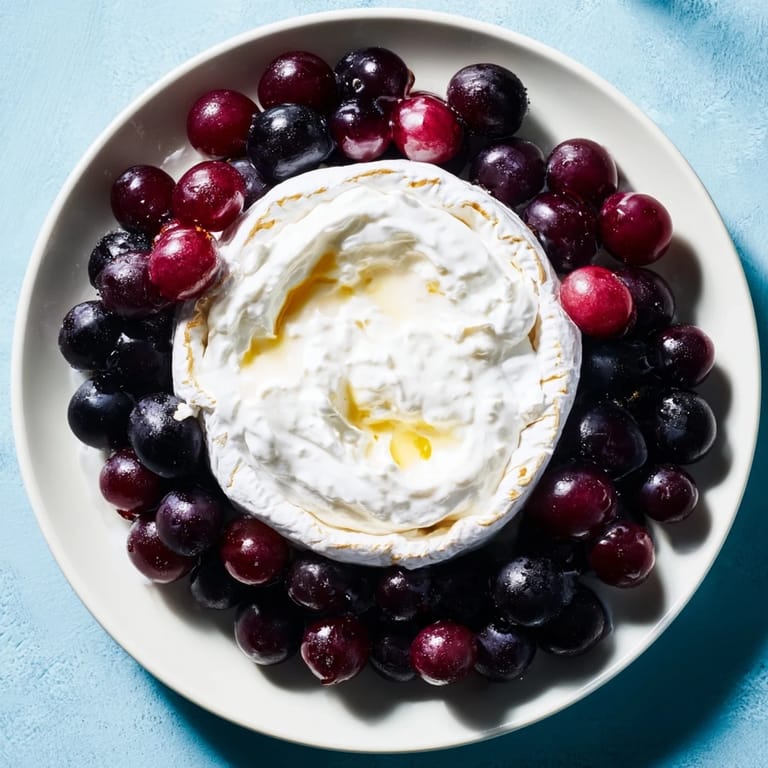
- 250 g seedless black or red grapes: The dark color creates the dramatic border, so avoid the pale green ones no matter how good they look in the store.
- Fresh herbs (optional): Dill, parsley, or even small microgreens scattered on top turn the cheese island into something that looks intentional rather than accidental.
Tired of Takeout? 🥡
Get 10 meals you can make faster than delivery arrives. Seriously.
One email. No spam. Unsubscribe anytime.
Instructions
- Set your island:
- Place the cheese wheel in the dead center of a large platter, leaving plenty of space around it like you're creating a moat. If the platter feels too large, your dip will spread too thin and lose the drama.
- Build the lake:
- Whisk the Greek yogurt with lemon juice, garlic powder, and salt until it's completely smooth and has no lumps hiding in corners. Add the blue coloring one drop at a time, stirring between each addition, because once it's too dark you can't take it back.
- Paint the water:
- Spoon the blue yogurt gently around the cheese wheel, letting it pool naturally without covering the cheese itself. The boundary between island and lake should feel intentional, like you planned it rather than just guessed.
- Crown the edge:
- Arrange the grapes in a circle around where the yogurt meets the platter, creating that dramatic dark frame. If you want to get fancy, scatter a few herbs across the top of the cheese like they just landed there.
- Serve with intention:
- Bring it to the table and let it sit for a moment before people dive in so they can take in the whole composition first.
 Save to Pinterest
 What surprised me most about this dish was that it proved presentation isn't superficial—it actually changes how people experience food. Everyone ate more slowly, more intentionally, because they were aware they were eating something beautiful. Food became an event rather than just a convenience, and somehow that made the flavors taste better too.
Playing with the Color
The blue is the first thing people notice, so it deserves attention. I learned that gel coloring creates a more sophisticated, jewel-like tone than liquid coloring, which can look a bit artificial and day-glo under kitchen lights. Natural alternatives like butterfly pea flower tea exist if you want to avoid food coloring entirely, though the shade will be slightly softer and more purple-leaning. The key is building it gradually rather than dumping it all in at once—I've ruined batches by overshooting and ending up with something that looked more like pool water than an elegant lake.
The Cheese Selection Matters
Brie and Camembert are the obvious choices, and they work beautifully because you're meant to scoop the soft interior onto crackers along with the dip. I've experimented with other soft cheeses like Saint-André or Boursin, which add different flavor profiles—the Boursin brings garlic and herbs already built in, which some people prefer. The only rule is that it needs to be soft enough that people can actually eat it with a small knife and crackers, otherwise it becomes frustrating rather than fun. I once tried a harder cheese thinking the presentation would hold better, but everyone stared at it confused, unsure if they were supposed to slice it or what, and that killed the magic immediately.
Serving and Pairing Notes
This works best when you surround it with simple, neutral vehicles for eating—good quality crackers in natural colors so they don't compete with the platter's drama, or thinly sliced bread toasted just enough to hold weight without being too crunchy. I've found that water crackers or even simple round crackers work better than elaborate flavored ones that distract from the cheese and dip. A crisp white wine really does amplify everything, especially Sauvignon Blanc, but honestly it pairs beautifully with sparkling water and a conversation too.
- Prep the yogurt mixture up to six hours ahead and store it covered—just don't add the color until thirty minutes before serving.
- If your grapes feel slightly warm from being in a sunny spot, rinse and chill them for ten minutes before arranging so they don't look wilted next to the fresh cheese.
- The whole thing stays best if served within two hours of assembly, so plan your timing backward from when you actually want to eat.
 Save to Pinterest
 This dish teaches you that sometimes the most memorable meals aren't the most complicated ones—they're the ones that make people feel something unexpected the moment they see them. Once you make it once, you'll find yourself planning parties just to make it again.
Questions & Answers
- → What kind of cheese works best for the floating island?
Soft-ripened cheeses like Brie or Camembert hold their shape well and provide a creamy texture perfect for the centerpiece.
- → How is the blue color achieved in the yogurt dip?
Adding blue food coloring, either gel or natural, to the Greek yogurt creates the striking lake-like blue surrounding the cheese wheel.
- → Can I prepare this dish ahead of time?
It's best served fresh to maintain the vivid colors and texture, but you can prepare the dip in advance and assemble just before serving.
- → Are there suitable alternatives for a vegan version?
Yes, use plant-based cheese and yogurt substitutes to replicate the flavors and presentation while keeping it vegan.
- → What pairings enhance the flavors of the floating island?
Serving with crackers or crusty bread is ideal, and a crisp white wine like Sauvignon Blanc complements the dish beautifully.