 Save to Pinterest
 I discovered this dish during a gallery opening downtown, watching the way light played across a Picasso exhibition. The bold geometric shapes sparked something in me, and I thought: what if I could paint with food the same way? That evening, I came home and started slicing vegetables into impossible angles, arranging them like an edible canvas. My first attempt was chaotic, but after a few tries, something magical happened when all those bright colors and shapes came together on a plate. It felt like I'd translated art directly into something you could taste.
I remember making this for a dinner party where my friend brought her new partner. When the plate arrived, everyone just stopped and stared before anyone touched anything. That pause, that moment of appreciating beauty before tasting it, felt like a small gift. By the end of the meal, people were talking about it like it was the most memorable thing I'd made.
Ingredients
- Cucumber, peeled: This crisp vegetable keeps its cool, refreshing bite and provides a clean base note. Peel it for a smoother mouthfeel and better geometric cutting.
- Golden beet, cooked and peeled: Sweet and earthy, it's your warm undertone. Cook it ahead of time and let it cool completely so it holds its shape when cut.
- Watermelon radish, peeled: The hidden star with its pink and white stripes. Its peppery crunch balances the softer elements beautifully.
- Ripe avocado: Creamy contrast that makes everything feel luxurious. Add it last and cut just before plating or it browns.
- Feta cheese block, not crumbled: A firm block cuts into clean shapes and provides a salty anchor. Crumbled feta loses the geometric intent.
- Ripe mango, peeled: Golden sweetness that somehow makes all the vegetables taste more vibrant. Choose one that gives slightly to pressure but isn't mushy.
- Extra virgin olive oil: Good quality matters here since it's doing the talking. Use something peppery or fruity you actually enjoy tasting.
- Lemon juice: The brightness that ties everything together and prevents browning. Fresh lemon, not bottled.
- Flaky sea salt: The texture and mineral notes matter. It won't disappear into the dish the way table salt does.
- Fresh cracked black pepper: Ground fresh right before serving, it adds heat and aromatics that bag pepper can't match.
- Microgreens or fresh herbs: Basil, cilantro, or whatever microgreens you find create the final pop of color and freshness.
Tired of Takeout? 🥡
Get 10 meals you can make faster than delivery arrives. Seriously.
One email. No spam. Unsubscribe anytime.
Instructions
- Gather Your Ingredients and Sharp Tools:
- Assemble everything on your counter. A sharp chef's knife is essential here, and if you have small cookie cutters, keep them nearby. Dull knives bruise vegetables and ruin clean edges, so this is worth getting right.
- Prepare the Vegetables:
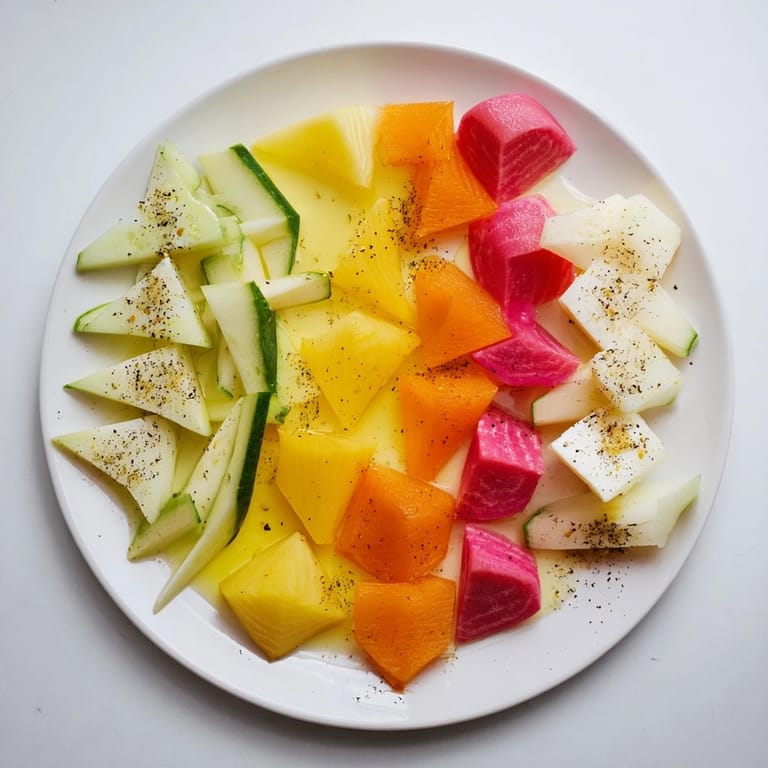
- Start with your cooked beet and cucumber. Slice them into varied geometric shapes, aiming for roughly 1 cm thickness. Think triangles, parallelograms, hexagons, irregular polygons. This isn't about perfection but about breaking the expected rectangle. Take your time and enjoy the meditative rhythm of cutting.
- Cut the Remaining Vegetables and Fruit:
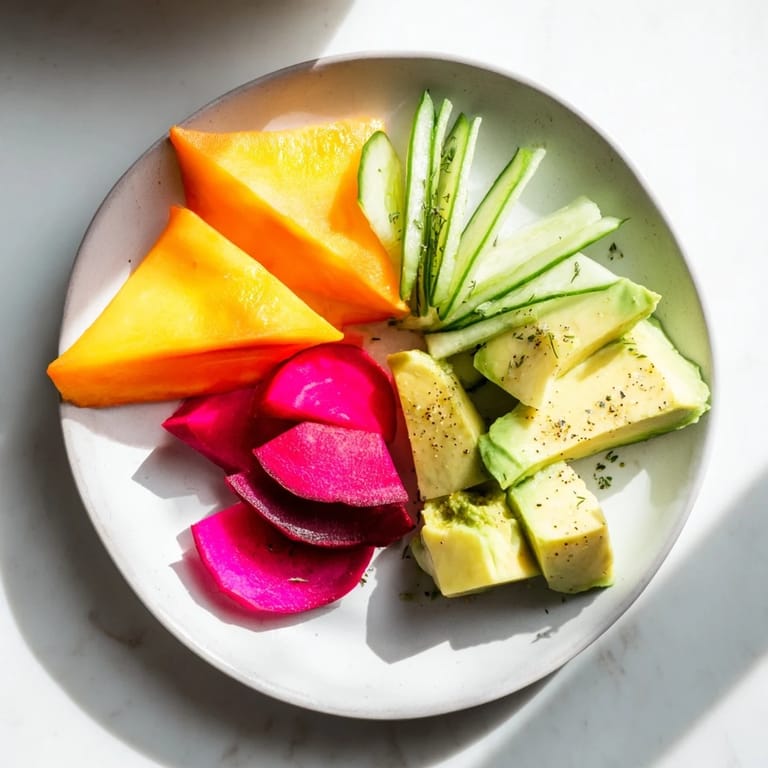
- Move to the watermelon radish, avocado, and mango, creating the same geometric variety. The avocado will be soft, so use a gentle hand. If you have small cookie cutters, use them for uniform shapes in one or two elements to add another layer of visual interest.
- Shape the Feta:
- Cut your block of feta into cubes or prisms that echo the geometric theme. The contrast of white geometric cheese against colorful vegetables creates the artistic tension this dish is about.
- Arrange Your Canvas:
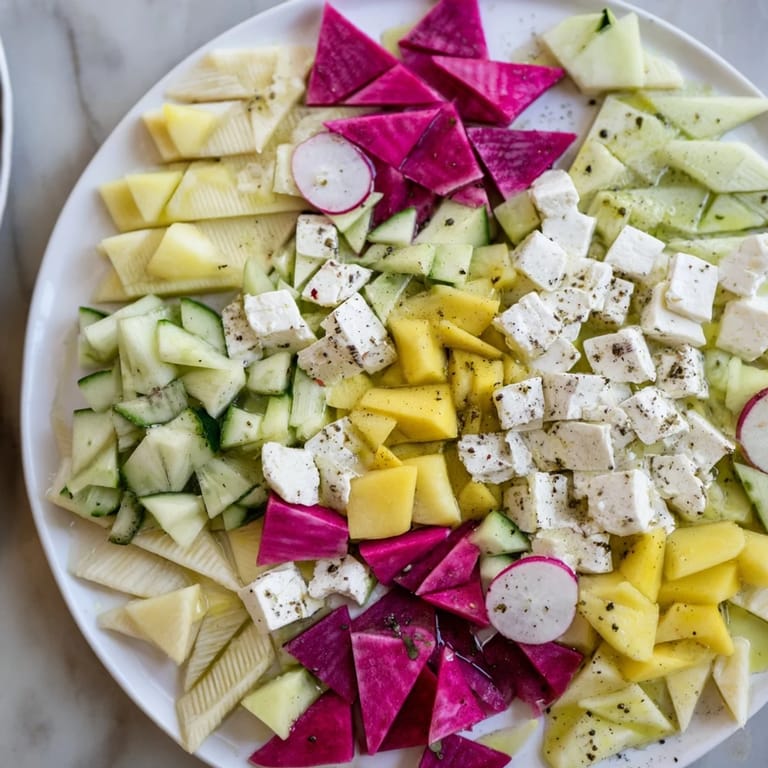
- On your large flat platter, begin arranging pieces close together without overlapping, the way puzzle pieces might sit beside each other in a museum display. Step back and look at it often. Move things around. Does the color distribution feel balanced? Are the shapes creating visual rhythm? This is where the dish becomes art.
- Dress It Gently:
- Drizzle olive oil and lemon juice evenly across the entire arrangement. Not pooling in one spot, but a gentle rain across everything. This is about respect for what you've built.
- Season and Garnish:
- Sprinkle flaky sea salt across the entire piece, then crack fresh black pepper. Scatter microgreens or torn herbs in pockets between the shapes. They should look intentional, not like an afterthought.
- Serve Immediately:
- The moment of plating is the moment to serve. The clean lines fade and the vegetables begin to soften as time passes. This dish is about that fresh, sharp moment when everything is exactly as it should be.
 Save to Pinterest
 The best compliment I received was from someone who said they felt like they had to take a picture before eating because it seemed wrong to destroy it. I laughed and told them that's exactly when you know it's ready to eat. The beauty and the taste are supposed to work together.
The Art of Cutting
The cutting is honestly the meditation of this dish. When you start slicing vegetables into non-standard shapes, something shifts in how you think about food preparation. You stop following recipes and start thinking like a designer. A triangle of golden beet catches light differently than a cube. A parallelogram of mango creates visual movement across the plate. Small cookie cutters become your secret weapon, creating perfect polygons from firm vegetables. Even if your hand-cut shapes are irregular, that authenticity is part of the charm. Kitchen imperfection is often more beautiful than sterile precision.
Why This Works as an Appetizer
This dish announces that dinner will be special before a single bite is eaten. It's light enough not to fill anyone before the main course, but substantial enough to feel like a genuine beginning rather than just a garnish on a plate. The variety of flavors wakes up the palate, preparing your guests' taste buds for what comes next. It's also conversation. People want to talk about beautiful food, and this invites admiration and questions in a way a standard appetizer doesn't.
Playing with Color and Variation
The vegetables I've suggested are starting points, not commands. I've made this with purple carrots creating deep eggplant tones, yellow bell peppers for bright sunlit corners, and even purple cabbage for unexpected richness. The principle is color contrast and visual rhythm. Warm tones next to cool tones, bright next to muted, creates visual depth on the plate. If you go vegan, firm tofu cut into matching geometric shapes replaces the feta beautifully and adds a different kind of elegance. The geometric shapes become the constant while you play with the palette.
- Choose vegetables that are contrasting in both color and flavor profile.
- Arrange warm-toned vegetables opposite cool-toned ones for visual balance.
- If substituting ingredients, maintain the geometric cutting to keep the artistic integrity of the dish.
 Save to Pinterest
 This dish changed how I think about appetizers. It taught me that a plate can be a conversation, a memory, and a flavor experience all at once. Make it when you want dinner to feel like something worth remembering.
Questions & Answers
- → What vegetables work best for geometric cutting?
Firm vegetables like cucumber, beet, and watermelon radish hold their shape well and are ideal for precise geometric slicing.
- → Can I substitute feta cheese for a vegan option?
Yes, firm tofu can replace feta to maintain the texture and complement the fresh flavors without dairy.
- → How should the shapes be cut to achieve the cubist effect?
Use a sharp knife or small cookie cutters to slice vegetables, fruits, and cheese into unique shapes such as triangles, parallelograms, and hexagons, about 1 cm thick.
- → What is the best way to serve this appetizer?
Arrange all pieces closely without overlapping on a large flat platter, then drizzle with olive oil and lemon juice, and garnish with microgreens right before serving.
- → How can the flavor be enhanced without overpowering the presentation?
Light seasoning with flaky sea salt and fresh cracked black pepper brings out the natural flavors while preserving the clean, artistic look.