 Save to Pinterest
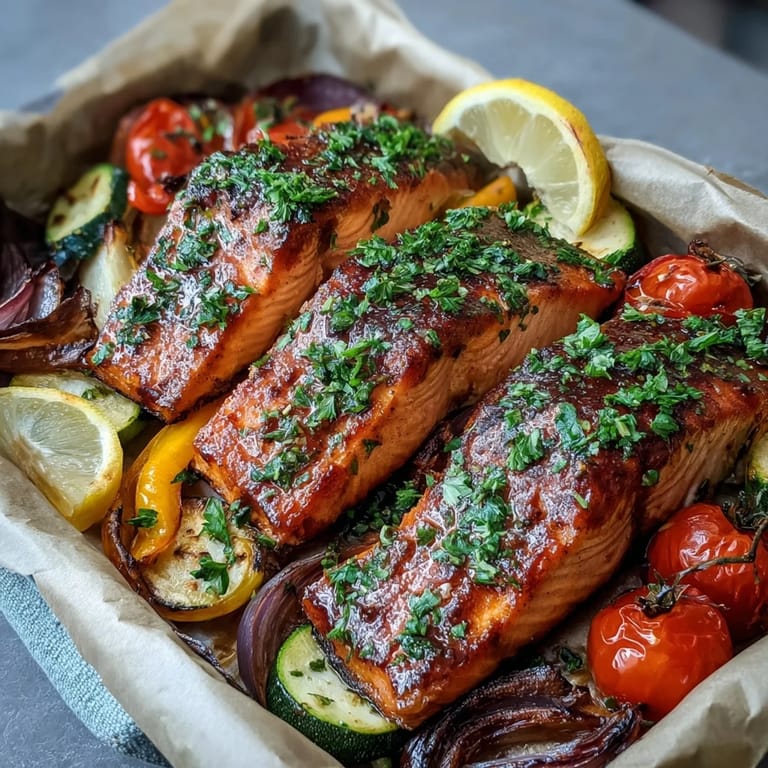
 My weeknight rhythm changed the moment I stopped fussing with multiple pans and embraced the pure simplicity of sheet pan salmon. One Tuesday evening, rushed and skeptical, I threw salmon and whatever vegetables needed using up onto a single pan, and twenty-five minutes later had a meal that tasted like I'd actually tried. The kitchen stayed clean, my stress dissolved, and everyone at the table asked for seconds without prompting.
I made this for my sister who'd just started trying to eat healthier, and watching her realize that good food doesn't require hours in the kitchen or a complicated ingredient list was genuinely moving. She's made it probably thirty times now, and each time she texts me a photo of her sheet pan like it's some kind of small victory, which it absolutely is.
Ingredients
- Salmon fillets (4, about 5–6 oz each): Look for fillets that are similar in thickness so they cook evenly, and don't skip patting them dry before seasoning because that's what gives you a better sear.
- Red onion: Cut into wedges so the layers stay together and actually caramelize rather than scatter into tiny burnt bits.
- Carrots: Slice them roughly half an inch thick so they soften at the same pace as the salmon, not hours later.
- Bell peppers (red and yellow): Use both colors because they add sweetness and visual appeal, plus yellow peppers taste slightly different than red in a way that keeps things interesting.
- Zucchini: Half-moon slices cook faster than rounds and look more intentional on the plate.
- Cherry tomatoes: Halving them prevents them from rolling all over the pan and helps them release their sweet juices into the vegetables below.
- Olive oil: Use your better quality oil since the heat isn't extreme and it's tasted directly, not as a cooking medium.
- Italian herbs (dried): A teaspoon is enough to flavor everything without tasting medicinal, which I learned after one particularly aggressive seasoning session.
- Lemon zest and wedges: Fresh lemon is non-negotiable here because it brightens everything and makes people think you spent more effort than you actually did.
- Fresh parsley: Scattered on top at the end, it adds a living element that makes the whole dish feel fresher and more intentional.
Tired of Takeout? 🥡
Get 10 meals you can make faster than delivery arrives. Seriously.
One email. No spam. Unsubscribe anytime.
Instructions
- Heat your oven and prepare the pan:
- Set your oven to 425°F and line your sheet pan with parchment paper, which makes cleanup effortless and prevents sticking. If you don't have parchment, foil works but gives you a different texture on the bottom vegetables.
- Season and spread the vegetables:
- Toss your onion, carrots, peppers, zucchini, and tomatoes with two tablespoons of olive oil, the Italian herbs, salt, and pepper in a large bowl, then spread them in a single layer on the pan. This initial toss ensures every piece gets coated before it hits the heat, so nothing dries out unevenly.
- Give vegetables a head start:
- Roast them alone for ten minutes so they begin to soften and develop color before the salmon joins them. This timing trick prevents the delicate fish from overcooking while waiting for harder vegetables like carrots to get tender.
- Prepare the salmon:
- Pat your salmon fillets completely dry with paper towels, then brush each one with a teaspoon of olive oil and sprinkle with lemon zest, salt, and pepper. Dry fish is the secret to better texture, not sliminess.
- Add salmon to the pan:
- After the initial ten minutes, pull the pan out, create some space among the vegetables, and nestled the salmon fillets in there skin-side down. The vegetables give off steam that helps cook the fish gently from below.
- Finish roasting:
- Return everything to the oven for twelve to fifteen minutes until the salmon flakes easily with a fork and the vegetables are caramelized at the edges. Salmon cooks faster than you'd expect, so start checking at twelve minutes rather than waiting the full fifteen.
- Finish and serve:
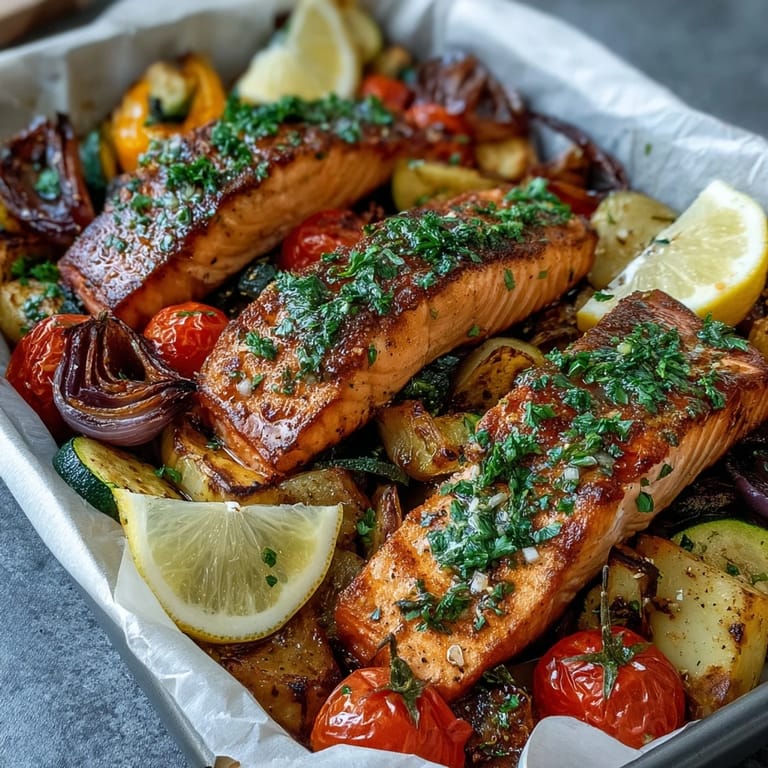
- Remove from the oven, scatter fresh parsley over the whole pan, and serve with lemon wedges on the side so people can adjust the brightness to their preference. The smell at this point is honestly half the appeal.
 Save to Pinterest
 There's something profoundly satisfying about serving dinner that looks like restaurant-quality plating but took barely any actual labor. My friend once said eating this made her feel taken care of, which might be the highest compliment a weeknight dinner can receive.
Vegetables That Work Beautifully Here
The vegetables in this recipe are suggestions, not rules, which is honestly why I love it so much. Asparagus works wonderfully if you add it in the last five minutes so it doesn't turn to mush, broccoli needs its florets cut small so they roast evenly, and sweet potatoes can replace regular carrots if you cut them thin and give them a few extra minutes. In spring I swap in thin green beans, in summer I add sliced summer squash, and by fall I'm loading up on Brussels sprouts cut in half. The sheet pan salmon formula stays exactly the same, but the vegetables let you cook seasonally without thinking too hard about it.
Flavor Additions That Transform the Plate
Once you've mastered the basic version, small additions create entirely different moods from the same framework. A drizzle of balsamic glaze added in the final minutes creates this savory-sweet complexity that makes people pause mid-bite and ask what you did, while a sprinkle of crumbled feta cheese adds a tangy richness that makes everything taste Mediterranean. I once added a light smear of Dijon mustard on the salmon before roasting and it was unexpectedly brilliant, and another time a scatter of toasted pine nuts on top created a textural element that felt almost luxurious for such a casual dinner.
Making It Work for Weeknights and Meal Prep
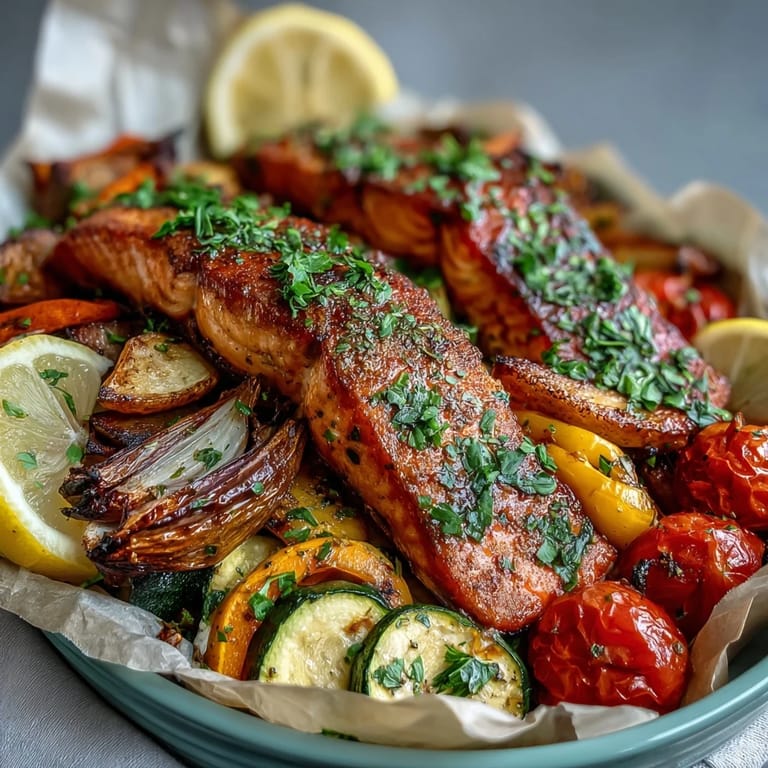
This dish lives in that beautiful middle ground between quick enough for a busy Tuesday and elegant enough when you have company coming. I prep the vegetables the night before and store them in a container so assembly is literally two minutes on a hectic day, and I've batch-roasted this for meal prep by tripling the recipe and eating leftovers cold with a squeeze of fresh lemon for three days straight. The salmon stays moist in the fridge and the roasted vegetables taste even better the next day as flavors deepen and meld.
- Prepping vegetables the evening before transforms a thirty-minute meal into a fifteen-minute assembly when you're exhausted.
- Leftover salmon and vegetables make an excellent cold lunch bowl when you add a simple grain or salad base.
- This recipe doubles easily for company, and a full sheet pan looks impressively abundant while requiring zero additional effort.
 Save to Pinterest
 This recipe taught me that the best meals aren't the ones that demand hours of attention, they're the ones that let you feed the people you care about without losing your mind in the process. Every time I make it, I'm reminded that sometimes the simplest approach tastes the sweetest.
Questions & Answers
- → Can I use frozen salmon fillets?
Yes, you can use frozen salmon fillets. Thaw them completely in the refrigerator overnight before cooking, then pat them dry with paper towels to remove excess moisture for better roasting results.
- → What other vegetables work well in this bowl?
You can easily swap in seasonal vegetables like asparagus, broccoli florets, sweet potato wedges, Brussels sprouts, or green beans. Just adjust roasting time accordingly—denser vegetables may need a few extra minutes.
- → How do I know when the salmon is done?
The salmon is finished when it reaches an internal temperature of 145°F (63°C) or flakes easily with a fork. The flesh should appear opaque throughout and slightly translucent in the center for medium doneness.
- → Can I prepare this ahead of time?
You can chop all the vegetables up to a day in advance and store them in airtight containers in the refrigerator. The salmon should be prepped just before cooking for the best texture and flavor.
- → What sides pair well with this bowl?
This complete meal works wonderfully on its own, but you can serve it over quinoa, brown rice, or cauliflower rice for extra heartiness. A light side salad with vinaigrette or crusty gluten-free bread also complements the dish nicely.