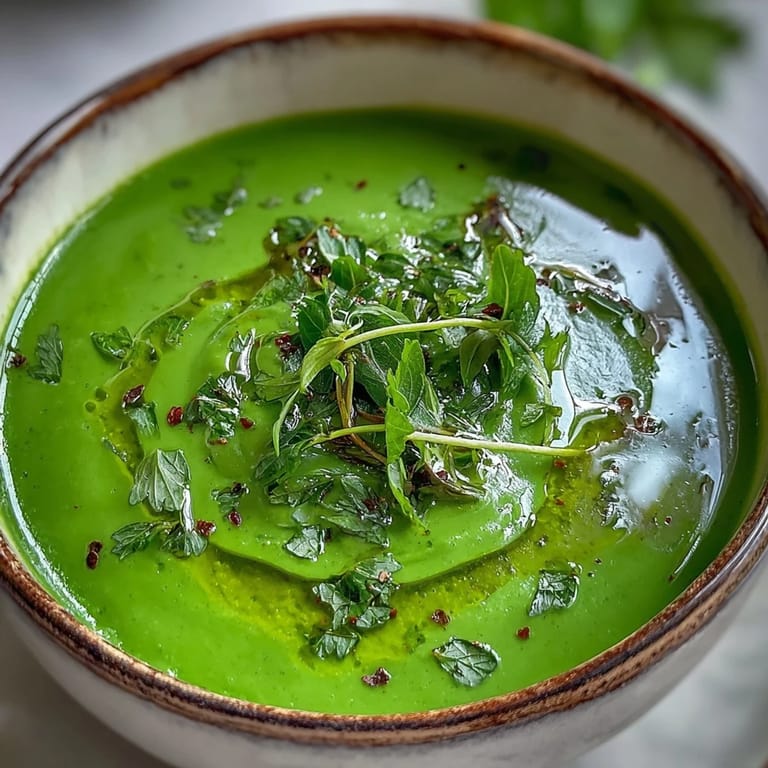
 Save to Pinterest
 There's something about chopping green vegetables on a quiet morning that shifts the whole day into focus. I discovered this soup during one of those seasons when my body felt heavy and my kitchen felt like the right place to reset. The simplicity caught me off guard—just vegetables, broth, and a squeeze of lemon—yet it tasted like intentional nourishment, the kind that makes you feel lighter by the third spoonful.
I made this for my sister when she was going through one of those phases where she needed to eat lighter, and I watched her face change after the first spoonful. She asked for the recipe immediately, which almost never happens. Now it's her go-to when she needs to feel grounded, and she's made it so many times she barely glances at the steps anymore.
Ingredients
- Zucchini: The mild base that lets other flavors shine without any watery disappointment—dice them consistently so they break down evenly.
- Green peas: Whether fresh or frozen, they add sweetness and body; frozen ones work just as beautifully and skip the shelling.
- Broccoli florets: Don't skip them thinking they'll overpower the soup—they add earthiness and transform into creamy velvet when blended.
- Baby spinach: Added at the end so it wilts gently and keeps its bright color and subtle mineral taste.
- Leek: Use only the white and light green parts; they're sweeter and softer than the darker layers.
- Celery stalk: A small piece is enough to add backbone without making the soup taste like a vegetable juice cleanse.
- Potato: The secret to creaminess without cream—it thickens naturally as it breaks down.
- Garlic cloves: Minced finely so they dissolve into the broth rather than lingering as chunks.
- Extra virgin olive oil: Use something you'd taste on bread; it's not just cooking fat here, it's flavor.
- Low-sodium vegetable broth: Check the label carefully—hidden sodium can sneak in and turn a gentle soup into something aggressive.
- Sea salt and black pepper: Add most of the salt early, then taste and adjust after blending since flavors concentrate.
- Ground cumin: Just a whisper of it—it adds warmth without announcing itself loudly.
- Lemon zest and juice: The lemon is what wakes this soup up; don't hold back on it.
- Fresh parsley and mint: Mint is optional but worth it; it brings a cooling counterpoint that makes the soup feel complete.
Tired of Takeout? 🥡
Get 10 meals you can make faster than delivery arrives. Seriously.
One email. No spam. Unsubscribe anytime.
Instructions
- Soften your base:
- Warm olive oil in a large pot, then add leek, celery, and garlic. Let them become tender and fragrant over a few minutes—you're building foundation flavors here, so don't rush past the point where they're just soft.
- Build the layer:
- Stir in potato, zucchini, broccoli, and peas. Give everything a minute to begin releasing its essence before you add liquid.
- Simmer until tender:
- Pour in broth along with salt, pepper, and cumin. Bring everything to a gentle boil, then lower the heat, cover, and let it bubble softly for 12 to 15 minutes—the vegetables should be completely tender when you poke them with a fork.
- Wilt the spinach:
- Add baby spinach and stir for about 2 minutes; it'll reduce into almost nothing, which is exactly what you want.
- Blend until smooth:
- Using an immersion blender, work through the soup until it's completely creamy and homogeneous—or transfer to a regular blender in batches if that's what you have. The potato does most of the work here, turning silky without any cream.
- Finish with brightness:
- Remove from heat and stir in lemon zest, lemon juice, parsley, and mint if you're using it. Taste and season once more—you might find it needs a tiny pinch more salt after blending.
- Serve with intention:
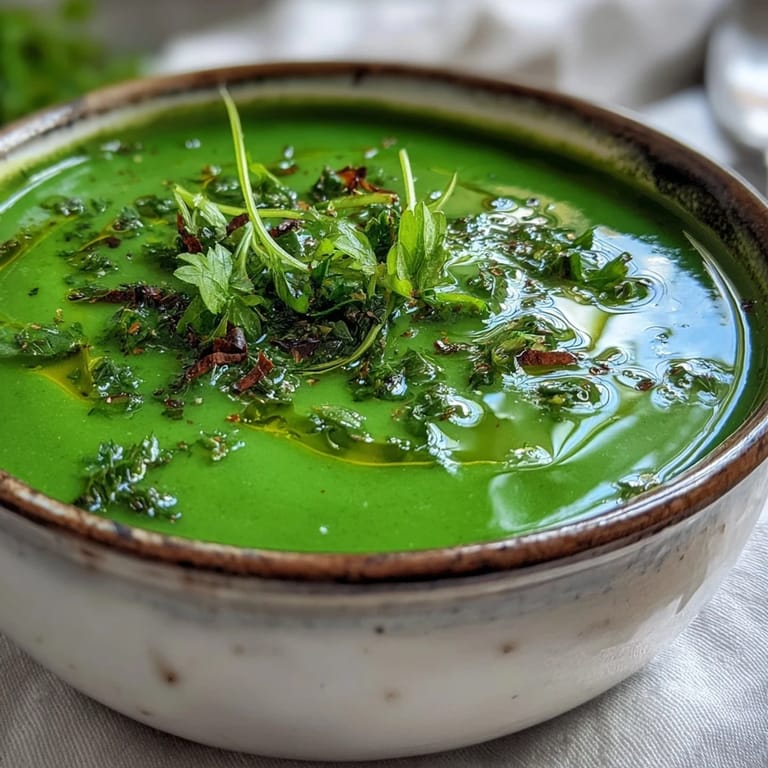
- Ladle into bowls and garnish as you like; a drizzle of olive oil or a scatter of fresh herbs makes it feel special.
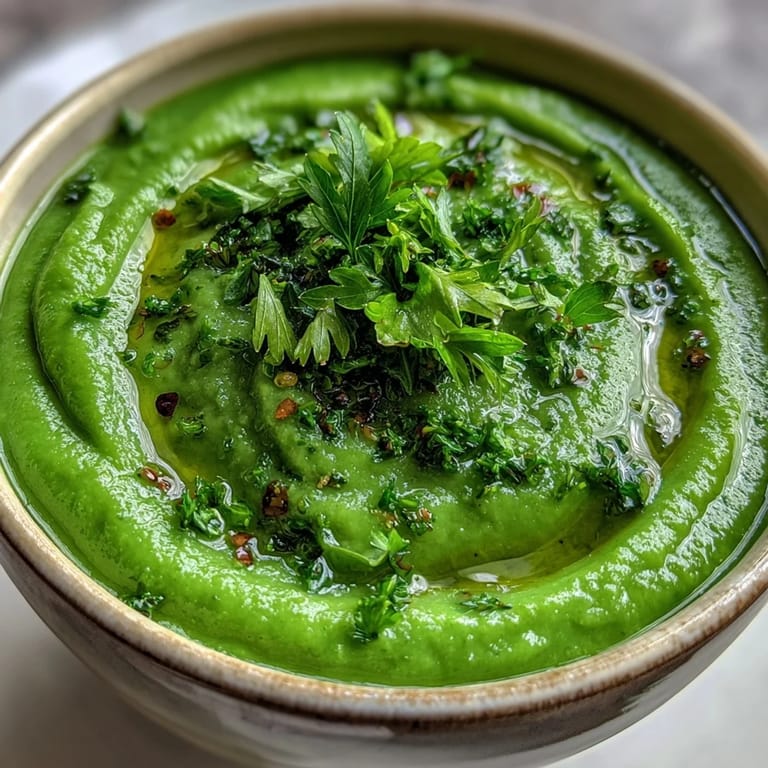 Save to Pinterest
 There's a particular moment, somewhere between the first sip and the last spoonful, when you realize this soup is exactly what you needed. It's not pretentious or complicated, just honest and clean and nourishing in a way that feels like self-care without the guilt.
Why This Soup Became My Reset Button
I started making this when I realized how much noise my usual meals had in them—heavy, rich, requiring so much time to digest. This soup is the opposite; it's green and light and makes you feel awake instead of sluggish. Within a week of eating it regularly, my energy shifted, my skin looked clearer, and I stopped reaching for the snacks I'd usually crave by 3 p.m. That's not magic, that's just what happens when you feed your body what it actually needs.
The Art of Not Overthinking It
One of the biggest mistakes I made early on was trying to make this soup fancy—adding coconut milk, swirling in yogurt, toasting seeds as garnish. Those things have their place, but the truth is, this soup is best when it's simple. The vegetables matter more than the trappings. The flavor comes from the vegetables themselves, not from decorative additions. Once I stopped trying to elevate it and just let it be what it was, something shifted.
Make It Your Own (Without Losing the Plot)
The beauty of this recipe is that it's flexible within reason. You can swap in other green vegetables if you like—green beans, asparagus, or even kale work beautifully. The structure stays the same: soften aromatics, add harder vegetables first, then greens at the end, blend, and brighten with lemon. Some days I add a quarter cup of coconut milk before blending for extra richness, and other days I leave it as is. The mint is truly optional, but if you have it, use it. You could also experiment with different herbs like basil or dill if they call to you.
- Coconut milk adds creaminess but keep it to a quarter cup or the soup becomes a different thing entirely.
- Frozen vegetables work just as well as fresh since you're blending everything anyway.
- Make a big batch and freeze it in portions—it reheats beautifully and tastes just as good three weeks later.
 Save to Pinterest
 This soup isn't about restriction or deprivation; it's about eating in a way that honors what your body actually wants. Make it when you need to feel lighter, and it'll deliver exactly that.