 Save to Pinterest
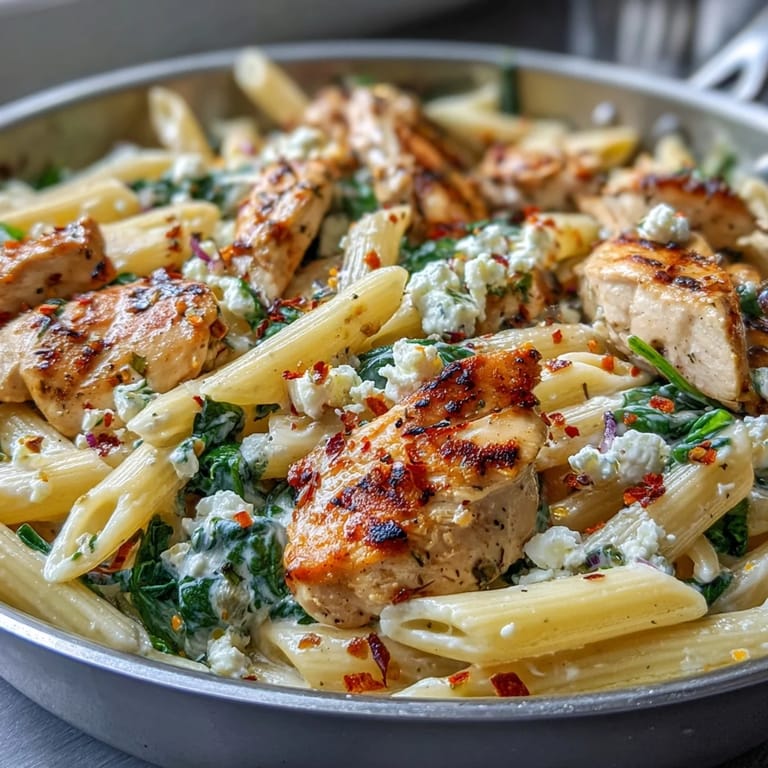
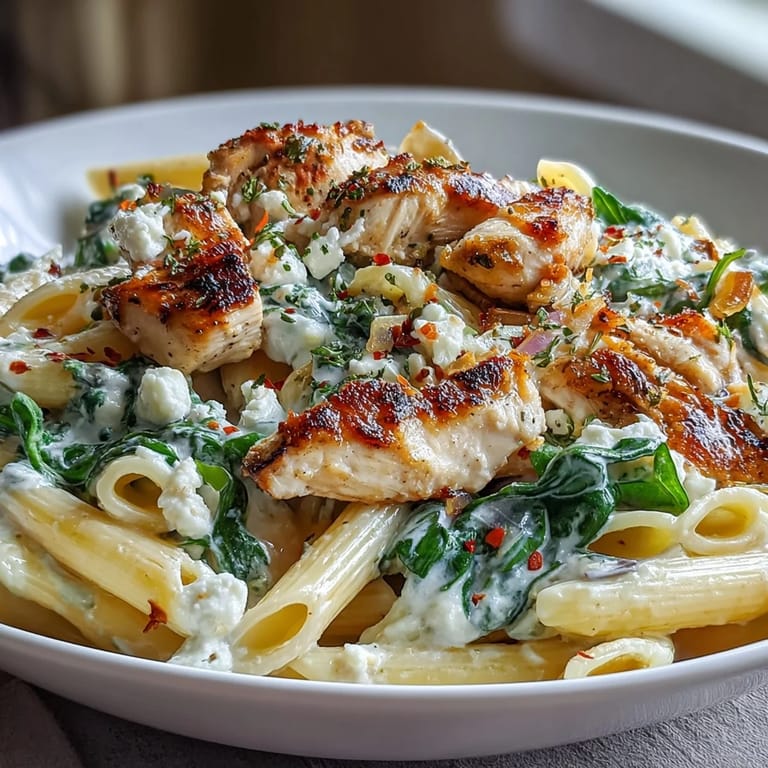
 There's something about cooking in a single skillet that feels almost meditative—no mountains of dishes waiting at the end, just one pan transforming simple ingredients into something that tastes like a Greek seaside taverna. I discovered this chicken and feta pasta on a Tuesday evening when I was too tired to think about technique, just craving something bright and creamy at the same time. The lemon hit first, then the tang of feta, and suddenly my kitchen smelled like herbs and summer despite the weather outside.
I made this for my neighbor who'd just moved in, and she took one bite and said it tasted like she was on vacation. That comment stuck with me because it's true—somehow this dish carries you somewhere else entirely. The combination of fresh spinach wilting into creamy sauce and feta crumbles catching the light makes dinner feel intentional, even when you've thrown it together on a whim.
Ingredients
- Chicken breast: Cut into bite-sized pieces so they cook quickly and evenly in the skillet without needing to babysit them.
- Short pasta: Penne, fusilli, or rigatoni work best because they catch and hold the creamy sauce in every bite.
- Feta cheese: Buy it in blocks and crumble it yourself if you can; pre-crumbled tends to dry out and won't melt as gracefully into the sauce.
- Greek yogurt: Use plain, full-fat if you find it—the creaminess makes a real difference compared to nonfat versions.
- Fresh baby spinach: It wilts almost instantly, so add it right before you need it to avoid turning the whole dish into a dark green mush.
- Red onion: Thinly sliced so it softens quickly and adds sweetness without overwhelming the other flavors.
- Garlic: Mince it fine so it distributes throughout the sauce rather than sitting in chunks.
- Lemon: Both zest and juice matter here—the zest adds brightness that juice alone can't quite reach.
- Chicken broth: Low-sodium lets the other ingredients shine without turning everything salty.
- Olive oil: Good quality matters since there aren't many ingredients to hide behind.
- Oregano and dill: These dried herbs are what make it taste unmistakably Mediterranean, so don't skip them even if the bottle has been sitting around.
- Red pepper flakes: Optional but worth keeping nearby for anyone who wants to bring heat to their bowl.
Tired of Takeout? 🥡
Get 10 meals you can make faster than delivery arrives. Seriously.
One email. No spam. Unsubscribe anytime.
Instructions
- Start the pasta:
- Bring a large pot of salted water to a rolling boil and add your pasta, cooking until it's just shy of fully tender since it'll finish cooking in the skillet. As the pasta drains, reserve half a cup of that starchy water—you'll need it to loosen the sauce later.
- Build the chicken foundation:
- While pasta cooks, heat olive oil in your skillet over medium-high heat until it shimmers slightly. Add chicken pieces seasoned with salt, pepper, oregano, and dill, then let them sit undisturbed for a couple minutes so they brown properly before you start moving them around.
- Create the aromatic base:
- Once chicken is cooked through and set aside, use the same skillet to soften red onion and garlic in the remaining oil. You'll notice the skillet still has all those browned bits stuck to the bottom—that's flavor you want to keep.
- Wilt the spinach:
- Add fresh baby spinach and stir until it collapses into the pan, which takes maybe a minute. The heat from the skillet is enough without needing extra cooking.
- Bring it together:
- Return the cooked pasta and chicken to the skillet along with lemon zest, lemon juice, and chicken broth. Toss everything together and let it warm through for a minute or two until the sauce becomes cohesive.
- Finish with cream:
- Remove from heat, then gently fold in Greek yogurt and crumbled feta, stirring slowly so the cheese distributes evenly instead of clumping. If the sauce feels too thick, splash in reserved pasta water a tablespoon at a time until it reaches the consistency you want.
- Season and serve:
- Taste it, adjust salt and pepper and red pepper flakes if you're using them, then serve while everything is still warm and the feta is soft enough to melt into bites.
 Save to Pinterest
 Last week someone asked me what I'd made for dinner, and before I could even describe it, they said they could smell the lemon from across the room. That's when I realized this dish does something simple dishes rarely do—it fills your whole space with possibility, making everyone in the kitchen want to stay a little longer.
Why This Works as a Weeknight Dinner
The beauty of cooking everything in one skillet is that you're building layers of flavor without increasing complexity. As the chicken browns, it leaves behind fond that enriches the entire dish. The red onion softens and turns slightly sweet, the garlic perfumes the oil, and suddenly you have a sophisticated base ready to accept the pasta and sauce. There's a rhythm to it—brown, sauté, wilt, combine—that becomes almost automatic once you've done it twice.
The Lemon's Secret Role
Lemon juice alone tastes sharp and obvious, but lemon zest adds an almost floral brightness that makes people pause and ask what that flavor is. The acid from the juice balances the richness of feta and yogurt so the whole dish doesn't feel heavy, while the zest keeps everything tasting fresh and alive. This is why I always zest before juicing—it takes 10 extra seconds but changes the entire character of what you're making.
Flexibility and Variations
This recipe is more of a framework than a rigid formula, which means you can adapt it without losing its soul. If you have Kalamata olives in your pantry, a handful of pitted ones adds briny depth that echoes the feta. Sundried tomatoes work beautifully too, especially if you chop them fine so they soften into the sauce. Arugula can stand in for spinach if you prefer something peppery, or you can use half spinach and half arugula for complexity.
- Swap the chicken for shrimp if you want something lighter, just reduce the cooking time to 3 or 4 minutes.
- Crumbled goat cheese creates a tangier sauce if you want to push the Mediterranean flavors even further.
- Fresh herbs like dill or oregano added at the very end bring a brightness that dried herbs can't quite match.
 Save to Pinterest
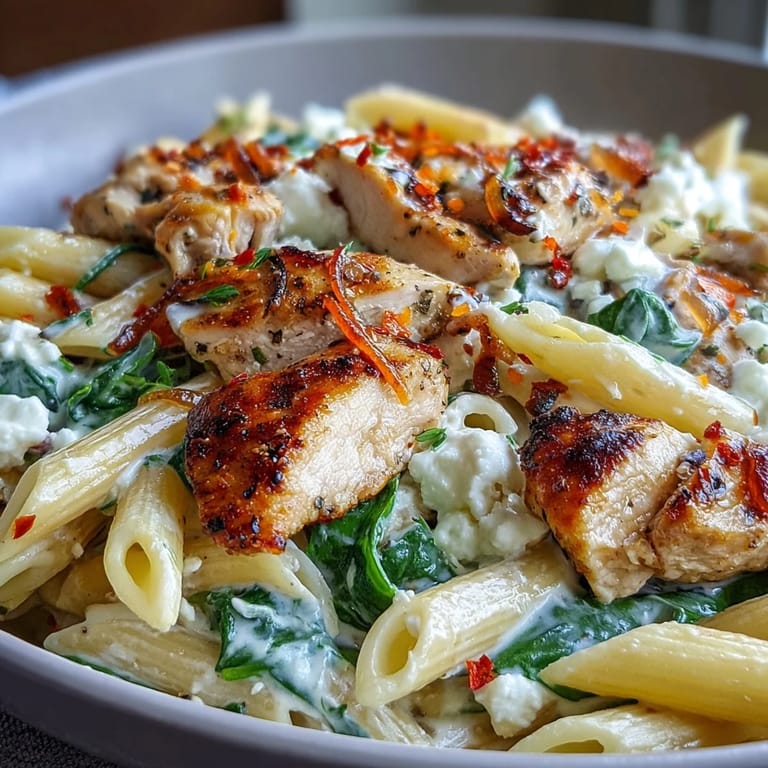
 This skillet has become my answer to the question of what to make when you want something that feels special but doesn't require special effort. Every time I make it, someone at the table says it tastes like a restaurant, which is the highest compliment a home cook can get.
Questions & Answers
- → Can I make this dairy-free?
Substitute the Greek yogurt with coconut yogurt or a dairy-free cream alternative. Replace feta with a vegan feta-style cheese or extra olives for salty tang. The sauce texture will vary slightly but remain delicious.
- → What pasta shapes work best?
Short pasta varieties like penne, fusilli, rigatoni, or rotini catch the creamy sauce beautifully in their ridges and tubes. Macaroni or small shells also work well. Avoid long strands like spaghetti—they're harder to eat in skillet form.
- → Can I prep this ahead?
Cook chicken and vegetables up to 2 days ahead, store separately. Cook pasta fresh before serving. Reheat everything together, adding yogurt and feta at the end. The dish also reheats well for leftovers—add splash of broth when warming.
- → What vegetables can I add or swap?
Try chopped tomatoes, bell peppers, or zucchini along with the onion. Artichoke hearts, roasted red peppers, or wilted chard make excellent additions. For extra protein, add chickpeas or white beans when combining everything.