 Save to Pinterest
 I'll never forget the afternoon I discovered the Golden Ratio in my grandmother's old geometry textbook while searching for a recipe card. There, spiraling across the page like nature's own blueprint, was Fibonacci's sequence. That evening, I wondered: what if I could bake mathematics? What if a dessert could be both delicious and a celebration of nature's perfect proportions? That's when The Golden Ratio Shell was born, a dessert that makes people pause mid-bite to simply look at it.
I made this for my sister's engagement dinner, and watching her trace the spiral with her fork while everyone else just stared in wonder told me everything. She said it tasted like celebration itself. That moment taught me that the most memorable meals aren't about being complicated, they're about care made visible.
Ingredients
- All-purpose flour (60 g): Creates the tender structure of your sponge layer, the foundation everything else rests on. Sifting it matters more than you'd think, as it incorporates air that keeps the cake feather-light.
- Granulated sugar (60 g for sponge, plus 30 g more for jelly): Beyond sweetness, sugar whipped with eggs creates tiny air bubbles that give the sponge its delicate crumb. Don't skip the whisking stage.
- Large eggs (2 for sponge, 2 yolks for mousse): These are your binding agents and your leavening power. Room temperature eggs whip higher and lighter, so take them out of the fridge a bit before you start.
- Unsalted butter, melted (30 g): This enriches the sponge without weighing it down. Melting it first ensures it distributes evenly instead of creating greasy pockets.
- Vanilla extract (1 tsp sponge, 1 tsp mousse): A whisper of vanilla rounds out every component, binding the flavors together like they were always meant to know each other.
- Salt (pinch): A tiny secret that makes everything taste more like itself. Never underestimate salt in desserts.
- Fresh raspberry puree (110 g): The soul of your jelly spiral, bringing bright acidity and natural beauty. If you make your own, press fresh raspberries through a fine sieve for silky smoothness.
- Powdered gelatin (4 g): This sets your jelly to the perfect wobble. Don't skimp on blooming it in cold water first, or you'll end up with a grainy texture.
- Lemon juice (1 tsp): Cuts through the sweetness and brightens the raspberry, making the jelly taste more alive.
- Dark chocolate 70% (180 g), chopped: The deeper the cocoa content, the more sophisticated your mousse becomes. Chop it small so it melts evenly without seizing.
- Heavy cream (140 ml for mousse, 40 ml for glaze): Whipped cream becomes mousse when folded into chocolate, creating that impossible lightness that feels decadent.
- White chocolate, chopped (100 g): Your final glaze layer, which should be smooth and glossy. White chocolate seizes easily, so treat it gently and don't let it overheat.
- Edible gold leaf or gold dust (optional): The final flourish that turns dessert into jewelry. If you choose to use it, save it for the very last moment.
Tired of Takeout? 🥡
Get 10 meals you can make faster than delivery arrives. Seriously.
One email. No spam. Unsubscribe anytime.
Instructions
- Start with warmth and precision:
- Preheat your oven to 180°C and line your 24 x 16 cm baking tray with parchment paper. This small act of preparation means everything won't stick and your sponge will bake evenly. Get your mise en place ready now, because once you start whisking eggs and sugar, there's no stopping.
- Build your sponge foundation:
- Crack your eggs into a bowl and whisk them with the granulated sugar. This is where your muscles matter. Keep going until the mixture is pale, thick, and ribbons form when you lift the whisk. You'll know it's ready when it looks like pale mousse. Gently sift the flour and salt over the top, and fold it in with a spatula, being careful not to deflate all that air you just created. Drizzle in your melted butter and vanilla, folding until just combined. Spread this into your prepared tray and bake for 10-12 minutes until it's golden and springs back when you touch it. The kitchen will smell like vanilla and promise.
- Set your jelly spiral:
- While the sponge cools, sprinkle the gelatin over cold water and let it sit for 5 minutes, blooming into a spongy powder. Heat your raspberry puree and sugar until it steams gently, then whisk in the bloomed gelatin until completely dissolved. Add lemon juice for brightness. Pour this into your 16 x 16 cm tray lined with plastic wrap and refrigerate until it sets, about 1.5 hours. Once set, cut it into spiral strips, each starting 3 cm wide and tapering to 1.8 cm, mimicking the Golden Ratio. This is the meditative part, where geometry becomes edible.
- Create silky mousse magic:
- Chop your dark chocolate finely and set it over a gentle bain-marie, stirring until it melts into glossy smoothness. In a separate bowl, whisk your egg yolks with sugar until pale and thick. Gently warm your heavy cream until it steams, then slowly whisk just a little into the yolks to temper them, preventing scrambled eggs. Combine this with your melted chocolate and vanilla, stirring until completely smooth. Let it cool for a few minutes, then whip your remaining cream to soft peaks and fold it in with a light hand. The result should feel cloud-like on your tongue.
- Assemble your masterpiece:
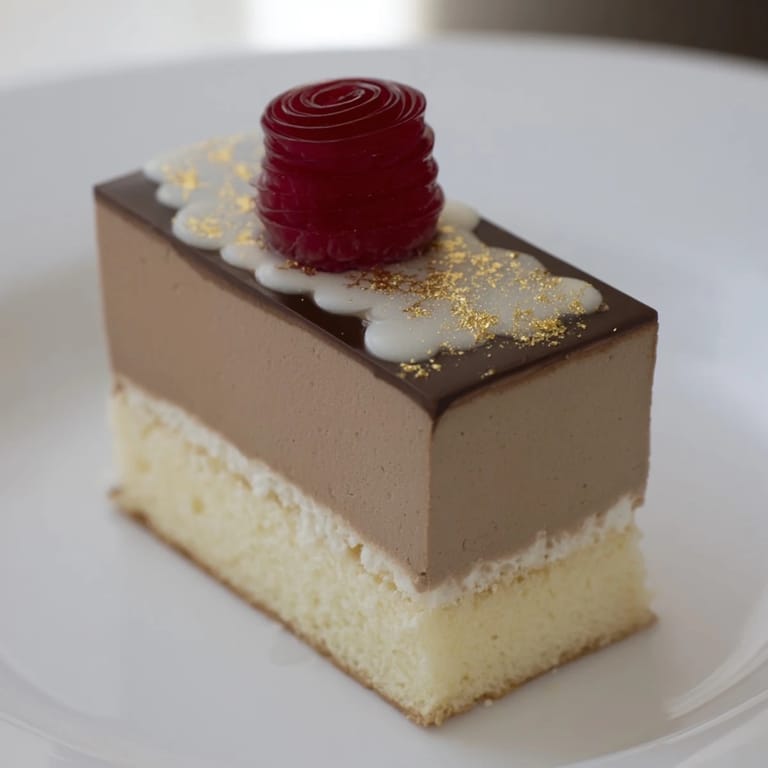
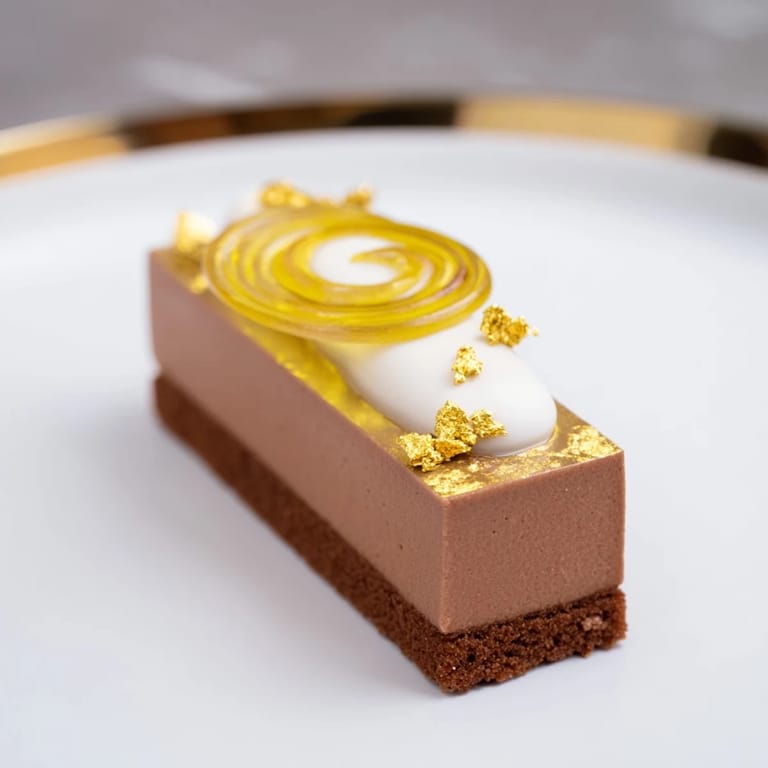
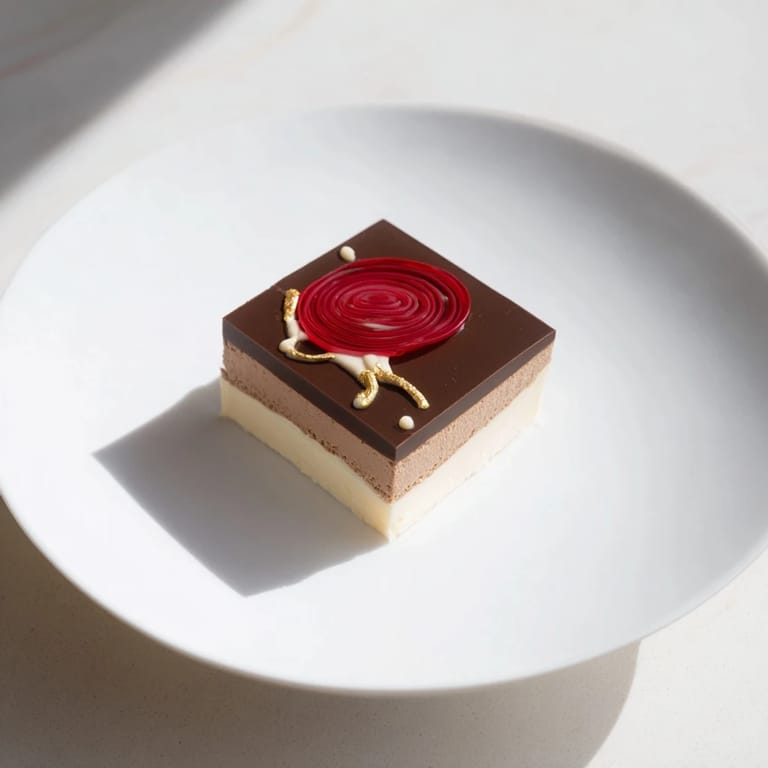
- On each plate or serving dish, place your cooled sponge rectangle as the base. Pipe mousse on top, creating a layer about 3 cm thick. Carefully arrange your jelly spiral on top, following that beautiful Fibonacci curve. The contrast of dark mousse against red jelly against pale sponge is where the magic happens visually.
- Glaze with elegance:
- Chop your white chocolate and place it with cream in a small saucepan. Melt gently over low heat, stirring constantly until smooth and pourable. Let it cool slightly so it's not too hot, then pour it over each assembled dessert in a thin, even layer. This white glaze becomes your canvas for the final touch.
- Finish and chill:
- If using edible gold, apply it now while the glaze is still slightly soft. Then chill your assembled desserts for at least 2 hours before serving. This resting time lets all the flavors settle into harmony and the structure to set beautifully.
 Save to Pinterest
 The first time someone said this dessert made them cry because it was so beautiful they almost didn't want to eat it, I understood that cooking is really about creating moments. The Golden Ratio Shell taught me that sometimes the most meaningful meals are the ones where mathematics, art, and flavor converge into something unforgettable.
Understanding the Golden Ratio in Your Kitchen
The Golden Ratio, also known as Phi (1.618), appears throughout nature, and working with it in the kitchen connects you to something ancient and beautiful. When you cut your jelly spiral and see how each curve diminishes in perfect proportion, you're not just decorating a dessert, you're honoring the same mathematics that shapes seashells and galaxies. It takes patience to cut those spiral strips accurately, but once you understand the principle, it becomes almost meditative. Each strip guides you naturally to the next, and suddenly you're not thinking about measurements anymore, you're thinking about harmony.
Choosing Your Fruit and Flavor Variations
Raspberry is the classic choice, with its bright acidity perfectly balancing the richness of the chocolate mousse. But once you master this dessert, you'll start thinking about mango, which brings tropical warmth, or passionfruit, which adds a sophisticated tartness. I've even experimented with blueberry and blackberry, each bringing their own character to that red jelly spiral. The key is choosing fruits that provide color contrast and acidity to cut through the sweetness of the mousse layer. Think about what colors will photograph beautifully and what flavors will make people close their eyes when they taste them.
Wine Pairing and Serving Suggestions
This dessert deserves to be celebrated properly, which is why pairing it with the right beverage elevates the entire experience. A crisp glass of Moscato d'Asti brings honeyed notes that complement the chocolate without overpowering it, while Champagne adds elegance and its bubbles cut through the richness beautifully. I've also served this with a sweet Riesling, which brings both fruit and acidity to the table. The beauty of The Golden Ratio Shell is that it looks formal enough for a restaurant, but the flavors are approachable enough that it works at casual dinner parties too. Chill everything properly before serving, because these layered desserts deserve to arrive at the table cold and perfect.
- Let the dessert sit at room temperature for 5 minutes before serving so the mousse isn't too firm and the jelly quivers gently with each bite
- Serve with small forks and small plates, making each bite feel intentional and precious
- Have a moment of silence before cutting into it, because this dessert is worth admiring before it becomes breakfast conversation
 Save to Pinterest
 This dessert reminds me that the most beautiful things in life come from patience, precision, and a willingness to try something that seems impossible. Every time you make The Golden Ratio Shell, you're not just following a recipe, you're creating a memory that will linger long after the last bite.
Questions & Answers
- → What is the golden ratio in this dessert?
The golden ratio guides the size and arrangement of each layer, creating a visually balanced spiral design for an elegant presentation.
- → Can I substitute the raspberry puree?
Yes, mango or passionfruit purees work well, providing different fruity notes while maintaining the jelly's texture.
- → How do I ensure the mousse is smooth and airy?
Temper egg yolks with warm cream, melt chocolate gently, and fold whipped cream carefully to keep the mousse light.
- → What is the best way to cut the jelly spiral?
After chilling, slice the jelly into strips starting wider and tapering according to the golden spiral proportions for accurate layering.
- → How long should the dessert chill before serving?
Chill assembled layers for at least 2 hours to set fully and allow flavors to meld together for optimal taste and texture.