 Save to Pinterest
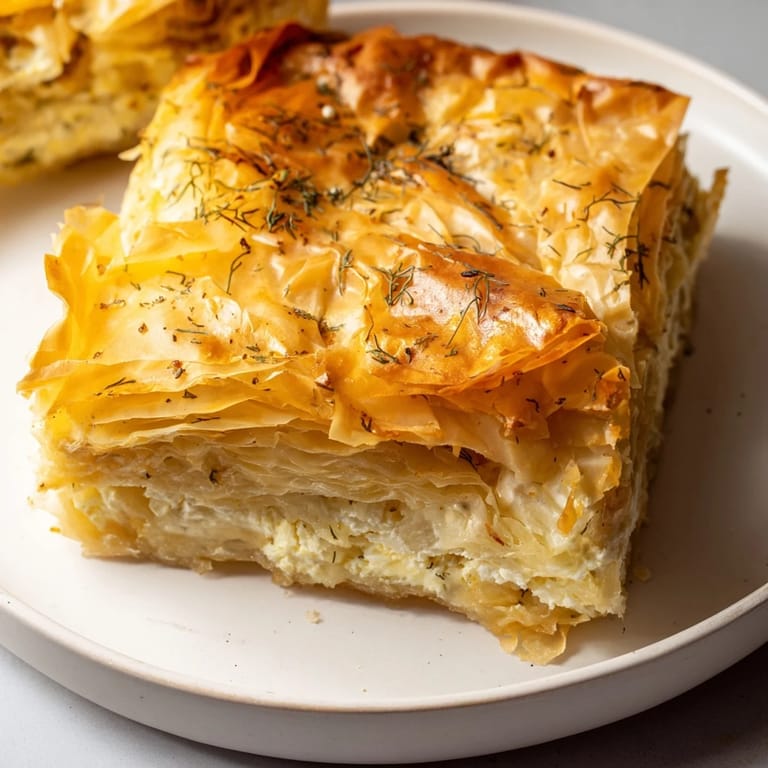
 The first time I watched my grandmother pull a tray of banitsa from her oven, the kitchen filled with a smell so golden and buttery that I forgot to breathe for a moment. She'd been making it the same way for fifty years—layers so thin and crisp they shattered between your fingers, each one kissed with melted butter and filled with soft feta that somehow stayed creamy even after baking. I asked her once why she never wrote down the recipe, and she just smiled and said some things are meant to be learned by standing next to someone who loves them. Now when I make it, I feel like she's there, guiding my hands as I brush each sheet of phyllo dough.
I made this for my book club one Saturday morning, and I remember feeling nervous in a way I don't usually—like I was sharing something precious. But the moment everyone took that first bite and went quiet, I knew it was going to be okay. One friend came back to the kitchen asking how I'd made the cheese filling so light and custardy, and I realized that this dish has a way of making people slow down and actually taste what they're eating instead of just eating to be eating.
Ingredients
- Feta cheese, crumbled (400 g): Use a good quality feta—the kind that crumbles easily and tastes sharp but not too salty. It's the soul of this dish, so don't cheap out here.
- Plain yogurt (250 ml): The yogurt adds tang and moisture that keeps the filling from drying out in the oven, and it's part of what makes banitsa distinctly Bulgarian.
- Eggs (4 large): These bind everything together and create that custardy texture that makes people say "wait, there's egg in here?" with wonder.
- Unsalted butter, melted (60 g): You'll use this to brush between every layer, so the phyllo becomes impossibly crisp and golden—this is where patience pays off.
- Whole milk (50 ml): Just enough to loosen the filling so it spreads evenly without being soupy.
- Phyllo dough (1 package, about 400 g): Buy it frozen and thaw it slowly in the fridge overnight—rushing the thaw means tears and frustration.
- Salt (1/2 tsp) and freshly ground black pepper (1/4 tsp): Season gently; the feta brings its own salt, so taste as you go.
Tired of Takeout? 🥡
Get 10 meals you can make faster than delivery arrives. Seriously.
One email. No spam. Unsubscribe anytime.
Instructions
- Get your oven and pan ready:
- Preheat to 180°C (350°F) and butter your 23 x 33 cm baking dish thoroughly—you want every corner slick with butter so nothing sticks.
- Make the filling:
- Whisk eggs, yogurt, milk, salt, and pepper until the mixture is smooth and pale, then gently fold in the crumbled feta so you don't break it into dust. The filling should look creamy and cloud-like.
- Prepare your phyllo:
- Unroll it carefully and lay it on a clean kitchen towel, then cover it immediately with a damp towel—phyllo dries out in seconds, and dry phyllo cracks instead of layers.
- Build the first layer:
- Lay one sheet of phyllo in your buttered dish, brush it lightly with melted butter, and repeat until you have four layers. This base is your foundation.
- Add filling and continue layering:
- Spread about a quarter of the cheese mixture over the four phyllo sheets, then add three to four more buttered phyllo sheets on top. Repeat this pattern—filling, then layers—until all the filling is gone, ending with three to four final phyllo sheets on top.
- Score and finish:
- Using a sharp knife, cut the whole thing into squares or diamond shapes all the way through (don't be shy), then drizzle any remaining melted butter over the top so it gets into those cut lines.
- Bake until golden:
- Bake for 30–35 minutes, watching until the top turns deep golden brown and sounds crispy when you tap it with a spoon. The kitchen will smell impossibly good.
- Cool and serve:
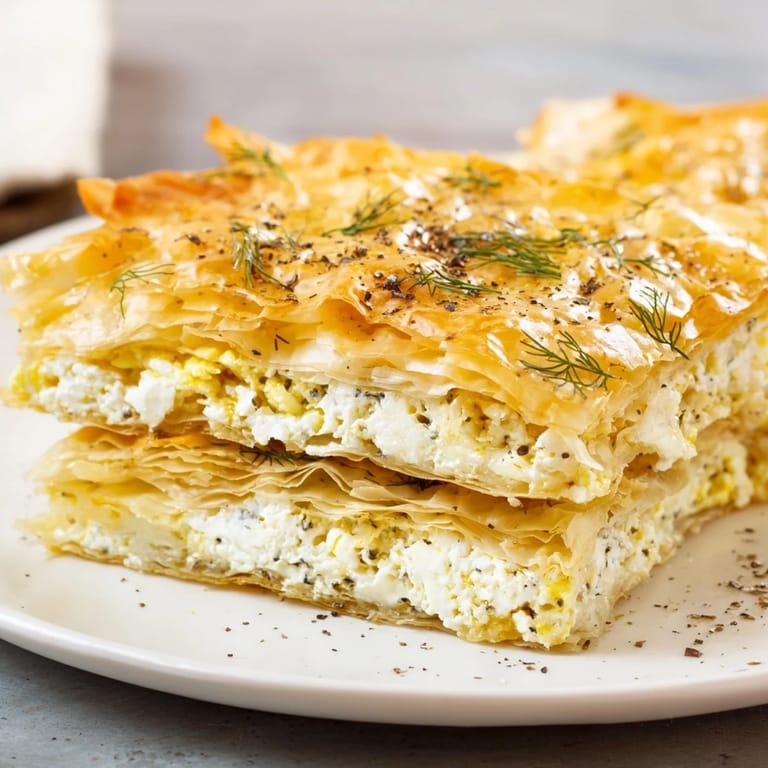
- Let it rest for 10 minutes—this lets the layers set so they don't fall apart when you pick them up—then serve warm or at room temperature.
 Save to Pinterest
 There's a moment in every banitsa, right when it comes out of the oven, where you realize why this dish has survived hundreds of years in Bulgarian kitchens—it's not fancy, it's not complicated, but it's absolutely, completely right. It's breakfast, it's lunch, it's the thing you bring to a potluck, and somehow it's also the thing people remember you for.
The Layering Ritual
There's something almost meditative about brushing butter on each phyllo sheet, watching it soak in slightly and turn translucent. I used to rush this part, thinking it was the boring bit, but I've learned that the layering is actually where all the magic happens. Each sheet of butter-brushed phyllo becomes crispy and golden in its own way, and when you bite through them all at once, you're tasting patience more than anything else.
Variations That Work
Once you understand how banitsa works, you can play with it gently. Some people add fresh dill or parsley to the filling for brightness, and honestly, it's a revelation—suddenly the whole thing tastes fresher and more garden-like. You can also mix half the feta with milder cheeses like ricotta or even Bulgarian sirene if you want less saltiness, and it still works beautifully. The structure of the dish is strong enough to handle small changes without falling apart.
What to Serve Alongside
Banitsa is one of those dishes that loves company but doesn't need much. A glass of cold ayran—that tangy yogurt drink—is the traditional pairing, and once you've had it, you understand why they go together so perfectly. A simple salad of cucumbers, tomatoes, and fresh herbs cuts through the richness beautifully, and honestly, that's all you really need for a meal that feels complete and balanced.
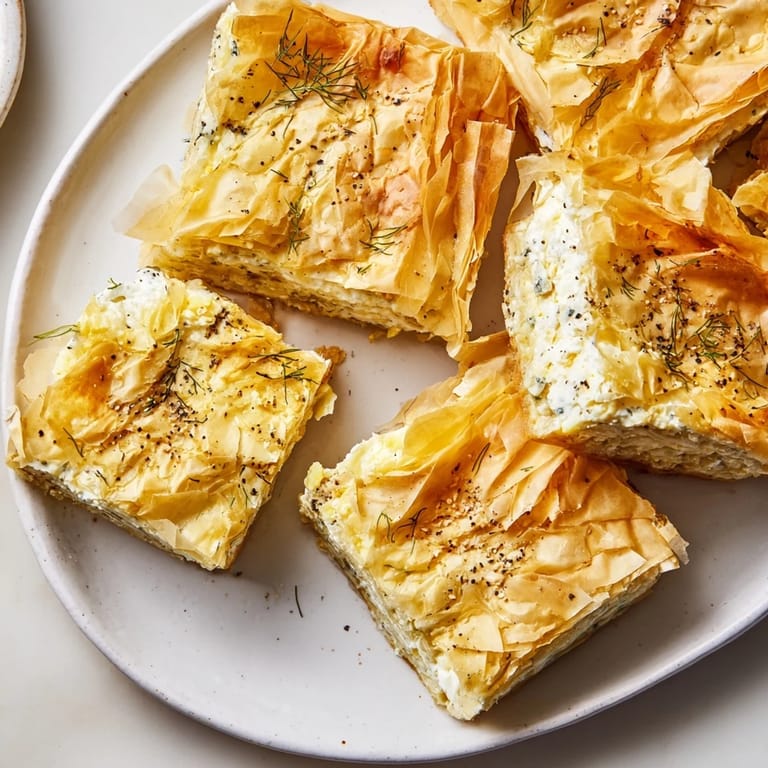
- Make sure your banitsa is actually cool enough to handle before you cut it, or the layers will squish instead of shatter.
- Leftover banitsa keeps in an airtight container for three days and reheats perfectly in a moderate oven for about 10 minutes.
- If you're making this ahead, assemble it in the morning and bake it in the afternoon so the phyllo doesn't get soggy from sitting.
 Save to Pinterest
 Making banitsa feels like joining a conversation that's been going on for centuries, and the best part is knowing that when you feed it to someone, you're passing that conversation along to them. That's something worth mastering.
Questions & Answers
- → What type of cheese is used in Bulgarian Banitsa?
Crumbled feta cheese provides the traditional tangy and creamy filling for Banitsa.
- → Can I substitute phyllo dough for another pastry?
Phyllo dough’s thin, flaky layers are essential to achieve Banitsa’s texture; puff pastry won’t quite replicate the crispy, light result.
- → How do I keep phyllo dough from drying out during preparation?
Cover the phyllo sheets with a damp towel while working to prevent them from becoming brittle and tearing.
- → What is the best way to store leftover Banitsa?
Wrap leftovers tightly and refrigerate; reheat gently to maintain crisp edges and creamy filling.
- → Are there variations to the traditional filling?
Yes, fresh herbs like dill or parsley can be added for flavor; ricotta or Bulgarian sirene cheese can replace some feta for milder taste.