 Save to Pinterest
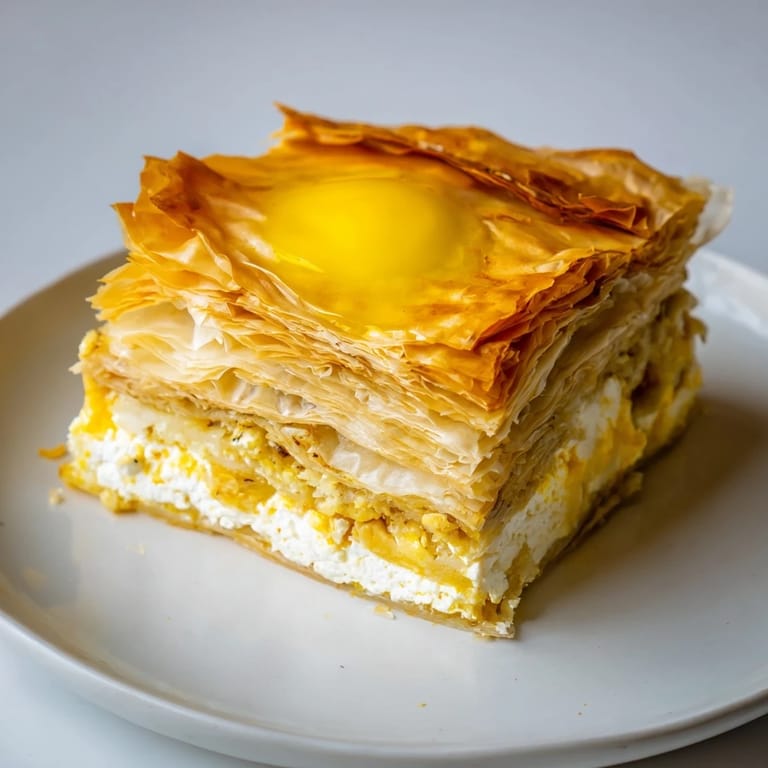
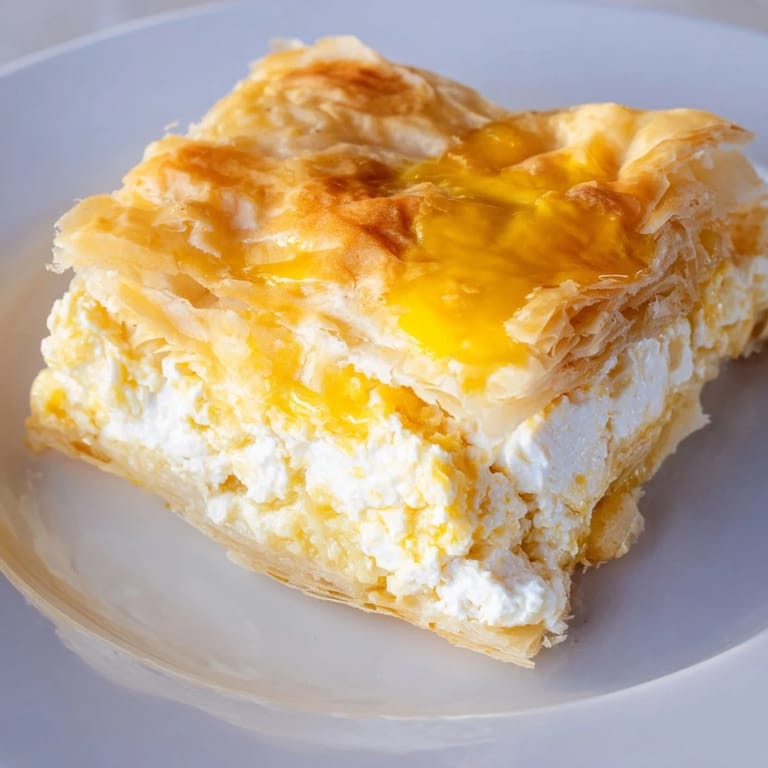
 My neighbor's kitchen smelled like warm butter and cheese the first time she mentioned gibanica, and I was immediately intrigued by how casually she described this golden Balkan treasure. She explained it with her hands moving as if layering the phyllo herself, and I realized this wasn't just a recipe—it was a ritual. Years later, I finally made it on a quiet Sunday morning, and the moment those crispy layers emerged from the oven, I understood why she'd talked about it with such reverence. That first bite, still warm with melted feta and cottage cheese oozing between the layers, became the memory that keeps me coming back to this dish.
I brought this to a potluck once, nervous it wouldn't disappear fast enough, only to watch it vanish before I'd finished pouring drinks. Someone asked for the recipe before even finishing their slice, and I realized gibanica has this quiet power—it doesn't shout for attention, but people can't stop eating it. That's when I started making it regularly, not because it's complicated, but because it genuinely brings people together in the most unpretentious way.
Ingredients
- Cottage cheese (300 g): The mild backbone of the filling—it keeps everything soft and binds the sharper feta without overwhelming it.
- Feta cheese (200 g): Crumble it by hand if you have time; it distributes more unevenly and creates pockets of intense, salty flavor.
- Eggs (4 large): These set the filling and add richness, so don't skimp or use smaller eggs.
- Plain yogurt (100 ml): The secret weapon that keeps the filling moist and adds a subtle tanginess that lifts the whole dish.
- Sunflower oil (50 ml for filling plus 2 tbsp for brushing): Use neutral oil so the cheese flavors shine; olive oil will overpower everything.
- Sparkling water (50 ml): This creates tiny air pockets in the filling that make it lighter and fluffier than you'd expect.
- Salt and pepper: Taste as you go—feta is already salty, so you need less than you think.
- Phyllo dough (500 g, about 12 sheets): Keep it thawed and covered with a damp towel while working, or it'll shatter into unusable pieces.
Tired of Takeout? 🥡
Get 10 meals you can make faster than delivery arrives. Seriously.
One email. No spam. Unsubscribe anytime.
Instructions
- Prepare your workspace:
- Preheat your oven to 180°C and grease your baking dish generously—this step matters more than you'd think for easy release later.
- Mix the cheese filling:
- Combine all filling ingredients in a bowl and whisk until smooth and creamy, but not overmixed. You want some texture, not a completely uniform paste.
- Start layering:
- Place your first phyllo sheet in the dish and brush it lightly with oil using long, gentle strokes that follow the paper's natural grain. Layer two more sheets the same way, then spread 3-4 tablespoons of filling across the whole surface.
- Build the layers:
- Repeat this rhythm—2 or 3 phyllo sheets brushed with oil, then a generous spread of filling—until you've used everything, finishing with 2 clean phyllo sheets on top for a beautiful crust.
- Brush and optional glaze:
- Generously brush the top layer with oil so it gets truly golden and crisp. If you want extra richness, beat the egg yolk with a splash of water and brush it on top instead.
- Cut before baking:
- Using a sharp knife, cut the whole thing into squares or diamonds now while it's still raw—trying to cut hot gibanica is a recipe for phyllo shattering everywhere.
- Bake until golden:
- Bake for 35-40 minutes until the top is deep golden and crispy to the touch. The edges will brown faster than the center, which is perfectly normal.
- Cool and serve:
- Let it rest for 10 minutes so the filling sets slightly, then serve it warm or at room temperature with a simple salad on the side.
 Save to Pinterest
 There was a moment when my teenager took a bite of this warm from the oven, looked surprised, and asked for seconds without being prompted—rare enough that I remember it clearly. That's when gibanica stopped being just a recipe in my kitchen and became one of those dishes that signals comfort and care in the quietest way.
Why Phyllo Works Here
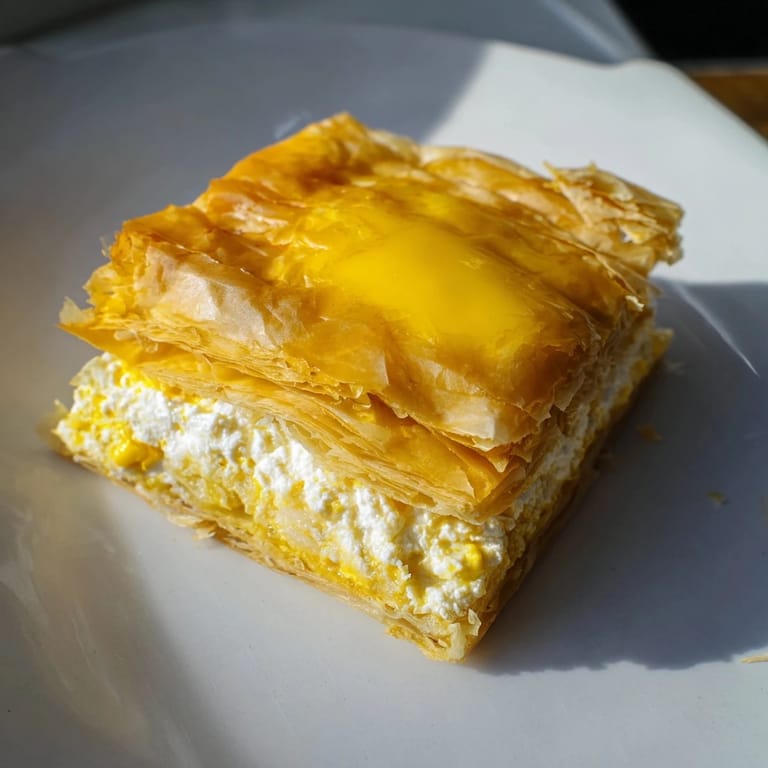
Phyllo creates something impossible—simultaneously crisp and tender, fragile and substantial. The oil between each thin layer doesn't just cook the pastry; it creates these pockets of steam that puff everything up while the exterior shatters. It's the textural opposite of the creamy filling, which is exactly why this dish works as well as it does. When you brush each sheet thoughtfully, you're not just following steps; you're building a structure that will transform in the heat.
The Cheese Balance
Cottage cheese and feta alone would be too heavy or too salty respectively, but together they create something more interesting than either could alone. The yogurt brightens everything without making it watery, and the eggs tie it all together while adding richness. I've tried adjusting the ratios and always come back to these proportions because they just work—the filling stays creamy without leaking everywhere, and every bite tastes balanced rather than dominated by any single flavor.
Variations and Occasions
This dish is endlessly flexible in the best way—it tastes equally at home as a casual lunch, a dinner party starter, or part of a spread of shared appetizers. Some people add sour cream for even more richness, others skip the egg yolk glaze entirely and still end up with beautiful golden layers. The beauty of gibanica is that it forgives small changes while maintaining its essential character, which is maybe why it's lasted for generations across the Balkans.
- Try adding fresh dill or parsley to the filling if you want something more herbaceous and spring-like.
- Serve leftovers cold the next day with strong coffee—the textures actually improve as it cools and firms up.
- Double the recipe and freeze one before baking if you want a ready-made dinner hiding in your freezer.
 Save to Pinterest
 Gibanica is one of those dishes that reminds you how the simplest ingredients, layered with patience and attention, become something transcendent. Make it once and you'll understand why people keep coming back to it.
Questions & Answers
- → What type of cheese is used in this layered pie?
A combination of cottage cheese and crumbled feta provides a creamy and tangy filling.
- → How is the phyllo dough prepared for baking?
Phyllo sheets are layered and brushed with sunflower oil between each layer to ensure crispiness and golden texture.
- → Can this pie be served as a main dish?
Yes, it serves well as a light main dish, snack, or appetizer, offering a satisfying savory flavor.
- → Is there a way to add richness to the filling?
Adding a tablespoon of sour cream to the cheese mixture boosts richness and creaminess.
- → How should leftovers be stored and reheated?
Store leftovers in the refrigerator and reheat gently to preserve the pie’s crisp texture.
- → Are there gluten-free options for the pastry?
Use gluten-free phyllo sheets as a substitute to make the dish gluten-free.