 Save to Pinterest
 The first time I really understood burek was at a crowded Sarajevo market on a grey morning, watching an elderly woman assemble one with the kind of practiced grace that comes from decades of muscle memory. She worked so fast her hands blurred, and when I asked her secret, she just smiled and said the phyllo knows what to do if you listen to it. That conversation stuck with me, and now whenever I make this Bosnian classic, I think about how something so elegant starts with the simplest ingredients—ground beef, spinach, butter, and paper-thin pastry that transforms into something crispy and golden.
I made this for my neighbor once on a Sunday afternoon when the whole kitchen smelled like melting butter and caramelized onions, and she came over with her family expecting just a quick lunch. Three hours later, we were still sitting around the table, laughing and passing around plates, and her youngest kept asking for one more slice until the whole burek was gone. That's when I realized this dish isn't really about the technique—it's about the moment it creates.
Ingredients
- Ground beef (400 g, 80/20 ratio): The lean-to-fat balance matters here because too much fat makes the filling greasy, but too little and it gets dry and crumbly when you bite into it.
- Fresh spinach (200 g, washed and chopped): The moisture in fresh spinach is what keeps the filling from being dense—frozen spinach works too, but you'll want to thaw and squeeze it dry first or your burek gets soggy.
- Onion (1 medium, finely chopped): This becomes almost sweet when it cooks into the beef, rounding out all the savory flavors and adding moisture to the filling.
- Garlic (2 cloves, minced): Don't skip this or use powder instead—fresh garlic melts into the meat in a way that changes everything about the taste.
- Salt (1 tsp): Season generously; the phyllo and butter are neutral, so the filling carries all the flavor.
- Black pepper (½ tsp): Freshly cracked is noticeably better here than pre-ground.
- Paprika (½ tsp, optional): This adds a subtle warmth and a hint of color if you want it, but the burek is delicious without it too.
- Phyllo pastry sheets (500 g, about 12–14 sheets): This thin pastry is the entire point—it becomes impossibly crispy and golden when butter hits it in the oven.
- Unsalted butter (120 g, melted): Use good butter; you'll taste it in every layer.
- Vegetable oil (3 tbsp): Mix this with the butter to prevent burning and help the phyllo get extra crispy without turning dark too fast.
- Plain yogurt (3 tbsp, optional): A yogurt-and-water wash on top creates an even crispier, more golden exterior.
- Water (1 tbsp, for brushing): Just enough to dilute the yogurt so it spreads evenly without clumping.
Tired of Takeout? 🥡
Get 10 meals you can make faster than delivery arrives. Seriously.
One email. No spam. Unsubscribe anytime.
Instructions
- Prepare your workspace and oven:
- Heat the oven to 190°C (375°F) and line your baking tray with parchment paper. You want everything ready because once you start working with phyllo, you'll want to move quickly—those sheets dry out faster than you'd think if they're exposed to air.
- Mix the filling until it's unified:
- In a large bowl, combine the beef, spinach, onion, garlic, salt, pepper, and paprika, stirring until there are no streaks of raw beef showing and the spinach is evenly distributed. The mixture should look almost paste-like, with no dry spots.
- Make your butter-oil mixture:
- Melt the butter in a small bowl and stir in the vegetable oil, which keeps the heat lower and prevents the butter from burning as the phyllo crisps up in the oven.
- Layer and brush the phyllo:
- Take one phyllo sheet and lay it flat on your work surface. Brush it lightly with the butter-oil mixture using a pastry brush—you don't need a heavy hand here, just enough so the next sheet sticks. Lay a second sheet on top and brush again, then add a third if you want extra sturdiness. You're creating a cushion for the filling.
- Add the filling in a line:
- Spread a thin, even layer of the meat-spinach mixture along one long edge of your phyllo stack, leaving about an inch of border on the sides and the edge closest to you. This border is what holds everything together when you roll it up.
- Roll it into a tight log:
- Starting from the edge where your filling is, roll the phyllo up tightly, tucking the filling in as you go and using the border to seal everything. You're making one long, firm log that shouldn't have any gaps.
- Coil it into a spiral:
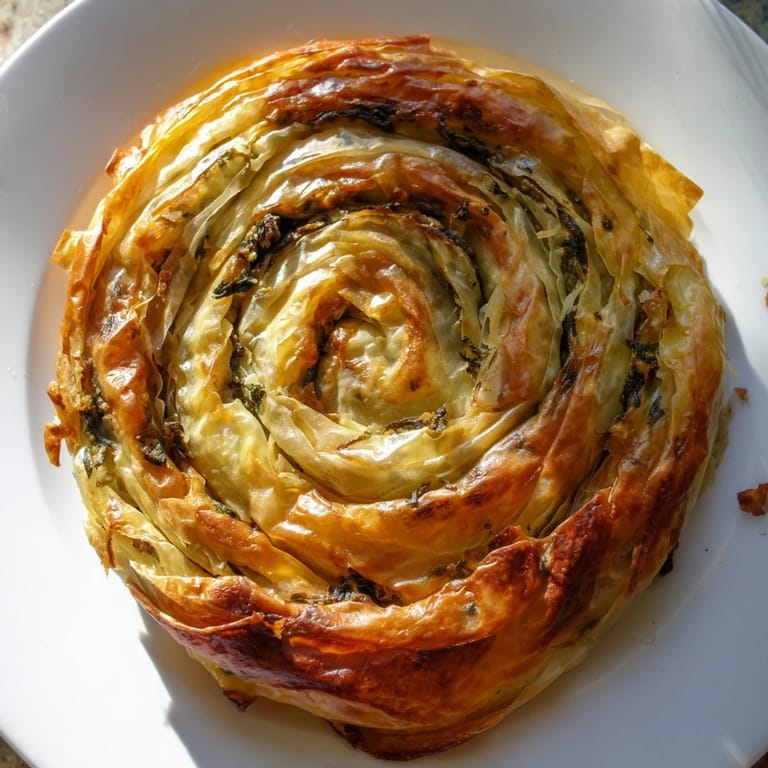
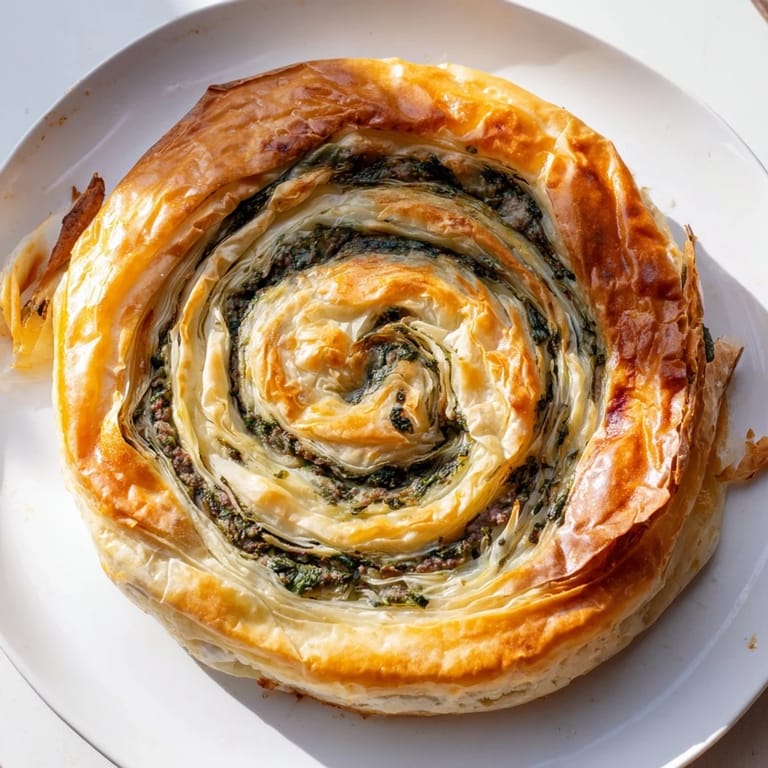
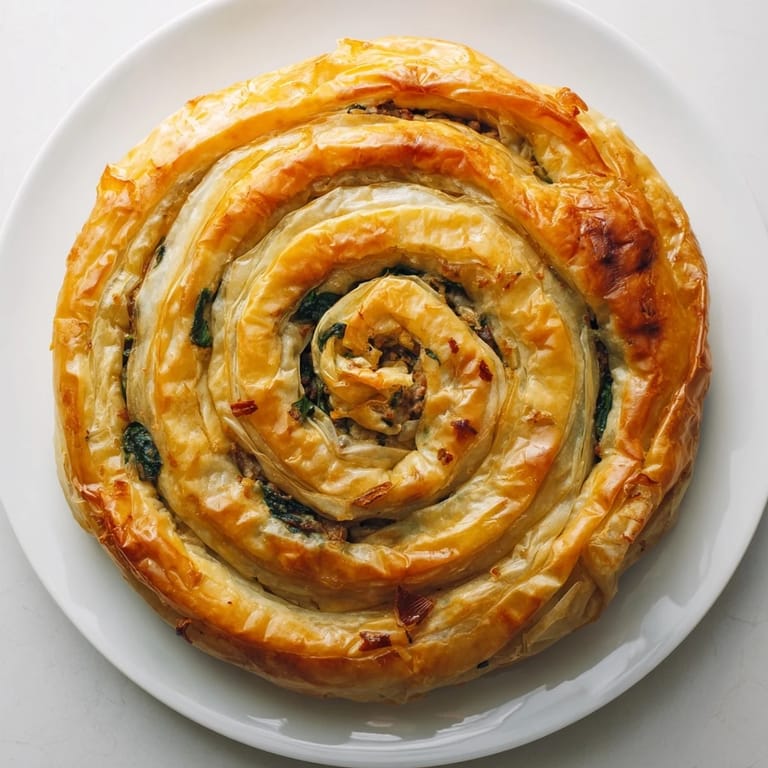
- Take your log and curl it gently into a spiral shape, like a snail shell, and place it seam-side down on your prepared baking tray. If you have filling and phyllo left over, repeat the whole process and make another spiral—one large one or a few smaller ones will both work.
- Brush generously and add the yogurt wash:
- Brush the top of your spiral with the remaining butter-oil mixture so it gets golden all over. If you're using the optional yogurt wash, stir together the yogurt and water until it's thin enough to brush, then paint that on top for extra crispness and color.
- Bake until it's golden and shatters at the touch:
- Bake for 35–40 minutes, watching toward the end so it doesn't darken too much. The burek is done when the pastry is golden brown and sounds crispy when you tap it.
- Rest before cutting:
- Let it cool for about 10 minutes so the filling sets slightly and the pastry stays crispy when you slice it. If you cut too soon, everything falls apart; if you wait too long, it cools down and loses some of that warmth that makes it perfect.
 Save to Pinterest
 There's a moment right when you pull burek out of the oven and the smell hits you—butter and garlic and the kind of deep, savory aroma that makes everyone in the house stop whatever they're doing and head to the kitchen. I've seen that moment turn strangers into friends over a shared plate, and I've seen it quiet a whole table full of noise just so people could listen to the sound of the pastry crackling under a fork.
Building Layers That Actually Stay Together
The trick to a burek that holds its shape is understanding that phyllo is delicate but strong if you treat it right. Each butter-brushed layer creates a seal, and by the time you've stacked two or three sheets, you've got something sturdy enough to roll without tearing. I used to rush this part until one afternoon when I was impatient and skipped brushing between layers—the whole thing fell apart in the oven, and I learned that day that phyllo respects patience more than speed.
The Spiral Technique and Why It Works
Coiling your filled phyllo log into a spiral instead of just folding it is what gives burek its signature look and texture. When it bakes, the spiral creates natural pockets where the butter pools and makes the pastry extra crispy, and the filling stays moist and tender in the center because of the gentle layering. The shape also looks a lot more impressive than a simple rolled log, even though it takes maybe ten extra seconds to do.
How to Serve and Store It
Burek is best served warm, right after it comes out of the oven, either with a dollop of cool yogurt alongside or a simple cucumber salad to cut through the richness. It keeps well covered in the fridge for a few days, and you can warm it gently in the oven without the phyllo getting soggy if you let it come to room temperature first and then reheat at a low temperature just until warm.
- Pair it with plain yogurt or a tangy cucumber and tomato salad for balance.
- You can make it a day ahead, cover it tightly, and bake it fresh when you're ready—just add a few extra minutes to the baking time since it'll start from cold.
- If you want to get fancy, try swapping the beef for lamb or a beef-lamb mix for deeper flavor, or go vegetarian with crumbled feta cheese instead of meat.
 Save to Pinterest
 This burek tastes like home, whether or not it's actually your home—it carries that kind of generous, welcoming energy that only comes from food that's meant to be shared. Make it once, and I promise you'll find yourself wanting to make it again.