 Save to Pinterest
 There's something about the smell of cinnamon hitting a warm kitchen on a quiet morning that makes everything feel possible. I stumbled onto this apple pie oatmeal bowl on a Saturday when I was tired of the same cereal routine and had a couple of apples sitting on the counter getting soft. Twenty minutes later, I had a steaming bowl that tasted like dessert but actually filled me up for hours. It became my go-to when I needed comfort in a bowl without the guilt.
I made this for my roommate once when she was stressed about a work presentation, and she ate it so slowly and deliberately that I knew I'd accidentally created something therapeutic. Now whenever someone's having a rough week, this is what I make them. There's a reason apple pie exists, and sometimes you just need that feeling at 7 a.m.
Ingredients
- Old-fashioned rolled oats: These hold their shape and create that creamy texture without turning into mush—don't swap for instant unless you enjoy porridge.
- Milk (dairy or unsweetened non-dairy): The base of creaminess, and honestly, oat milk makes this even richer if you have it on hand.
- Maple syrup or honey: Just enough sweetness to remind you this is breakfast, not dessert, but not so much that your blood sugar takes a nosedive.
- Ground cinnamon: Use the good stuff if you can—cheap cinnamon tastes like cardboard, and this dish is all about that warm spice.
- Salt: A tiny pinch that makes every other flavor pop and keeps this from tasting one-dimensional.
- Pure vanilla extract: Don't skip this; it adds a subtle depth that people taste but can't quite name.
- Medium apple, peeled and diced: Granny Smith gives you that tart edge that cuts through sweetness, but use whatever you have—it all works.
- Unsalted butter or coconut oil: For caramelizing the apples; the butter version tastes richer, the coconut oil version feels lighter.
- Chopped toasted walnuts or pecans: A handful for crunch and nuttiness, though honestly toast them yourself if you can—it makes a real difference.
- Pinch of nutmeg: Optional but worth it, adds a whisper of something cozy you can't ignore.
Tired of Takeout? 🥡
Get 10 meals you can make faster than delivery arrives. Seriously.
One email. No spam. Unsubscribe anytime.
Instructions
- Build your base:
- Combine oats, milk, maple syrup, cinnamon, salt, and vanilla in a medium saucepan and stir until it looks like a breakfast disaster. Bring it to a simmer over medium heat, watching as it gradually transforms into something creamy and inviting.
- Let it get tender:
- Reduce the heat and stir occasionally for 8 to 10 minutes until the oats are soft and the whole thing moves like lava in the pan. You'll know it's ready when a spoon dragged through leaves a little trail behind it.
- Caramelize the apples:
- While the oats are cooking, melt butter in a small skillet over medium heat, then add diced apple, cinnamon, maple syrup, and salt. Stir and listen for that gentle sizzle as the apples soften and their edges turn golden, about 5 to 7 minutes of quiet kitchen moments.
- Bring it together:
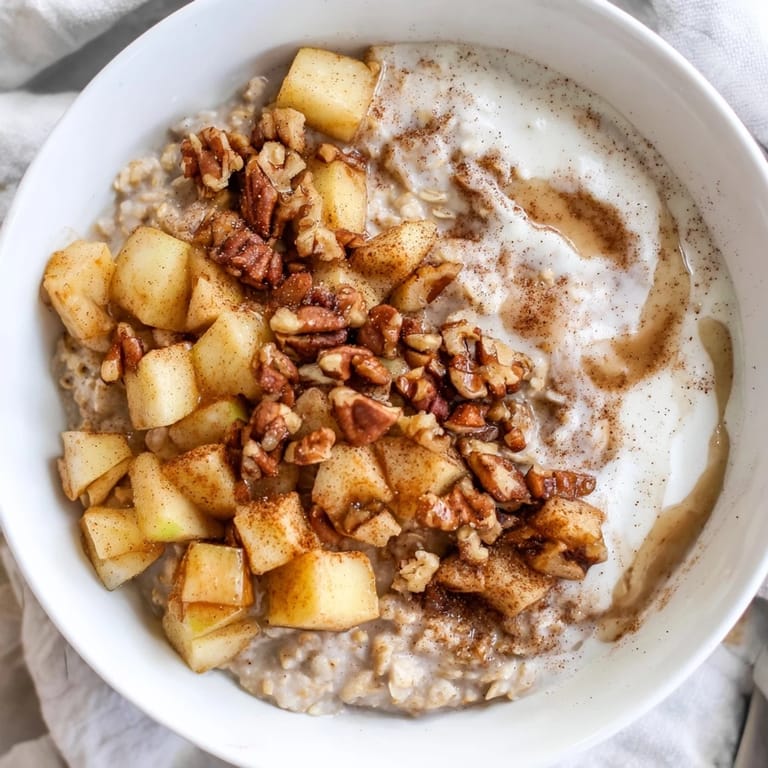
- Divide the oatmeal between two bowls and spoon that warm, caramelized apple mixture right over the top. Watch the apples nestle into the creamy base like they belong there.
- Finish and serve:
- Top with chopped nuts if you're using them, drizzle with extra maple syrup, and finish with a tiny pinch of nutmeg. Serve it warm while the apples are still releasing their warmth.
 Save to Pinterest
 There's a Tuesday morning I'll never forget when I made this for someone I was trying to impress, and instead of being nervous, I felt calm because I was cooking something genuine. We talked for an hour over those bowls, and it turned into something neither of us expected. That's when I realized this recipe isn't just breakfast—it's permission to slow down.
Why the Texture Matters
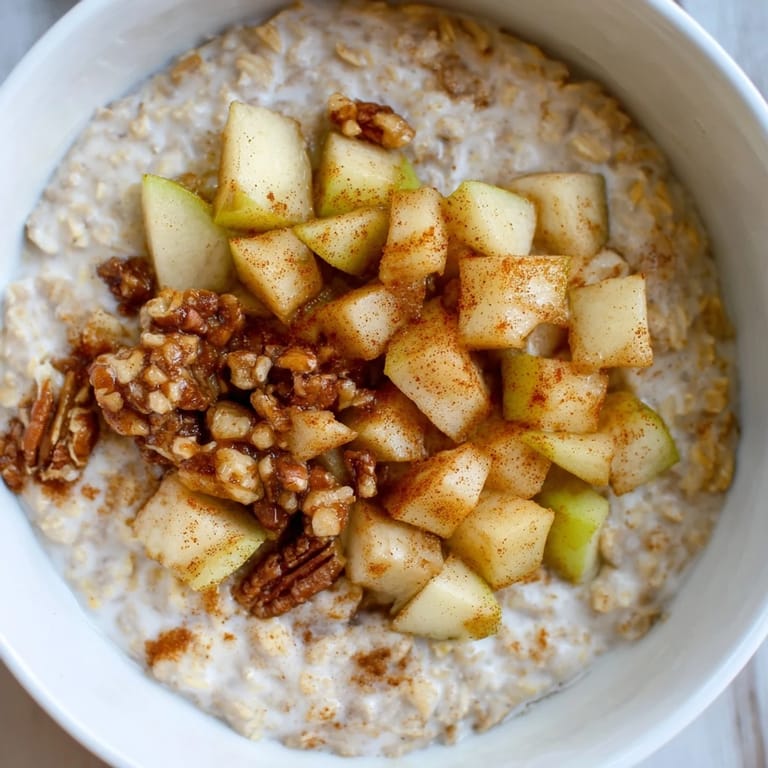
The magic happens when you pair creamy oats against warm, slightly caramelized apples. The apples break down just enough to get soft but not so much that they fall apart, and when they sit on top of the warm oats, they release a little juice that mingles with the creaminess below. That contrast is what makes it feel special instead of just hot cereal.
Playing with Variations
I've made this with pears instead of apples on a whim, and it's softer and more delicate but equally good. Brown sugar works if you don't have maple syrup, and almond milk makes it feel lighter if that's your preference. The bones of this recipe are forgiving enough that you can swap without it falling apart, but the cinnamon and warm apples are non-negotiable.
Make It Your Own
Some mornings I add a splash of vanilla almond milk at the end for extra creaminess, or I'll toss in raisins while the apples cook for a hidden burst of sweetness. You could stir in a dollop of yogurt right before serving, add a drizzle of almond butter, or even top it with granola for crunch. The base is solid enough that you can build on it without losing what makes it good.
- Toast your own nuts if you have the time; five minutes in a dry pan changes everything.
- Make the apple mixture first while you're waiting for the oats to simmer—you'll finish at the same time with no rushing.
- Leftovers reheat perfectly with a splash of milk stirred back in, though fresh is always better.
 Save to Pinterest
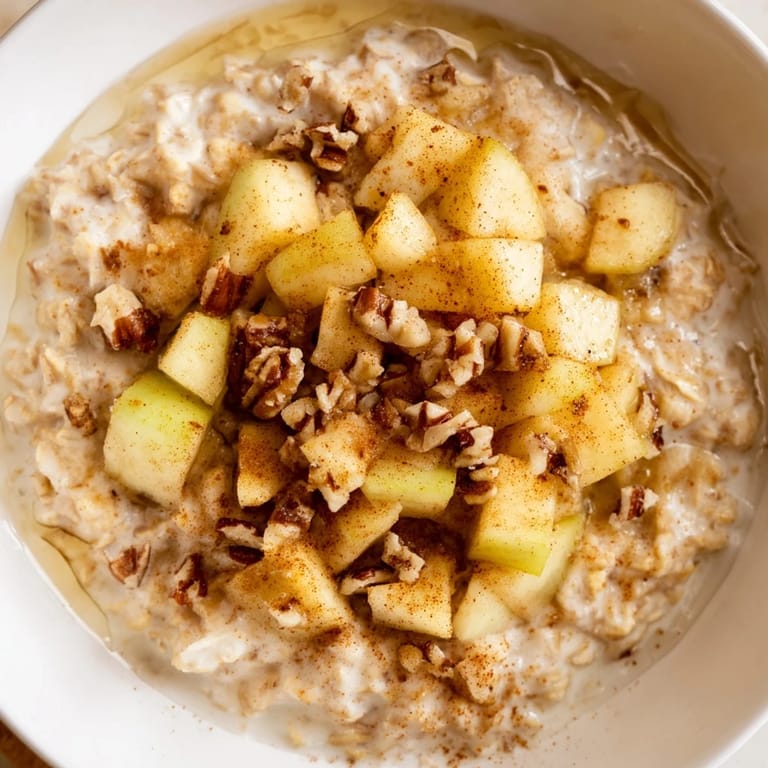
 This is the kind of breakfast that makes you feel taken care of, whether you're doing the taking care or someone else is. It's simple enough for a Tuesday but special enough to feel intentional.
Questions & Answers
- → What type of oats works best here?
Old-fashioned rolled oats provide the ideal creamy texture, but steel-cut or quick oats can be used with adjusted cooking times.
- → Can I make this dairy-free?
Yes, substitute milk with unsweetened plant-based milk and butter with coconut oil for a dairy-free version.
- → How do I keep the apples from getting mushy?
Cook the diced apples just until softened and lightly caramelized, about 5–7 minutes, so they retain some texture.
- → What nuts work best as toppings?
Toasted walnuts or pecans add a nice crunch and complement the warm spices well.
- → Can I adjust the sweetness?
Maple syrup or honey can be varied to taste, and brown sugar can be used with the apples for different sweetness levels.