 Save to Pinterest
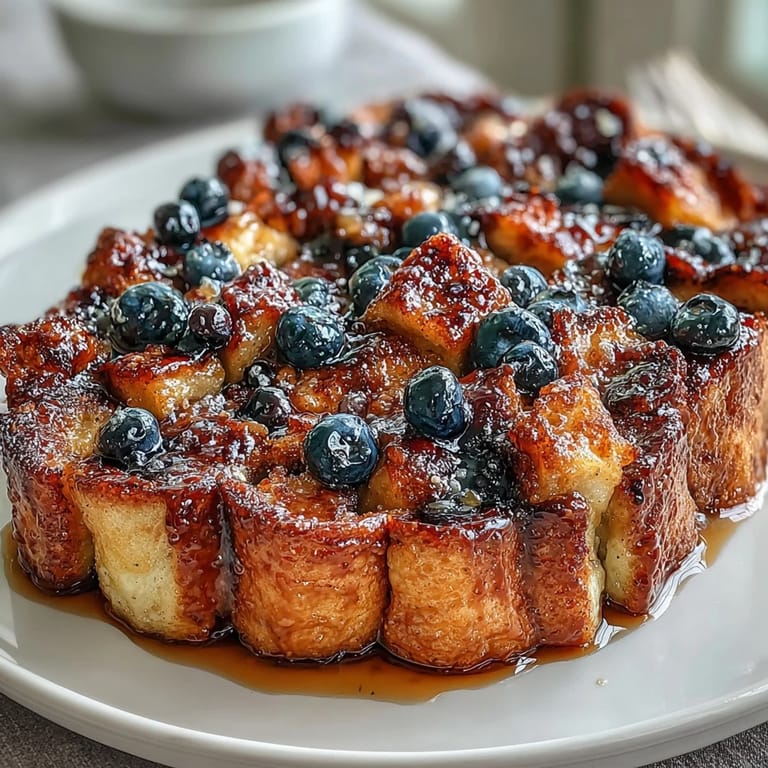
 There's something magical about the moment when a casserole dish transforms from humble ingredients into something golden and fragrant that fills your entire kitchen. I discovered this lemon blueberry sourdough French toast bake on a quiet Sunday morning when I was trying to use up both a slightly stale sourdough loaf and a carton of blueberries before they went soft. What started as a practical solution turned into the kind of breakfast that makes people linger at the table, asking for seconds before they've even finished their first bite.
I'll never forget the morning I made this for my sister's birthday brunch when she came to visit. She walked into the kitchen while it was still baking, and the smell of caramelized lemon and toasted sourdough stopped her in her tracks—she just stood there with her coffee mug, breathing it in. When we finally sat down to eat, the whole table went quiet in that particular way that only happens when food is genuinely delicious, and she asked if I'd make it every time she came home.
Ingredients
- Sourdough bread (1 loaf, about 400 g / 14 oz, cut into 1-inch cubes): The tang and structure of sourdough is essential here—it won't turn to mush like white bread would, and it adds a subtle complexity that balances the bright lemon.
- Fresh or frozen blueberries (1½ cups / 225 g): Frozen works beautifully and honestly saves you money; they won't bleed as much as fresh if you use them straight from the freezer.
- Lemon zest (from 1 lemon): This is where the magic lives—don't skip it or use bottled, the fresh oils make an enormous difference.
- Large eggs (6): These are your binding agent and what creates that custard-like richness that makes this feel indulgent.
- Whole milk (2 cups / 480 ml) and heavy cream (½ cup / 120 ml): The combination creates a silky custard; using only milk makes it thin and watery.
- Granulated sugar (⅓ cup / 65 g for custard, 2 tbsp / 25 g for topping): Keep these separate—the topping sugar caramelizes into golden crunch.
- Pure vanilla extract (2 tsp): Imitation will taste thin and chemical by comparison; trust me on this one.
- Salt (¼ tsp): A tiny pinch that makes every other flavor pop without announcing itself.
- Lemon juice (from 1 lemon): The juice balances the custard's sweetness and adds a gentle tartness that makes you want another bite.
- Unsalted butter, melted (2 tbsp / 28 g): This keeps the topping from sticking while it bakes and helps the cinnamon sugar get crispy.
- Ground cinnamon (½ tsp): A warm counterpoint to all that bright citrus.
Tired of Takeout? 🥡
Get 10 meals you can make faster than delivery arrives. Seriously.
One email. No spam. Unsubscribe anytime.
Instructions
- Set up your dish:
- Grease a 9x13-inch baking dish with butter or cooking spray, then scatter your cubed sourdough evenly across the bottom. Sprinkle the blueberries and lemon zest over the bread, letting the citrus color distribute throughout—this is less about perfect placement and more about visual appeal.
- Build your custard:
- In a large bowl, whisk together the eggs, milk, cream, sugar, vanilla, salt, and lemon juice until smooth and fully combined. The custard should look pale yellow and homogeneous with no streaks of egg white remaining.
- Marry bread and custard:
- Pour the custard evenly over the bread and berries, then gently press down with a spatula or your fingers so every piece of sourdough gets saturated with the mixture. You'll feel some resistance—that's the bread absorbing the liquid, which is exactly what you want.
- Let it rest:
- Cover the dish with plastic wrap or foil and refrigerate for at least 30 minutes, though overnight is genuinely better. This patience is what transforms it from a casserole into something with real custard texture.
- Prep for baking:
- Remove from the refrigerator about 10 minutes before baking. Preheat your oven to 350°F while you drizzle the melted butter over the surface, then mix your sugar and cinnamon together and sprinkle evenly across the top.
- Bake to golden perfection:
- Bake uncovered for 45 minutes, until the center is set (it should barely jiggle when you gently shake the dish) and the top is deep golden brown. A few darker spots on the edges are not only okay—they're the most delicious parts.
- Rest before serving:
- Let it cool for 10 minutes so the custard sets slightly and you won't burn your mouth on the first bite. Serve warm, drizzled with maple syrup or dusted with powdered sugar if you're feeling fancy.
 Save to Pinterest
 There was a morning when I made this for a house full of weekend guests, and what struck me wasn't just that everyone loved it—it was that people kept coming back to the kitchen, even after breakfast was technically over, just to have another small piece while standing at the counter talking. Food that does that, that creates reasons to linger and connect, feels like its own kind of success.
Why Sourdough Matters Here
Sourdough's natural tang and chewy structure are perfect for custard-based dishes because it stands up to saturation without turning to mush. The bread's fermentation also adds a subtle complexity that plays beautifully against bright citrus—it's not just about the texture, it's about how the flavors actually talk to each other. If you only have regular white bread or brioche on hand, they'll work, but you'll lose some of that sophisticated edge that makes this feel less like breakfast and more like something special.
The Lemon-Custard Balance
Getting the lemon right is about understanding that you need both juice and zest, and they do different things. The zest provides bright, concentrated flavor that hits immediately, while the juice adds a liquid tartness that cuts through richness. I once made this with extra juice and no zest, thinking more lemon would be better, and it ended up tasting one-dimensional and sour instead of balanced—the zest brings complexity that juice alone can't touch.
Make-Ahead Magic & Storage
This casserole is designed for people with actual lives—the kind of breakfast that works when you're hosting or just want something special without morning stress. You can assemble it the morning before, keep it covered in the refrigerator for up to 24 hours, and bake it fresh whenever you're ready. Leftover pieces keep for about three days in an airtight container and can be gently reheated in a 300°F oven until warm, though honestly they're almost better at room temperature the next day, like a very fancy bread pudding.
- Dairy-free option: Use unsweetened oat or almond milk and cashew cream (blend 1 cup soaked cashews with ½ cup water) for a surprisingly rich result.
- Berry variations: Raspberries, blackberries, or even a mix create different flavor profiles—experiment without guilt.
- Pairing suggestion: This tastes perfect alongside a strong cup of tea or even a mimosa if you're feeling celebratory.
 Save to Pinterest
 This is the kind of breakfast that makes people ask for the recipe and then actually make it, which feels like the highest compliment a dish can receive. Every time you make it, you're creating a reason for people to gather and linger over something warm and delicious.
Questions & Answers
- → Can I use frozen blueberries for this dish?
Yes, frozen blueberries work well and can be used directly without thawing, adding juiciness as they bake.
- → How do I ensure the bread soaks up the custard evenly?
Press the bread cubes gently after pouring the custard to help them absorb the liquid fully before refrigerating.
- → Can I prepare this dish in advance?
Absolutely, covering and refrigerating the assembled bake overnight allows flavors to meld and makes morning baking simple.
- → Is there a dairy-free alternative?
Yes, substitute plant-based milk and cream in place of dairy for a suitable variation without compromising texture.
- → What makes this version special compared to other baked toast dishes?
The combination of tangy lemon custard with fresh blueberries and the use of sourdough bread creates a bright, comforting flavor profile.
- → How do I get a golden, crisp topping?
Mix sugar with ground cinnamon and sprinkle over melted butter on top before baking to achieve a caramelized crust.