 Save to Pinterest
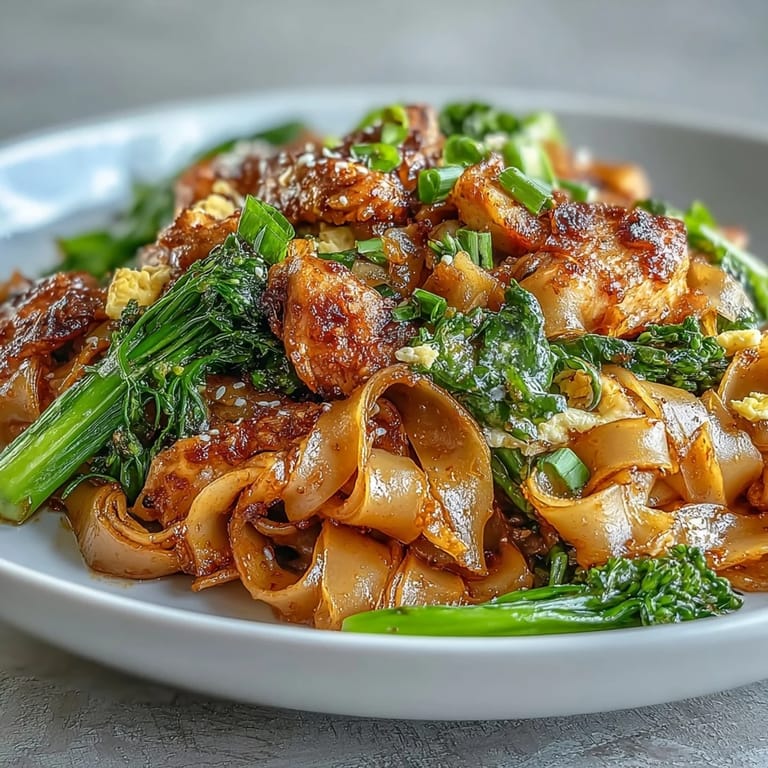
 The first time I watched a street vendor in Bangkok make Pad See Ew, I stood mesmerized for twenty minutes as flames danced around his wok and the smoky aroma of caramelized soy sauce filled the humid evening air. That incredible wok hei flavor isn't some restaurant secret—it's the result of high heat and confident technique that anyone can master at home with practice. Now whenever I make this dish, that familiar smoky sweetness immediately transports me back to those bustling night markets.
Last winter when my friend Tom was recovering from surgery, I brought over a steaming platter of this dish and he said it reminded him of his favorite street food stall in Chiang Mai. Watching his face light up with that first bite of smoky, tender noodles made me realize how food carries memories across continents and connects us to places we've loved.
Ingredients
- 200g dried wide rice stick noodles: Soak until pliable but still firm to the touch—they'll finish cooking in the wok and absorb that coveted smoky flavor
- 1 cup boneless chicken thighs: Thinly slice against the grain for tenderness that won't dry out during high heat stir frying
- 4 stems Chinese broccoli: Separate stems from leaves since stems need slightly longer cooking time
- 1 large egg: Room temperature eggs scramble more evenly in the hot wok
- 2 tsp dark soy sauce: This creates the gorgeous mahogany color and deep caramel flavor
- 1½ tbsp oyster sauce: Adds umami richness that rounds out the sauce perfectly
- 1 tbsp light soy sauce: Provides the essential salty base note
- 2 tsp white vinegar: Cuts through the richness and brightens all flavors
- 2 tsp sugar: Balances the salty elements and aids in achieving those gorgeous caramelized edges
- 2 cloves garlic: Finely chop so it releases fragrance quickly without burning
- 3 tbsp peanut or vegetable oil: High smoke point oils handle the intense wok heat beautifully
Tired of Takeout? 🥡
Get 10 meals you can make faster than delivery arrives. Seriously.
One email. No spam. Unsubscribe anytime.
Instructions
- Prepare the noodles:
- If using dried rice noodles, soak in warm water for about 30 minutes until pliable but not fully cooked. Drain and set aside. If using fresh rice noodles, gently separate and set aside.
- Mix the sauce:
- In a small bowl, combine dark soy sauce, oyster sauce, light soy sauce, white vinegar, and sugar. Stir until sugar dissolves completely.
- Prepare the Chinese broccoli:
- Cut stems into 2 inch pieces and leaves into larger pieces, keeping them separate for staged cooking.
- Cook the chicken:
- Heat 1 tbsp oil in a wok or large skillet over high heat. Add sliced chicken and stir fry until just cooked through. Remove and set aside.
- Stir fry the Chinese broccoli:
- In the same wok, add 1 tbsp oil. Add broccoli stems and stir fry 1 minute. Add leaves and stir fry until just wilted. Remove and set aside.
- Scramble the egg:
- Add remaining 1 tbsp oil to the wok. Add garlic and sauté a few seconds until fragrant. Crack in the egg and scramble quickly until just set.
- Combine noodles and sauce:
- Add soaked or fresh noodles to the wok. Pour sauce over noodles and toss well to coat evenly.
- Finish the dish:
- Return chicken and Chinese broccoli to the wok. Stir fry everything together for 1 to 2 minutes until hot and well combined.
- Serve immediately:
- Divide Pad See Ew among serving plates and enjoy while steaming hot.
 Save to Pinterest
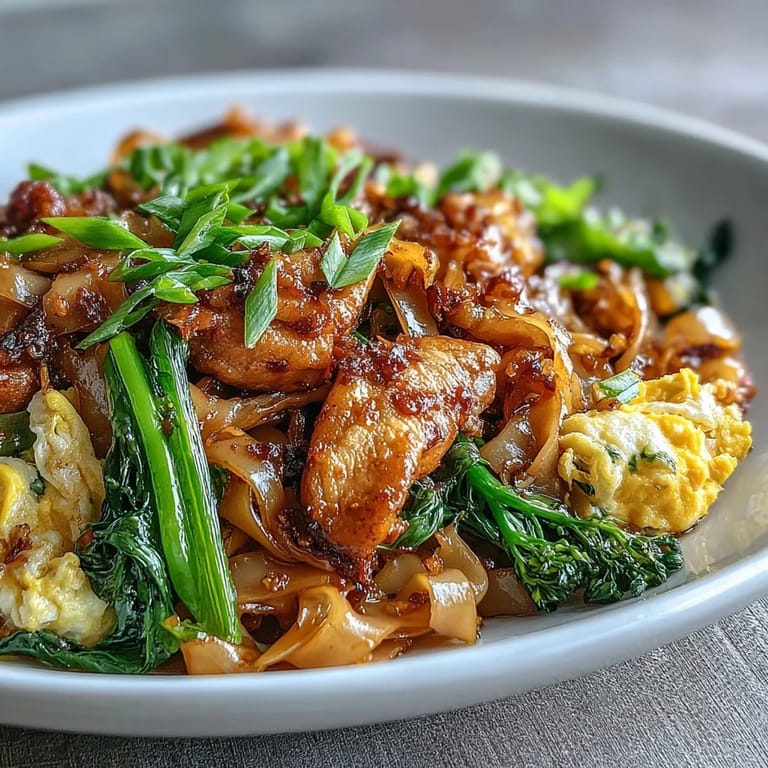
 This recipe has become our Friday night tradition, the kind of meal where we all gather around the platter with forks in hand, stealing bites straight from the serving dish. There's something about those slippery, smoky noodles that turns dinner into a celebration every single time.
Choosing Your Noodles
Fresh wide rice noodles from an Asian market will give you the most authentic texture and require no soaking. If you can only find dried noodles, don't worry—they still produce excellent results when properly rehydrated. Just avoid breaking them into smaller pieces during soaking since wider noodles are traditional for this dish.
Mastering the Wok
High heat is your best friend for achieving wok hei, that prized smoky flavor that elevates good Pad See Ew to great. Let your wok get properly hot before adding any ingredients, and don't be afraid of a little smoke. If you're working with a less powerful home stove, cook in smaller batches to maintain the high temperature needed for proper caramelization.
Customization Ideas
This versatile template works beautifully with whatever protein you prefer or have on hand. The key is adjusting cooking times accordingly so everything finishes at the right moment.
- Thinly sliced beef or pork cook similarly to chicken and add wonderful richness
- Shrimp cook in just 1 to 2 minutes so add them with the noodles in the final step
- Firm tofu cubes develop crispy golden edges and make this vegetarian friendly
 Save to Pinterest
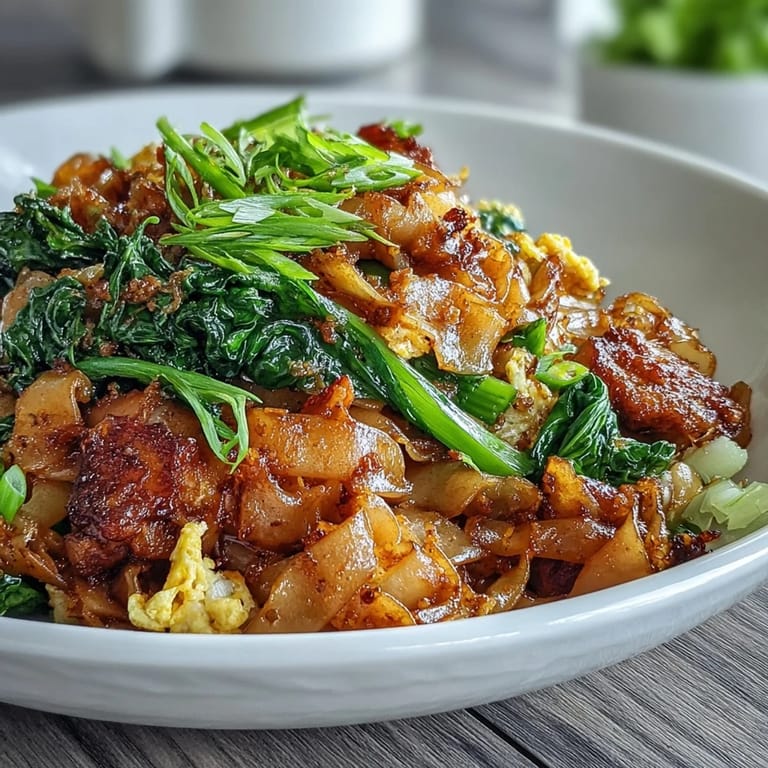
 The beauty of Pad See Ew lies in its simplicity and the way humble ingredients transform into something extraordinary under high heat. Once you taste that first perfectly caramelized bite, you'll understand why this remains one of Thailand's most beloved exports.
Questions & Answers
- → What makes Pad See Ew different from other Thai noodle dishes?
Pad See Ew features wide rice noodles stir-fried until slightly smoky and charred, distinct from the thinner rice noodles used in Pad Thai. The sauce emphasizes dark soy sauce for deep color and sweetness, creating a richer, more caramelized flavor profile than the tangier, tamarind-based Pad Thai.
- → Can I use fresh rice noodles instead of dried?
Absolutely. Fresh wide rice noodles (sen yai) are traditional and require no soaking—just gently separate before cooking. If using dried noodles, soak in warm water for 30 minutes until pliable but firm. Fresh noodles typically yield better texture and absorb the sauce more effectively.
- → What protein alternatives work well in this dish?
Thinly sliced beef or pork are excellent traditional substitutes. For seafood, shrimp cook quickly and pair beautifully with the savory sauce. Firm tofu cubes work well for vegetarian versions. Adjust cooking times accordingly—shrimp need only 2-3 minutes, while beef benefits from slightly longer searing.
- → How do I prevent noodles from sticking to the wok?
Ensure your wok or skillet is thoroughly heated before adding oil. Use sufficient oil to coat the surface and noodles. Keep ingredients moving constantly with tongs or spatula. If noodles stick, add a splash of water or oil and scrape gently with your cooking utensil.
- → What vegetables can substitute for Chinese broccoli?
Broccolini offers similar flavor and texture with smaller florets. Regular broccoli works, though stems require longer cooking. Bok choy provides mild crunch and cooks quickly. For authentic flavor, Chinese broccoli (gai lan) remains ideal due to its slightly bitter notes that balance the sweet sauce.
- → How can I achieve restaurant-style smoky flavor at home?
The secret is cooking over high heat in a well-seasoned wok. Let noodles sit briefly against the hot surface without constant stirring to develop charred spots. A gas stove provides better heat control. Avoid overcrowding the pan, which lowers temperature and prevents proper searing.