 Save to Pinterest
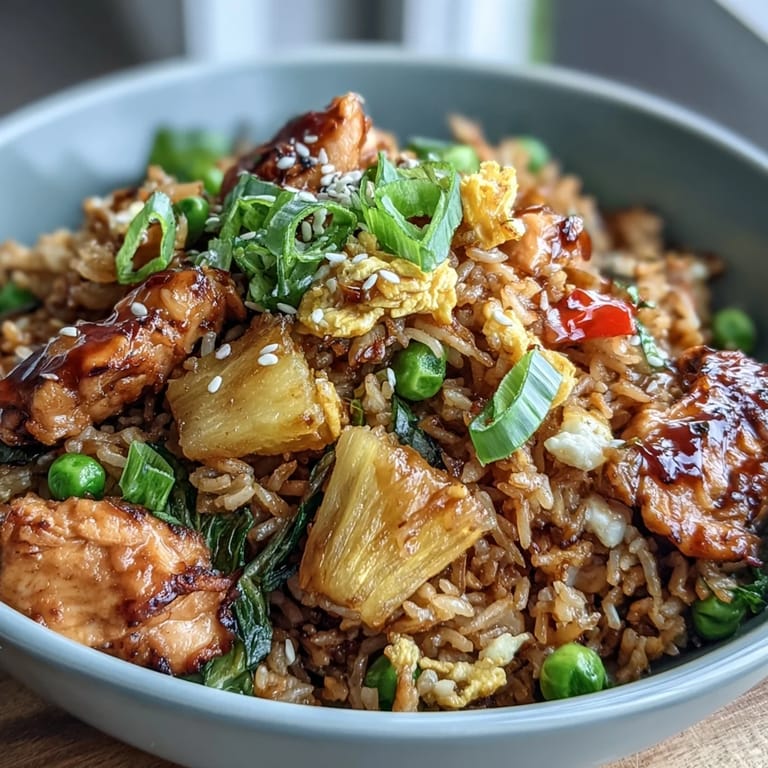
 My roommate came home one Thursday evening with a bag of fresh pineapple from the farmers market, and I found myself staring at it while leftover jasmine rice sat in my fridge. Within an hour, I'd thrown together this sweet chili chicken fried rice, and the smell of it cooking—that perfect blend of garlic, caramelized edges, and tropical fruit—made her cancel her dinner plans. We ate straight from the wok, passing it back and forth, and I realized how something this colorful and alive could come together in less time than ordering delivery.
I made this for a potluck once, deciding last-minute to serve it in a hollowed pineapple half because someone had mentioned it in passing. The whole room went quiet when I set it down, and then everyone crowded around asking for the recipe. That moment taught me that presentation and taste together create memories people actually remember.
Ingredients
- Boneless, skinless chicken breasts: Diced into bite-sized pieces that cook quickly and absorb the sauce—I learned to cut them as uniform as possible so everything finishes at the same time.
- Day-old jasmine rice: This is non-negotiable; fresh rice turns mushy and sticky, but day-old rice has dried out just enough to stay separate and crispy at the edges.
- Fresh pineapple: Canned works in a pinch, but fresh pineapple brings actual brightness and juiciness that makes the whole dish taste alive.
- Red bell pepper: The sweetness complements the chili sauce, and the color makes this dish impossible to ignore on the plate.
- Frozen peas: They thaw in seconds and add a pop of texture without any prep work.
- Green onions: Added at the end so they stay crisp and sharp rather than wilting into nothing.
- Garlic: Minced small so it distributes through the rice and creates those little pockets of intense flavor.
- Small carrot: Diced small so it softens just enough but keeps its slight crunch.
- Sweet chili sauce: This is your backbone flavor—it should taste balanced and not overly hot, though you can adjust to your heat preference.
- Soy sauce: Both in the marinade and the sauce, it deepens everything without making it salty if you measure carefully.
- Fish sauce: Optional, but it adds a savory depth that makes people ask what your secret ingredient is.
- Toasted sesame oil: A little goes a long way; too much overpowers, but the right amount adds warmth and complexity.
- Vegetable oil: High heat cooking requires an oil that won't smoke, so stick with something neutral.
- Large eggs: They scramble into the rice and become little pockets of richness throughout.
- Roasted cashews or peanuts: These add texture and a slight bitterness that balances the sweetness.
- Fresh cilantro: Bright and essential for finishing; it cuts through the richness and adds a fresh note.
- Lime wedges: Squeezing lime over everything at the table gives people control over how much tang they want.
Tired of Takeout? 🥡
Get 10 meals you can make faster than delivery arrives. Seriously.
One email. No spam. Unsubscribe anytime.
Instructions
- Prepare and marinate the chicken:
- Toss your diced chicken with soy sauce, cornstarch, and black pepper, then let it sit for 10 minutes while you prep everything else—the cornstarch helps it stay tender and creates a slight coating that seals in juices.
- Sear the chicken:
- Heat oil in your wok until it's shimmering and almost smoking, then add the chicken in a single layer and let it sit for a moment before stirring—this creates those golden, caramelized edges that taste incredible. It takes about 4 to 5 minutes total.
- Build your vegetable base:
- Add more oil, then throw in garlic, carrot, and bell pepper, stirring constantly for 2 to 3 minutes until the carrot is just tender but still has a slight crunch.
- Scramble the eggs:
- Push everything to the side, pour in your beaten eggs, and let them set for about 30 seconds to form a slight base, then scramble them into fine pieces and mix everything together—the eggs create little ribbons throughout the rice.
- Toast the rice:
- Add your cold cooked rice, breaking up any clumps as you go, and stir constantly for about 2 minutes until every grain is hot and starting to separate—you're looking for some grains to get slightly crispy on the edges. This is where the magic happens.
- Bring it all together:
- Return the chicken to the pan, add the pineapple, peas, and green onions, then pour in your sauce mixture and toss everything constantly for another minute until the sauce coats every grain evenly and smells incredible.
- Finish and serve:
- Taste as you go, adjusting the sweetness or heat with extra sauce if needed, then transfer to a serving bowl or pineapple half and shower it with cashews, cilantro, and lime wedges so people can customize their own bites.
 Save to Pinterest
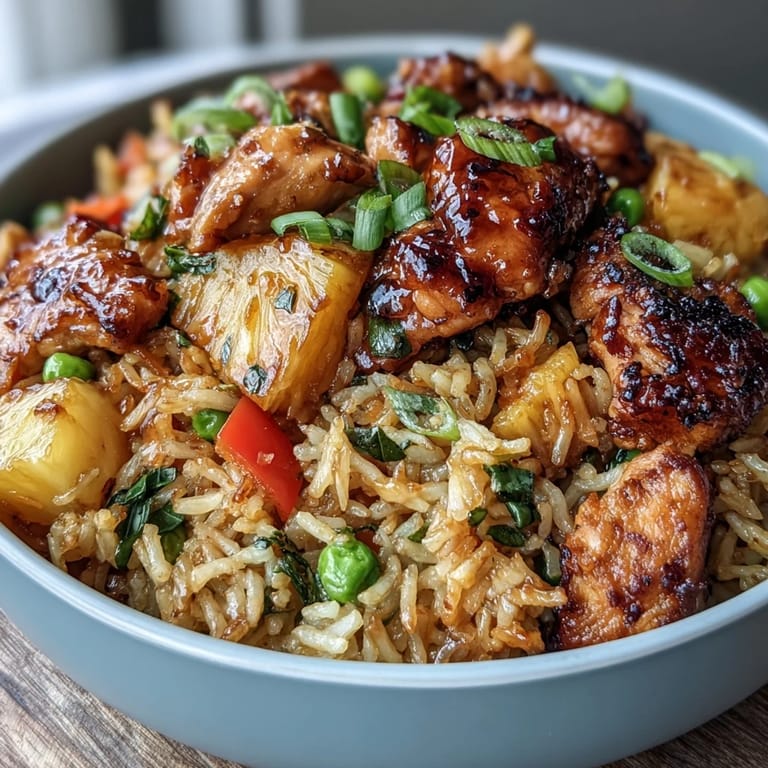
 There's something about this dish that brings people together in an unguarded way, maybe because eating directly from a shared wok or passing bowls back and forth creates conversation. I've watched skeptical eaters brighten when they taste the pineapple and chili meeting in their mouth, and that shift from doubt to delight never gets old.
The Sweet and Spicy Balance
The genius of this dish lies in the tension between the chili heat and the pineapple sweetness—they're supposed to play against each other, making your mouth want more. When I first made this, I used too much chili sauce and it became one-note and overwhelming, but once I found the right ratio, it became addictive in a way that feels intentional rather than accidental. Everyone's heat tolerance is different, so taste as you go and adjust the sweet chili sauce before mixing everything together.
Why Day-Old Rice Changes Everything
Fresh rice contains too much moisture, and when you try to fry it, the heat turns it into a sticky clump that no amount of stirring can fix. Day-old rice that's been refrigerated has dried out just enough to absorb the sauce without turning mushy, and those slightly dried grains crisp up at the edges when they hit the hot wok. Plan ahead if you can, or if you're making this on a whim, spread fresh cooked rice on a sheet pan to cool completely before using it.
Building Flavor in Layers
Each step in this recipe adds a new dimension rather than just combining ingredients at random. The garlic and carrot cook first to release their aromatics, then the eggs add richness, then the rice carries all that flavor forward, and finally the sauce brings everything together into something cohesive. This is how you go from a list of ingredients to something that tastes intentional and complex.
- Cook your aromatics first so the oil carries their flavor throughout the dish.
- Add sauce at the end so it coats everything evenly instead of soaking into the rice unevenly.
- Taste and adjust before serving because every ingredient brand tastes slightly different.
 Save to Pinterest
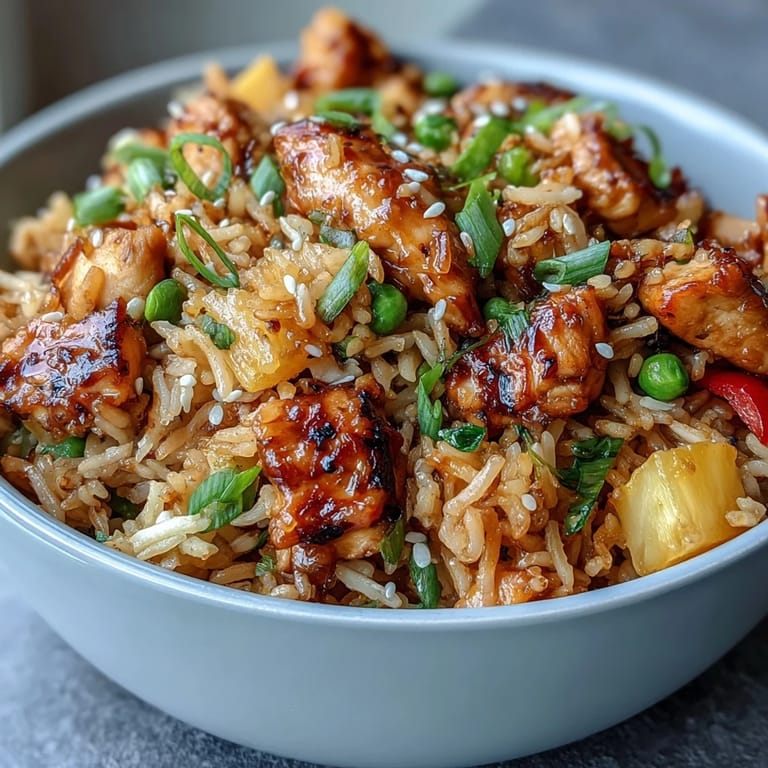
 This is the kind of meal that tastes impressive and celebration-worthy but comes together on a regular Tuesday when you've got rice and chicken in the house. Once you make it once, you'll find yourself reaching for it again and again.
Questions & Answers
- → How do I ensure the chicken stays tender?
Marinating the chicken briefly with soy sauce, cornstarch, and pepper helps keep it tender and flavorful during stir-frying.
- → Can I use a different type of rice?
Day-old jasmine rice is ideal for frying as it’s drier and less sticky, but you can use other long-grain rice varieties if needed.
- → What can I substitute for sweet chili sauce?
Try mixing chili paste with honey or sugar and a splash of vinegar to mimic the sweet and spicy balance.
- → Is it necessary to add eggs to the dish?
Eggs add richness and texture but can be omitted or replaced with tofu or other protein options according to preference.
- → How can I make this dish vegetarian?
Skip the chicken and fish sauce, and substitute tofu and extra soy sauce. Use vegetable broth or additional seasoning to enhance flavor.