 Save to Pinterest
 My first pelmeni arrived on a cold St. Petersburg evening, served by a babushka who'd been making them for fifty years. The dumplings were impossibly small, almost translucent where the dough stretched thin, and when I bit into one, the filling was still warm and seasoned just right. Since then, I've chased that exact moment every time I fold the dough, remembering how something so simple could taste like home.
I made these for my neighbor last winter when she was recovering from surgery, and she actually cried a little when she tasted them. She said they reminded her of her mother's kitchen. That's when I realized pelmeni aren't just dumplings—they're the kind of food that holds memories for people who never even made them.
Ingredients
- All-purpose flour (2 cups): The foundation—you want it to be strong enough to hold the filling without tearing, but tender enough to cook through quickly in boiling water.
- Cold water and egg: These create a dough that's silky rather than tough; the key is keeping everything cold and not overworking it.
- Salt (1/2 tsp for dough): Essential for flavor and also helps the gluten structure hold together.
- Ground pork and beef (7 oz each): The combination gives the filling depth—pork alone can feel one-note, beef alone can be heavy.
- Onion and garlic (finely grated or minced): These disappear into the filling and add moisture plus flavor that blooms as the pelmeni cook.
- Salt and pepper for filling: Don't skip seasoning the meat—it's the soul of the whole dish.
- Cold water (2 tbsp in filling): This keeps the filling from becoming dense and gives it a tender texture when cooked.
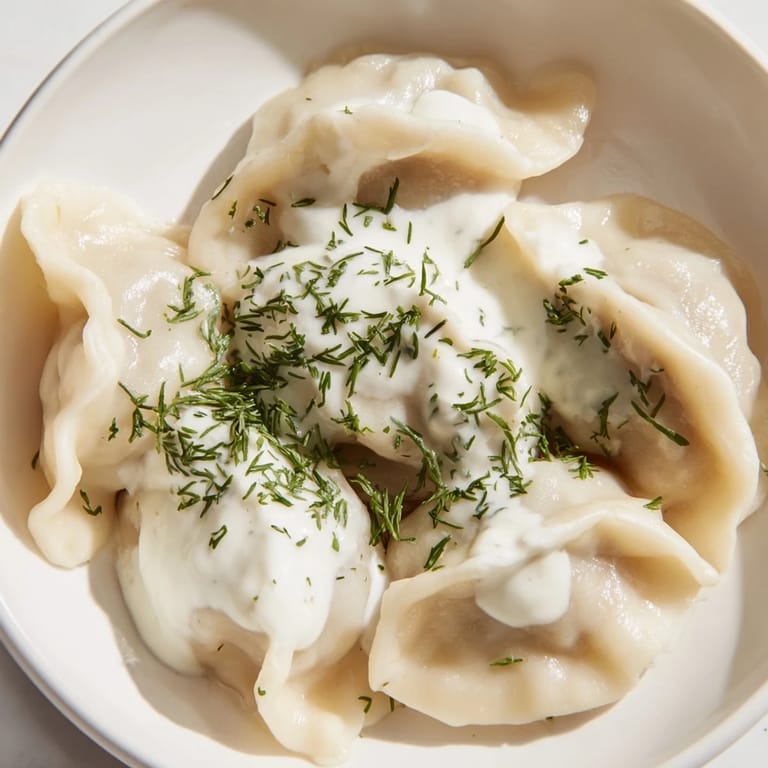
- Sour cream: The cooling, tangy finish that balances the richness of the meat.
- Fresh dill (optional): If you can find it, use it—the brightness matters more than you'd think.
Tired of Takeout? 🥡
Get 10 meals you can make faster than delivery arrives. Seriously.
One email. No spam. Unsubscribe anytime.
Instructions
- Mix the dough:
- Combine flour and salt, then add the egg and cold water gradually, mixing until everything comes together. Knead for eight to ten minutes until the dough feels smooth and elastic—you'll know it's ready when it springs back when you poke it. Cover and rest for twenty minutes so the gluten relaxes.
- Combine the filling:
- Mix the ground pork and beef with the grated onion, garlic, salt, pepper, and cold water until it's sticky and well combined. The meat should feel almost wet; this is what makes pelmeni tender inside, not dense.
- Roll and cut:
- On a floured surface, roll the dough out to about two millimeters thick—thin enough to see light through it, but not so thin it tears. Cut circles with a two-point-five-inch cutter and work quickly so the dough doesn't dry out.
- Fill and shape:
- Place one teaspoon of filling in the center of each circle, fold it in half to form a half-moon, then bring the corners together and seal them tightly. The shape matters because it helps them cook evenly and look beautiful on the plate.
- Boil until they float:
- Drop pelmeni into salted boiling water in batches, stirring gently so they don't stick together. They're done when they float and you can feel they're cooked through—usually five to seven minutes.
- Serve hot with sour cream:
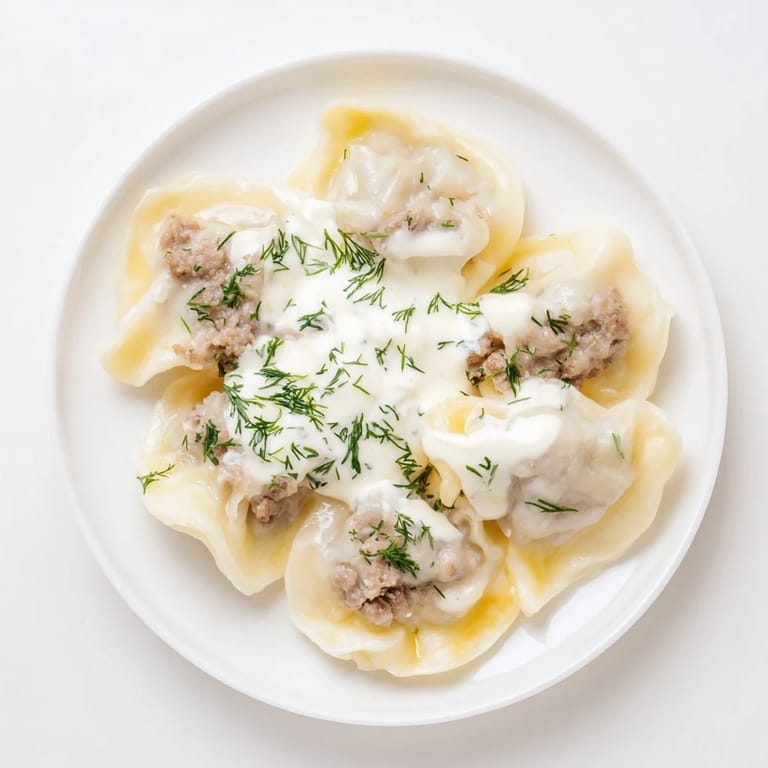
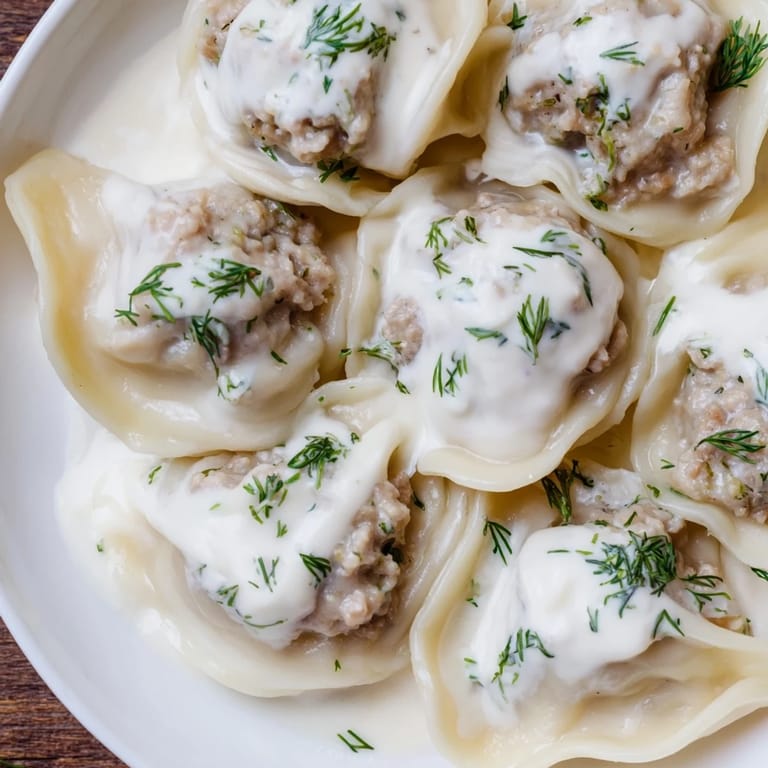
- Remove them with a slotted spoon and pile them into a warm bowl, then generously top with sour cream and fresh dill. Eat them while they're still steaming.
 Save to Pinterest
 There's something almost magical about the moment a whole pot of pelmeni surfaces through the boiling water at the same time, each one bobbing up together like they're announcing they're ready to eat. My daughter calls them the 'shy dumplings' because they hide under sour cream, and she'll dig through the pile looking for her favorites.
Freezing and Make-Ahead Magic
The real gift of pelmeni is that you can make them ahead and freeze them raw on a tray before transferring them to a bag—they'll keep for three months. When you're hungry, just drop them straight from the freezer into boiling water without thawing; they take about one or two minutes longer to cook, but the result is exactly the same. This means you can have a home-cooked Russian dinner on a night when you barely have energy to boil water.
Playing With the Filling
Once you've made pelmeni the traditional way, you start noticing variations everywhere. Some cooks add a small pinch of nutmeg to the meat filling—it's subtle but changes everything, adding a warmth that makes you want another dumpling. I've seen versions with lamb, with mushroom and potato, even vegetarian versions that use cabbage and cheese. The dough and technique stay the same, but the filling becomes your canvas.
Serving and Traditions
In Russia, pelmeni are served simply: in a bowl with broth or melted butter, topped with sour cream or vinegar. The vinegar might sound strange if you've never tried it, but it's sharp and bright against the richness of the meat. Some families keep a bottle of melted butter on the table and let everyone dress their bowl however they prefer—that's the real tradition, letting everyone make it their own.
- If you want the melted butter route, heat two tablespoons of butter with a few peppercorns and pour it over just before eating.
- Vinegar isn't required, but if you try it, use a good one—it should taste clean, not harsh.
- Leftover pelmeni can be fried in butter until golden, which transforms them into something crispy and different.
 Save to Pinterest
 Pelmeni remind me that some of the most comforting food in the world is made by hand and takes patience. Once you understand the technique, you'll find yourself making them again and again.
Questions & Answers
- → What meats are used for the filling?
Ground pork and beef are combined to create a flavorful and juicy filling.
- → How thin should the dough be rolled?
Roll the dough to about 1/16 inch (2 mm) thickness for tender yet sturdy dumplings.
- → What is the traditional shape of these dumplings?
They are shaped into half-moon forms with pinched edges, typical of this dish.
- → How do you know when the dumplings are cooked?
They float to the surface of boiling water when fully cooked, usually after 5 to 7 minutes.
- → What toppings complement these dumplings best?
A generous topping of sour cream and fresh dill enhances the savory flavors beautifully.