 Save to Pinterest
 My neighbor Aino taught me this soup on a grey afternoon when I'd wandered over complaining about the cold. She didn't fuss or apologize for her simple kitchen—just started chopping potatoes with the kind of ease that comes from making the same thing a hundred times. Within forty minutes, we were sitting at her small table with bowls of something so naturally comforting it felt like the soup had always existed, waiting for me to discover it. That's the magic of Finnish salmon soup: it asks for nothing fancy, yet delivers everything you need on a difficult day.
Years later, I made this for my partner on their first morning visiting my family. They'd arrived jetlagged and overwhelmed, and I stood in the kitchen moving with Aino's unhurried pace, letting the butter and onions fill the room with that specific aroma that says everything will be manageable. Two bowls into it, their shoulders dropped and they finally smiled—not politely, but genuinely. Food doesn't solve exhaustion, but sometimes it reminds you that you're safe.
Ingredients
- Salmon fillet (400 g, skinless and boneless): Cut into roughly 2 cm cubes so they cook evenly and stay tender—too small and they'll become stringy, too large and the center stays raw while the edges toughen.
- Potatoes (600 g): Waxy varieties like Yukon Gold hold their shape better than starchy ones, which matters when you want soup, not mashed potato broth.
- Carrot (1 medium): Slice thin enough that it softens in the same time as the potato—thick pieces sit hard at the bottom of your spoon.
- Leek (1 small, white and light green parts only): The dark green part is too tough for this delicate soup, but don't throw it away; save it for stock.
- Yellow onion (1 small): Finely chopped so it melts into the broth rather than creating texture; this is background flavor, not a statement.
- Fresh dill (1 bunch): This is the soul of the soup—use it generously and reserve some sprigs for garnish because the bright green matters as much as the taste.
- Fish stock or water (1 L): Stock tastes noticeably better, but good water works if that's what you have; avoid seafood stock, which can overpower delicate salmon.
- Heavy cream (200 ml): Full fat is essential here—it smooths everything together and catches the dill's brightness.
- Bay leaf (1): A quiet flavor anchor that makes people ask what the secret ingredient is, then look disappointed when you tell them.
- Salt (2 tsp) and white pepper (½ tsp): White pepper instead of black because it stays invisible and won't create specks that distract from the soup's creamy appearance.
- Butter (1 tbsp): For the initial sauté—it coaxes out sweetness from the vegetables that stock or cream never could alone.
Tired of Takeout? 🥡
Get 10 meals you can make faster than delivery arrives. Seriously.
One email. No spam. Unsubscribe anytime.
Instructions
- Start with softness:
- Melt butter in your pot over medium heat, then add onion, leek, and carrot. Let them sizzle gently for 4 to 5 minutes until they soften at the edges and the kitchen smells intentional. You're not caramelizing—you're coaxing out sweetness in a quiet way.
- Build the foundation:
- Add potatoes, bay leaf, and your stock. Bring it to a boil with purpose, then lower the heat and let it simmer for 12 to 15 minutes until the potatoes yield easily to a fork but haven't started falling apart. This is the moment to stop and taste the broth, because everything gets more delicate from here.
- Welcome the salmon:
- Gently lay the salmon cubes into the simmering liquid as if you're setting something precious into place. Simmer for 5 to 6 minutes—the fish will go from opaque to barely translucent at the thickest part, which is exactly cooked through.
- Finish with richness:
- Stir in the cream and chopped dill, then season carefully with salt and white pepper. Let it all warm together for 2 to 3 minutes, but do not boil—boiling splits cream and makes it look broken and sad.
- Serve with intention:
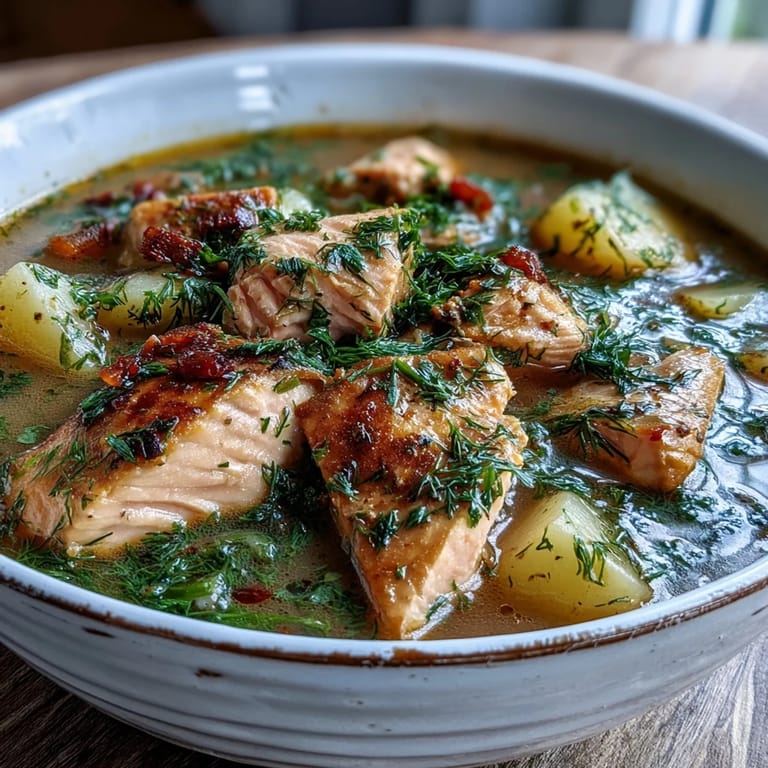
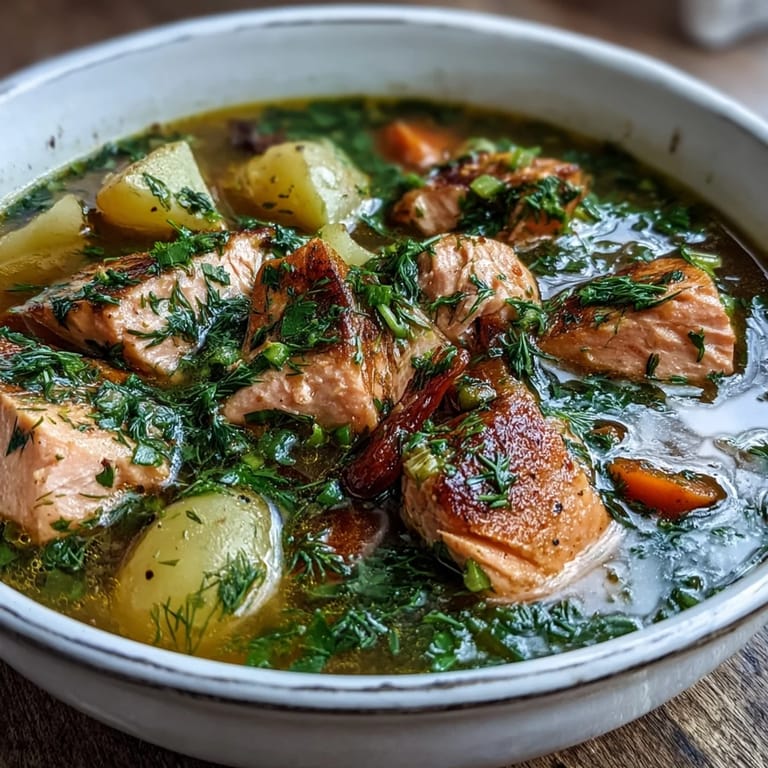
- Remove the bay leaf, ladle soup into bowls, and crown each one with a small handful of reserved fresh dill. The green matters as much as the taste.
 Save to Pinterest
 I learned the cream lesson the hard way, naturally, when I turned up the heat to hurry things along and watched my beautiful pale soup turn speckled and grainy. It taught me that the best soups aren't rushed—they're finished when they're ready, not when your stomach is impatient. Now I use that extra five minutes to set the table or pour wine, because anticipation has its own flavor.
How to Know When Everything Is Ready
The potatoes should be soft enough to press with a wooden spoon but still holding their shape—if they're dissolving, you've simmered too long and they'll cloud the broth. The salmon should have lost its translucency completely; undercooked salmon tastes metallic and wrong, but overcooked becomes that chalky texture no amount of cream can fix. The broth itself should smell like dill and the sea, not like nothing—if you're not catching that aroma, you're using dill too sparingly.
Variations That Actually Work
Smoked salmon transforms this into something darker and more complex, though I'd add it at the very end rather than simmering it, since the heat pushes the smoke flavor into something harsh and chemical. Some people add shrimp alongside or instead of salmon, which changes nothing about the technique but somehow makes it feel more special. I've even seen it made with just vegetables and stock, which is lovely in a different way—less a salmon soup and more a creamy root vegetable one that happens to taste faintly oceanic.
- For extra richness, swirl in a knob of fresh butter just before serving so it melts into slicks of golden flavor.
- A squeeze of lemon at the table brightens everything without being obvious about it.
- Rye bread, crispbread, or even good sourdough makes this feel complete and honest.
 Save to Pinterest
 This soup is the kind of thing that improves your life in small, invisible ways—it slows you down, it tastes like care, and it uses your good ingredients without pretending to be difficult. Make it when you need reminding that the best food is often the simplest.
Questions & Answers
- → Can I use frozen salmon?
Yes, thaw the salmon completely and pat dry before cutting into cubes. Frozen salmon works well, though fresh offers slightly better texture.
- → What makes this authentically Finnish?
The combination of salmon, potatoes, leeks, heavy cream, and generous fresh dill creates the classic flavor profile. Simmering rather than boiling preserves the delicate fish texture.
- → How do I prevent the cream from curdling?
Add the cream at the very end and reduce heat to low. Simmer gently for 2-3 minutes without bringing to a full boil. This prevents separation while allowing flavors to meld.
- → Can I make this lighter?
Reduce heavy cream to 100ml or substitute with half-and-half for a lighter version. The soup remains satisfying with less dairy.
- → What should I serve alongside?
Traditional dark rye bread or crispbread complements perfectly. A simple green salad with vinaigrette balances the rich, creamy elements.
- → How long does leftovers keep?
Store refrigerated in airtight containers for 2-3 days. Reheat gently over low heat, avoiding boiling to prevent cream separation. The salmon may soften slightly.