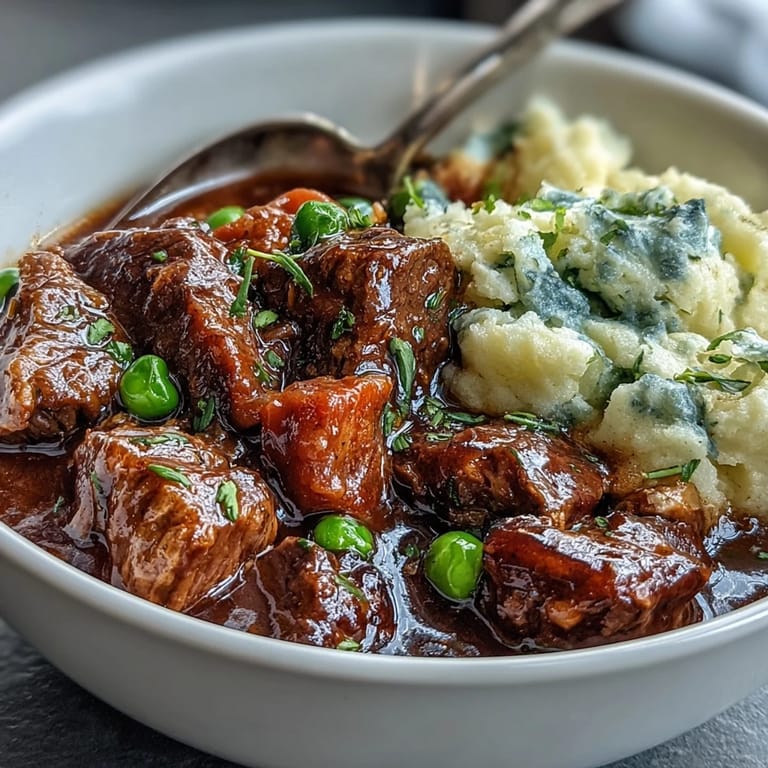
 Save to Pinterest
 There's something about the smell of beef browning in a hot pot that instantly transports me back to my grandmother's kitchen on a grey Dublin afternoon. She'd make her stew the traditional way, heavy with potatoes, but years later I found myself craving that same warming comfort without the heaviness afterward. This lightened Irish beef stew with cauliflower mash became my answer—it keeps all the soul of the original while letting you feel genuinely nourished afterward, not weighed down.
I made this for my partner on a Tuesday night when we were both exhausted from work, and watching their face light up as they tasted that first spoonful of tender beef against creamy cauliflower reminded me why I love cooking. They asked for seconds before finishing their first bowl, which honestly says more than any review could.
Ingredients
- Lean beef stew meat (1 lb): Trimming the fat keeps the stew lighter without sacrificing flavor—the long simmer tenderizes even lean cuts beautifully.
- Olive oil (1 tbsp): Just enough to get a proper sear on the beef, which builds the deep flavor base everything else relies on.
- Onion, carrots, and celery (1 medium, 2, and 2 stalks): This aromatic trio is the foundation of Irish cooking and creates natural sweetness as they soften.
- Garlic cloves (3, minced): Added after the softer vegetables prevents it from burning and keeps the garlic flavor bright rather than bitter.
- Low-sodium beef broth (3 cups): Low-sodium lets you control the salt level and prevents the stew from tasting one-dimensional.
- Dry red wine (1 cup): This adds complexity and acidity that balances the richness—you can substitute more broth if you prefer.
- Tomato paste (2 tbsp): A concentrated dose of umami that deepens the savory notes without adding bulk.
- Worcestershire sauce (2 tsp): This secret ingredient adds a subtle tang and layered flavor that makes people ask what you put in it.
- Dried thyme and rosemary (1 tsp each): These herbs are traditional in Irish cooking and infuse the broth with warm, earthy flavors.
- Bay leaves (2): They perfume the entire pot and are easy to remove before serving.
- Frozen peas (1 cup): Added at the end so they stay bright and tender rather than turning to mush.
- Cauliflower (1 large head): Boiling until very tender is the key to getting a silky mash that rivals potatoes.
- Unsalted butter and milk (2 tbsp each): These create creaminess while keeping the mash light and fluffy.
Tired of Takeout? 🥡
Get 10 meals you can make faster than delivery arrives. Seriously.
One email. No spam. Unsubscribe anytime.
Instructions
- Prepare and season your beef:
- Pat the cubes completely dry with paper towels—this helps them brown properly rather than steam. Season generously with salt and pepper right before searing.
- Sear the beef until golden:
- Heat olive oil in your pot until it shimmers, then brown the beef in batches without crowding the pan. You're not cooking it through, just building a flavorful crust that won't happen if pieces are touching.
- Build your aromatic base:
- In the same pot, sauté the onion, carrots, and celery for about 5 minutes until they start to soften and release their sweetness. The browned bits stuck to the bottom of the pot add incredible depth.
- Add garlic and herbs:
- Stir in minced garlic and let it bloom for just a minute until fragrant, then add tomato paste, thyme, rosemary, and bay leaves. This short cooking time keeps the garlic from burning while melding the herbs into the base.
- Deglaze and braise:
- Pour in the red wine and scrape up all those flavorful browned bits from the bottom of the pot with a wooden spoon. Return the beef, add the broth and Worcestershire sauce, then bring to a gentle simmer.
- Let time do the work:
- Cover and cook on low heat for 1 hour 15 minutes, stirring occasionally. The beef becomes fork-tender and the flavors meld into something far greater than their individual parts.
- Finish with peas:
- Remove the lid, add the frozen peas, and simmer uncovered for another 5 to 10 minutes. Taste and adjust salt and pepper—you might be surprised how much seasoning the broth has absorbed.
- Prepare the cauliflower mash:
- While the stew finishes, boil your cauliflower florets in salted water for 10 to 12 minutes until they're very tender and easily pierced with a fork. Drain them thoroughly in a colander, shaking off excess water.
- Blend until creamy:
- Transfer the drained cauliflower to a food processor with butter and milk, then blend until smooth and fluffy. If you don't have a food processor, a potato masher works too—it just takes more elbow grease and won't be quite as silky.
- Serve and garnish:
- Ladle the hot stew into bowls over a generous mound of cauliflower mash. Fresh chives scattered on top add a bright, oniony note that feels like the finishing touch a restaurant would add.
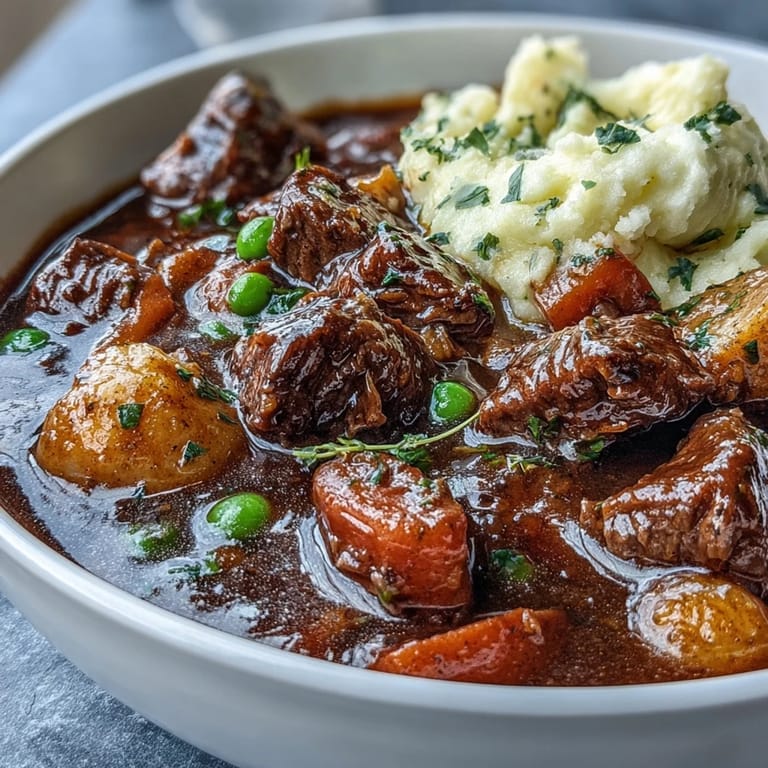 Save to Pinterest
 One evening, my neighbor smelled this simmering from across the hallway and knocked on my door asking what I was making. Twenty minutes later she was sitting at my table, and watching someone taste comfort food that also happened to be lighter than they expected felt like sharing a small kitchen victory.
Why This Works As a Lightened Dish
The traditional Irish stew relies on potatoes for bulk and comfort, but cauliflower mash delivers that same creamy, satisfying mouthfeel with a fraction of the carbs. The beef stays lean and tender through the long, gentle simmer, and all those herbs and aromatics do the heavy lifting flavor-wise so you don't need excess fat to feel satisfied. Every spoonful tastes like you spent hours in the kitchen, even though most of that time is hands-off simmering.
Making It Your Own
This recipe is flexible enough to bend to your preferences without losing its Irish soul. A splash of Guinness instead of red wine adds a slightly roasty, malty depth that feels very Dublin-kitchen. Substituting sweet potatoes for carrots gives you a different sweetness and color, though you'll lose some of the traditional flavor profile. Some nights I thicken the stew by removing half a cup of the cooked vegetables, mashing them, and stirring them back in—it creates a richer texture without adding cream.
Pairing and Storage
This stew tastes wonderful alongside a light-bodied red wine like a Beaujolais or an Irish ale if you're feeling patriotic about it. Leftovers keep beautifully in the refrigerator for four days and actually taste better the next day once flavors have settled and deepened. You can freeze the stew itself for up to three months, though I make the cauliflower mash fresh rather than freezing it.
- Store the stew and mash separately if you're planning to refrigerate—the cauliflower mash can get a bit watery over time.
- Reheat gently on the stovetop over medium-low heat, stirring occasionally and adding a splash of broth if the stew seems too thick.
- The stew tastes even more complex after sitting overnight as the flavors continue to marry together.
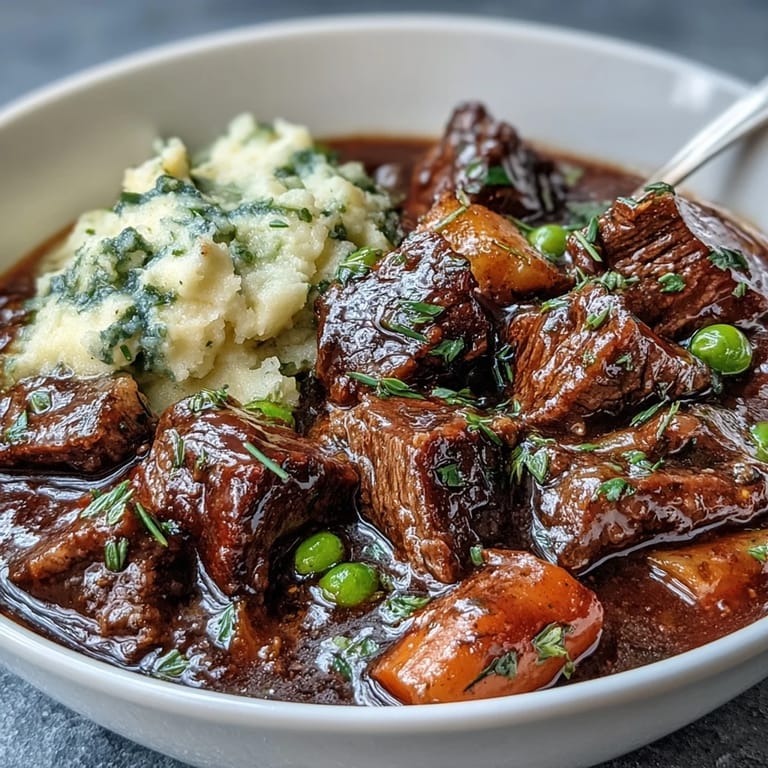 Save to Pinterest
 This recipe became my answer to wanting real, nourishing comfort food that doesn't leave you feeling sluggish. It's proof that lightening a classic dish doesn't mean compromising on soul or satisfaction.
Questions & Answers
- → What cut of beef is best for this stew?
Lean stew meat trimmed into 1-inch cubes works best as it becomes tender during slow cooking without excess fat.
- → How can I make the cauliflower mash creamy?
Boil cauliflower until very tender, then blend with butter and low-fat milk for a smooth, rich texture.
- → Can I substitute the red wine in the stew?
Yes, replacing the wine with additional beef broth or a splash of Guinness adds depth without alcohol.
- → How long should the stew cook for optimal tenderness?
Simmer the stew covered for about 1 hour 15 minutes until the beef is tender and flavors meld.
- → What garnishes complement this dish?
Freshly chopped chives add a mild onion flavor and a pop of color when sprinkled atop the cauliflower mash.
- → Is this dish suitable for gluten-free diets?
Yes, all ingredients are naturally gluten-free, making it safe for gluten-sensitive diners.