 Save to Pinterest
 My grandmother's kitchen in Budapest always smelled like paprika and slow-simmered beef on Sundays. I'd watch her tend to an enormous pot with barely any fuss, just the occasional stir and a taste from a wooden spoon, completely unbothered by the hours it would take. That's when I realized goulash isn't really about following steps—it's about understanding that time and low heat do the heavy lifting while you do almost nothing at all.
I made this for a potluck years ago in a tiny Toronto apartment, and someone actually asked for seconds before their plate was even empty. That's when I stopped doubting whether homemade goulash could compete with restaurant versions—it absolutely can, and it's because the technique is simple enough that you can focus on letting the flavors actually build.
Ingredients
- Beef chuck (2 lbs / 900 g): Cut into rough 1-inch cubes—don't stress about perfection, the beef will soften and shrink anyway.
- Onions (2 large): Finely chopped and caramelized until golden; this is where the stew's sweetness comes from, so don't rush this step.
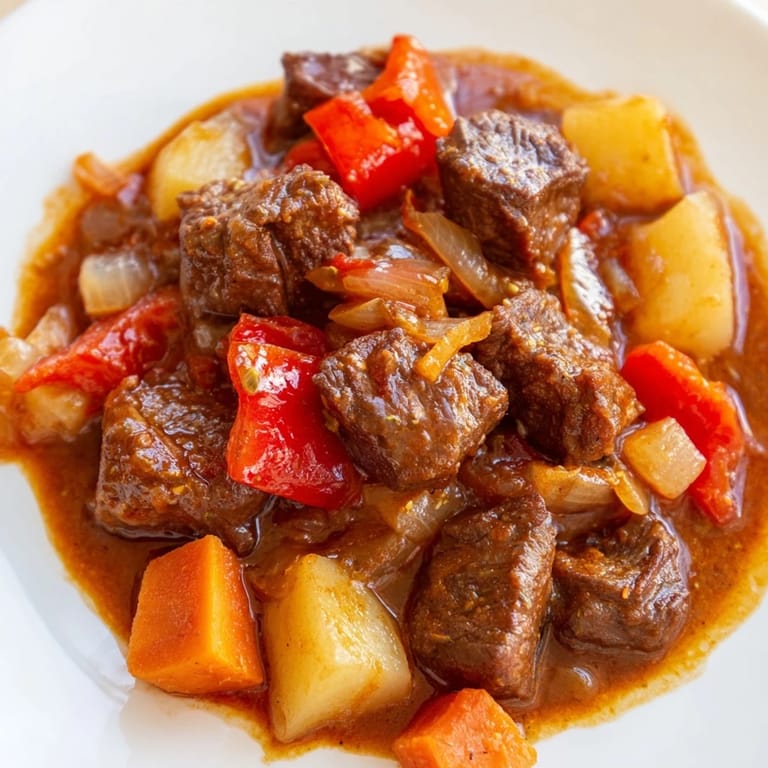
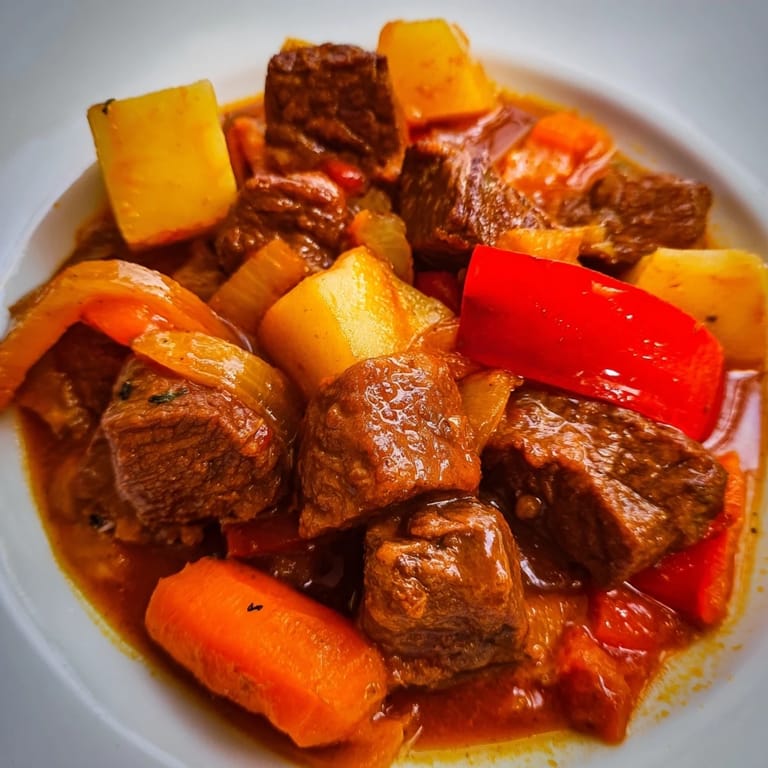
- Carrots (2 medium) and red bell pepper (1 large): Add natural sweetness and color without overpowering the paprika.
- Garlic (2 cloves): Minced and added early so it mellows into the background rather than shouting.
- Potatoes (2 medium, optional): They absorb the broth beautifully and add hearty substance, though some prefer the stew without them.
- Hungarian sweet paprika (3 tbsp): This is non-negotiable—cheap paprika tastes like dusty regret, so splurge here.
- Caraway seeds (1 tsp): Toasted and earthy, they give goulash its signature note that makes people wonder what you did differently.
- Dried marjoram (1 tsp), black pepper (1/2 tsp), and bay leaf: These three work together to prevent the stew from tasting one-dimensional.
- Beef broth (4 cups / 1 liter): Use homemade if you have it, but quality store-bought works fine.
- Tomato paste (2 tbsp): Adds depth and helps the stew thicken slightly as it cooks.
- Oil or lard (2 tbsp): Lard gives a more authentic result, but neutral oil works if that's what you have.
Tired of Takeout? 🥡
Get 10 meals you can make faster than delivery arrives. Seriously.
One email. No spam. Unsubscribe anytime.
Instructions
- Caramelize your onions like you mean it:
- Heat oil in a large heavy pot over medium heat and add chopped onions. Let them soften and turn golden, stirring occasionally—this takes about 8 minutes and is when the magic starts. Don't skip this or rush it; this is the foundation.
- Bloom the garlic quickly:
- Stir in minced garlic and cook for just 1 minute until fragrant. You're not cooking it through, just waking it up.
- Brown the beef in batches if needed:
- Add beef cubes and let them develop a dark golden crust on all sides, about 5 minutes total. This isn't boiling—you want color and texture, not tenderness yet.
- Toast the paprika without burning it:
- Sprinkle paprika over the meat and onions, then stir constantly for about 30 seconds. This is the only moment where speed matters; paprika can taste bitter if it scorches, but it becomes silky if you treat it gently.
- Build the flavor base:
- Stir in tomato paste, caraway seeds, marjoram, black pepper, and salt. Add carrots, bell pepper, and bay leaf, mixing until everything is coated.
- Deglaze and simmer gently:
- Pour beef broth in and scrape the bottom of the pot with a wooden spoon to release all the caramelized bits stuck there. Bring to a simmer, then reduce heat to low, cover, and let it go for 1 hour with occasional stirring.
- Add potatoes and finish the cook:
- After the first hour, add cubed potatoes (if using) and simmer uncovered for another 45–60 minutes until beef is completely tender and the stew has thickened slightly. The beef should shred if you press it with your spoon.
- Taste and adjust:
- Remove the bay leaf, taste, and add more salt or pepper if needed. Some people add a pinch of sugar here if the paprika tastes too savory, but trust your instinct.
 Save to Pinterest
 My friend once asked if there was a secret ingredient, and I almost told her it was love or time or some other sentimental thing, but the honest answer was just better paprika and the patience to let a pot sit on low heat without touching it constantly. That's when I learned that sometimes the best meals aren't about tricks—they're about respecting the process.
Why This Stew Gets Better With Time
Goulash tastes noticeably better on the second day because the flavors have more time to marry and the stew thickens as it cools. Make it the night before if you can; simply reheat gently on the stove without boiling, and it'll taste richer and more complex than when you first finished cooking. This is one of those rare dishes where planning ahead actually improves the result instead of just saving you time.
What to Serve It With
Crusty bread is the traditional choice because you'll want something to soak up the broth, but egg noodles work beautifully too—some people toss them right into the stew, which turns it into something closer to a complete one-bowl meal. If you want to get fancy, traditional Hungarian csipetke dumplings are small pinched noodles that are absolutely worth trying, though they require a bit more skill and timing.
Variations and Adjustments
This recipe is flexible enough to bend to what you have on hand without falling apart. You can skip the potatoes entirely, add extra carrots if you love them, or swap the bell pepper for more of whatever vegetable you prefer. If you like heat, add a pinch of hot paprika or a diced chili along with the sweet paprika—just go easy since the heat can overwhelm the other flavors if you're not careful.
- For extra richness, stir in a dollop of sour cream just before serving, though this makes it technically no longer gluten-free if that matters to you.
- Leftover goulash freezes beautifully for up to 3 months, and it reheats without losing any complexity.
- If your stew tastes too one-dimensional after cooking, a small pinch of sugar can balance the paprika, but add just a little and taste as you go.
 Save to Pinterest
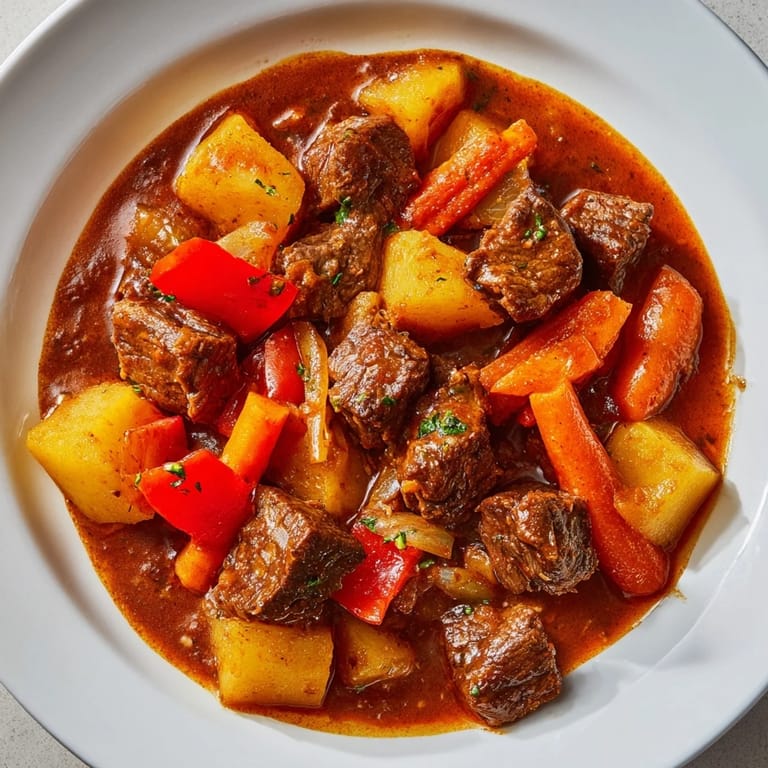
 There's something deeply satisfying about a meal that takes two hours and barely any effort, that tastes like tradition and feels like home no matter where you're eating it. This goulash is exactly that kind of dish.
Questions & Answers
- → What cut of beef is best for Hungarian goulash?
Beef chuck cut into cubes is ideal as it becomes tender and flavorful after slow simmering.
- → Can I make this stew spicier?
Yes, adding hot paprika or chopped chili peppers increases the spice level to your preference.
- → What vegetables complement this dish?
Onions, carrots, bell peppers, and optional potatoes provide sweetness and texture balance.
- → Is it important to brown the beef first?
Browning seals in juices and adds depth of flavor through caramelization.
- → What sides go well with this hearty stew?
Rustic bread, egg noodles, or traditional csipetke dumplings make excellent accompaniments.
- → Can I substitute beef broth in this dish?
Beef broth provides the richest flavor, but vegetable broth can be used for a lighter option.