 Save to Pinterest
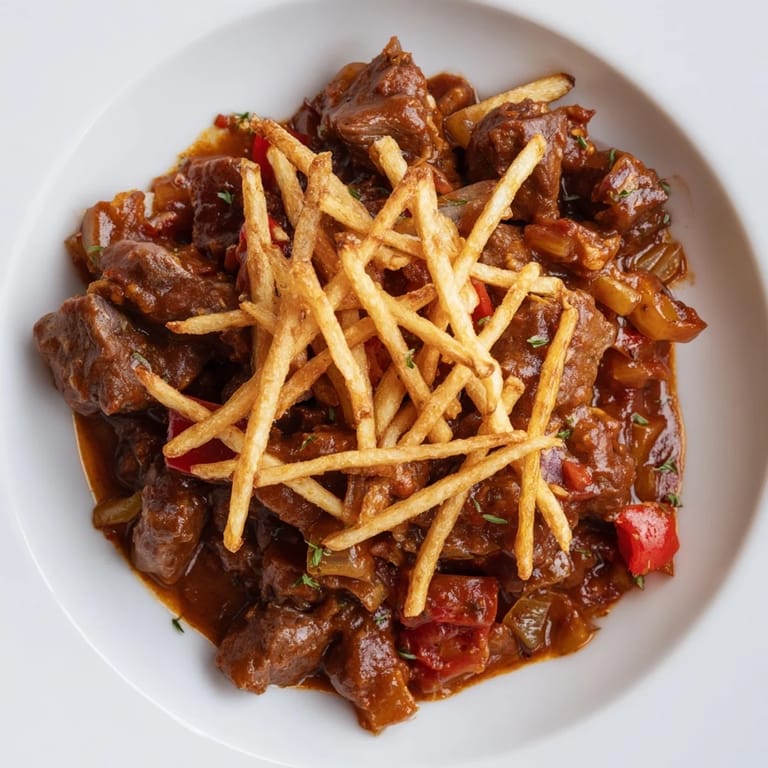
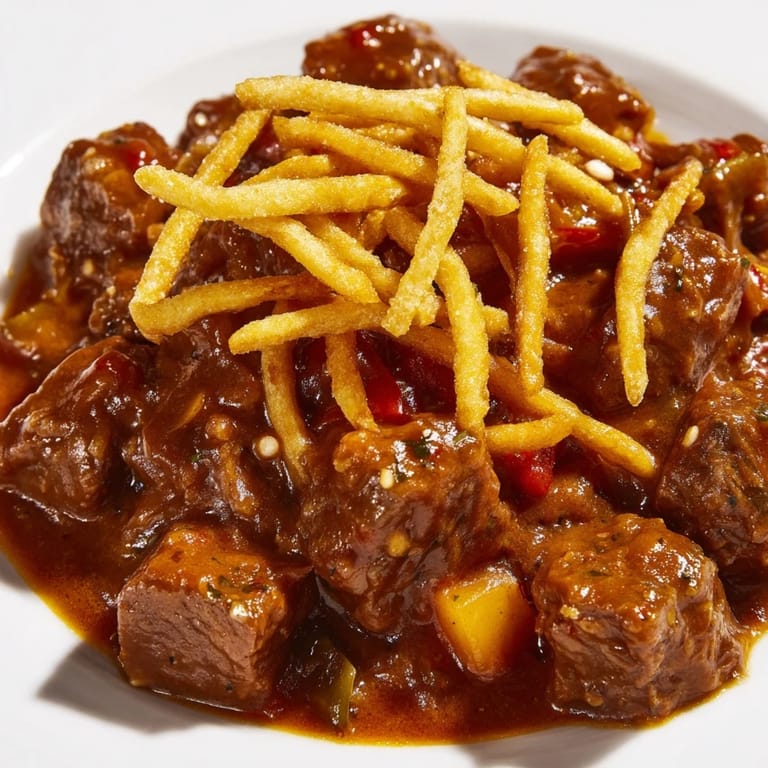
 My first Czech goulash arrived on a freezing Prague evening, brought to my table by a grandmother who barely spoke English but understood hunger completely. The beef melted on my tongue, and those crispy potato strips—golden and impossibly thin—crackled between my teeth like edible tradition. I spent the next hour asking questions between bites, watching her patient hands move through the kitchen as if the recipe lived in her muscle memory. Years later, I finally understood what she was teaching me: this dish isn't fancy, but it's honest.
I made this for my partner on a night when everything felt overwhelming, when we needed something warm and real. We sat at the kitchen table while it simmered, talking about nothing important, and by the time the goulash was ready, the worry had somehow lifted. Food does that sometimes—it's not magic, just chemistry and time and the small act of caring for someone.
Ingredients
- Beef chuck, 800g cut into 2.5cm cubes: This cut has just enough fat to stay tender during the long braise, and those irregular pieces catch the sauce beautifully.
- Sweet Hungarian paprika, 2 tbsp: Don't skimp or substitute—this is the soul of the dish, and real Hungarian paprika has a depth that's irreplaceable.
- Caraway seeds and marjoram, 1 tsp each: These herbs sound strange on paper but they're what make goulash unmistakably Czech, not just spiced beef stew.
- Onions, 2 large finely chopped: They dissolve into the sauce and create a sweet, caramelized foundation that everything else builds on.
- Beef broth, 750 ml: Use the good stuff—homemade or at least one without too many shortcuts—because it becomes the whole sauce.
- Potatoes, 4 large for frying: Waxy potatoes are your friend here; they hold together when you slice them thin and fry them crispy.
- Vegetable oil, 500 ml for frying: You need enough oil to fry at proper temperature; shallow frying gives you soggy disappointment.
Tired of Takeout? 🥡
Get 10 meals you can make faster than delivery arrives. Seriously.
One email. No spam. Unsubscribe anytime.
Instructions
- Start with the aromatics:
- Heat your oil in a heavy pot and let the onions go golden and soft, about 8 minutes. You're building flavor here, not rushing.
- Wake up the spices:
- Add garlic, caraway, and paprika, stirring constantly for just a minute so the paprika doesn't burn and turn bitter. This is where the magic starts.
- Brown the meat:
- Add beef cubes and let them sit undisturbed for a few minutes before you stir—they need a good sear to develop that deep, savory crust. About 5 minutes total.
- Build the sauce:
- Stir in tomato paste, marjoram, salt, pepper, and the bay leaf. The paste adds umami depth that transforms everything.
- Dust and braise:
- Sprinkle flour over the meat and stir so every piece gets coated—it'll thicken the sauce as it cooks. Pour in broth, bring to a boil, then lower the heat and cover.
- Trust the time:
- Let it simmer for 1.5 to 2 hours, stirring occasionally. The beef will go from tough to impossibly tender, and the sauce will darken and concentrate into something rich.
- Prepare the potatoes:
- While the goulash rests, cut peeled potatoes into thin matchsticks using a mandoline (careful fingers—they're sharp) or a sharp knife with patience. Rinse them in cold water to remove excess starch, then dry them thoroughly on a clean towel.
- Fry until golden:
- Heat oil to 180°C (350°F) and fry potato strips in batches, 3 to 4 minutes per batch, until they're golden and crispy. They'll continue to crisp as they cool, so pull them out just before they look done.
- Finish and taste:
- Remove the bay leaf from the goulash, taste the sauce, and adjust salt and pepper if needed. Some days it needs a little more spice.
- Plate with intention:
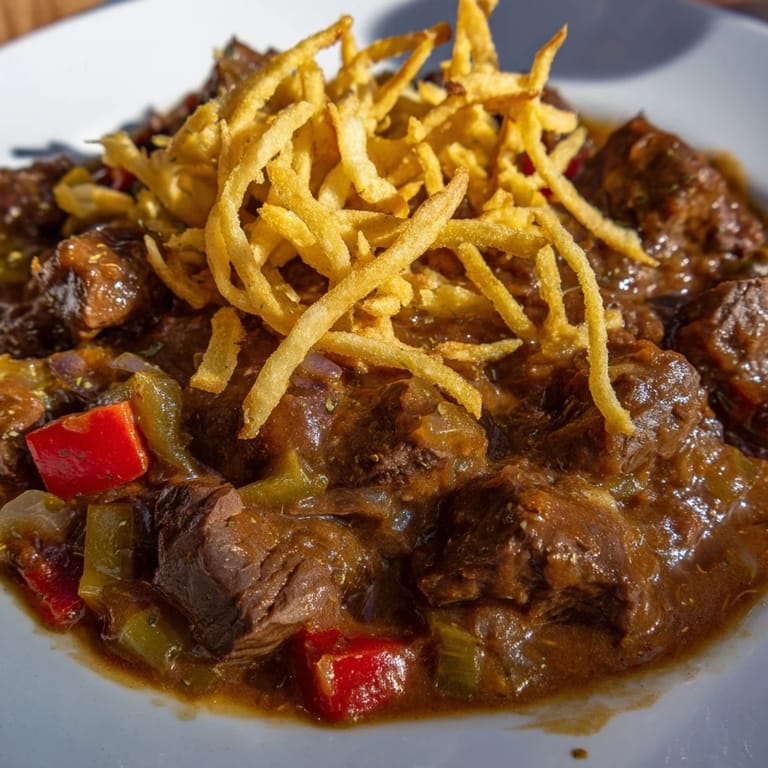
- Serve hot goulash in bowls and top with those crispy potato strips just before eating so they stay crunchy.
 Save to Pinterest
 There's a moment, usually around the 90-minute mark, when the kitchen fills with this warm, paprika-scented fog and you realize you've made something that tastes like it took all day. That's when you know it's going to be good.
The Paprika Question
Not all paprika is created equal, and this dish teaches you that quickly. Sweet Hungarian paprika has a gentle, almost fruity undertone that builds the entire flavor profile. Smoked paprika is beautiful, but it's a different story. Regular supermarket paprika is too thin and won't give you that signature depth. If you can find it, seek out paprika from a specialty store or order it online—it's the one ingredient where the source genuinely matters.
The Beef Matters Too
Chuck is the right cut because it has connective tissue that breaks down into gelatin during the long braise, making the sauce silky without any cream or extra thickeners. I've tried other cuts out of stubbornness—sirloin, brisket—and they're either too lean or too dense. Chuck is the Goldilocks of goulash.
Sides and Pairings
The fried potatoes are essential, not optional—they provide the crunch that makes this dish feel complete. Some people add a dollop of sour cream on top, and it's worth trying if you want richness. Fresh parsley scattered over the bowl adds a bright note that cuts through the heaviness. Serve it with cold Czech Pilsner or a light red wine if you're feeling fancy, or just pour yourself whatever you have and enjoy.
- A dollop of sour cream on top isn't traditional everywhere, but it's delicious and makes the dish feel more indulgent.
- Fresh parsley or dill scattered over everything at the end adds brightness and prevents the meal from feeling too heavy.
- This goulash keeps beautifully—it freezes well and tastes even better reheated the next day.
 Save to Pinterest
 This goulash is the kind of dish that reminds you why people cook at all—it's humble, it's generous, and somehow it tastes like home no matter where you are.
Questions & Answers
- → What cut of beef works best for this dish?
Beef chuck cut into cubes is ideal due to its balance of fat and connective tissue, which tenderizes during slow cooking.
- → How do I achieve a rich paprika flavor without bitterness?
Cook the paprika with onions and garlic briefly over medium heat, stirring constantly to avoid burning and developing a mellow, sweet aroma.
- → What is the best method for preparing the potato strips?
Cut potatoes into thin strips, rinse to remove starch, dry thoroughly, then fry in hot oil until golden and crisp.
- → Can I make the sauce thicker without flour?
Simmer the sauce uncovered for longer to reduce liquids and thicken naturally, or use a gluten-free thickener if preferred.
- → Are there common seasoning variations for this dish?
Adding marjoram, caraway seeds, or a splash of vinegar can enhance depth. For spiciness, a pinch of hot paprika or chili flakes works well.