 Save to Pinterest
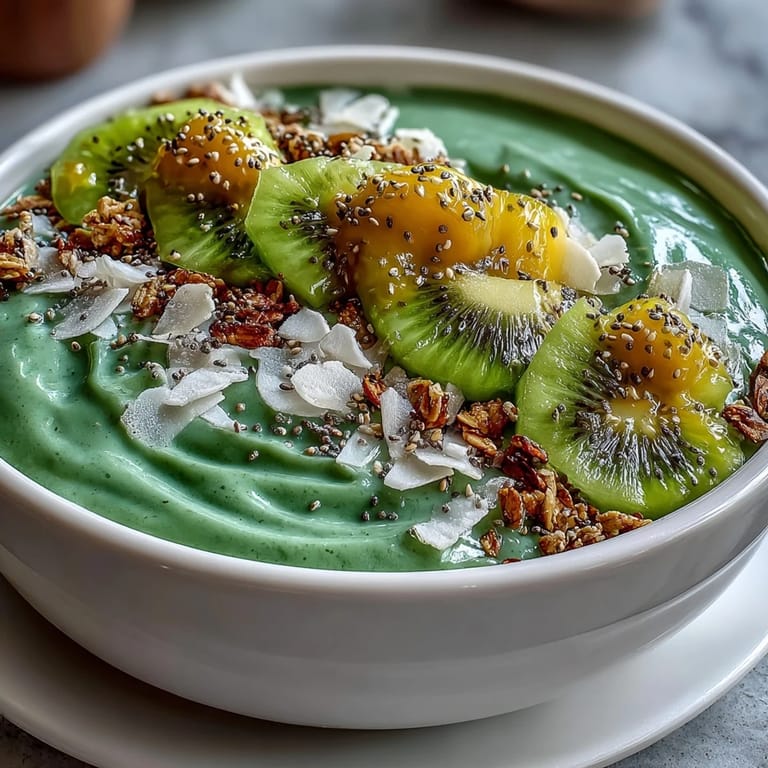
 There's something magical about the moment a blender whirs to life on a quiet morning, turning a handful of greens into something so vibrant and tropical that you'd swear you're sitting beachside instead of in your kitchen. My roommate once caught me mid-blend, curious about the green mixture that smelled like a vacation, and by the time I poured those two bowls, she was already hunting for a spoon. That's when this smoothie bowl stopped being just breakfast and became our weekend ritual—the kind of thing you make when you want to feel a little bit alive before noon.
I made this for my mom during one of her visits, and she sat at the kitchen counter watching me layer the toppings with such skepticism—until she took her first bite and went completely quiet. That silence said everything about how unexpected it was, how the tropical flavors actually sang together instead of fighting. She asked for the recipe that afternoon, which felt like the highest compliment possible.
Ingredients
- Fresh spinach (1 cup, packed): The leafy base that disappears completely into the blend while delivering iron and nutrition without any grassy taste when frozen fruits surround it.
- Frozen banana (1, sliced): This is your creamy backbone—don't skip freezing it ahead of time or you'll end up with a thin drink instead of a spoonable bowl.
- Frozen pineapple chunks (1/2 cup): The bright acidity that keeps everything from tasting too sweet and adds that genuine tropical note.
- Frozen mango chunks (1/2 cup): Contributes natural sweetness and that sunset-colored depth that makes the whole thing feel special.
- Unsweetened coconut milk or almond milk (1/2 cup): Use coconut for richer flavor or almond if you want lighter texture; either way, don't add more or you'll lose that spoonable consistency.
- Lime juice (1 tablespoon): A small squeeze that brightens everything and prevents the smoothie from tasting one-dimensional and heavy.
- Chia seeds for base (1 tablespoon): Add subtle texture and nutrition without calling attention to themselves.
- Fresh mango for topping (1/2 cup, diced): The piece de resistance that goes on top—choose fruit that's ripe but still holds its shape.
- Chia seeds for topping (2 teaspoons): These plump up as they sit in coconut water, creating a jammy consistency that tastes deliberately made rather than assembled.
- Coconut water (2 teaspoons): The secret to making that topping thicken without adding liquid sweetness.
- Maple syrup (1 teaspoon, optional): If your mango tastes slightly underripe, this subtle boost helps without making it cloying.
- Kiwi slices (1/4 cup): The pop of acid and that jewel-toned color that catches the light.
- Coconut flakes (1/4 cup): Toast them lightly yourself if you have time—they taste infinitely better than the pale store-bought version.
- Hemp seeds (1 tablespoon): Adds earthiness and protein in a way that feels less obvious than powder.
- Gluten-free granola (1 tablespoon): The crunch that makes eating this feel textured and intentional rather than mushy.
- Fresh mint leaves (optional): A garnish that smells incredible and cuts through the richness if your bowl starts feeling too heavy.
Tired of Takeout? 🥡
Get 10 meals you can make faster than delivery arrives. Seriously.
One email. No spam. Unsubscribe anytime.
Instructions
- Make the mango chia topping first:
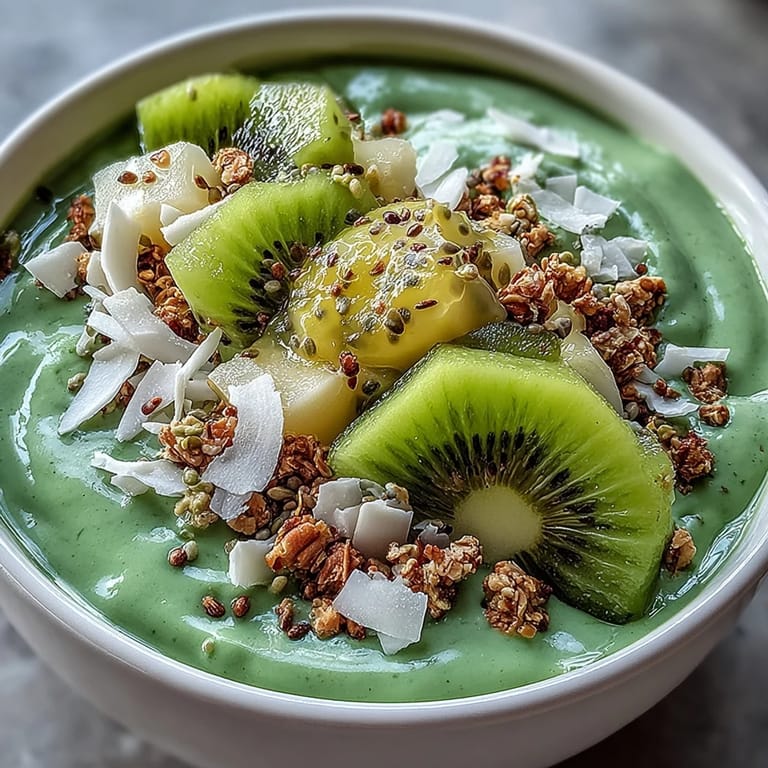
- Combine your diced mango with chia seeds, coconut water, and maple syrup if you're using it, then stir and let it sit while you blend everything else. This waiting time is crucial—it lets the chia seeds absorb the liquid and become jammy instead of hard little balls.
- Blend your way to smoothie gold:
- Throw spinach into the blender first, then add the frozen fruits, coconut milk, lime juice, and base chia seeds. Blend until completely smooth, stopping to scrape down the sides if things get stuck—you're looking for a texture thick enough to eat with a spoon, not thin enough to drink.
- Build your bowls:
- Divide that creamy base between two bowls, pouring it evenly so both servings look balanced. This is the canvas for everything else, so take a second to make it look inviting.
- Add the mango chia topping:
- Spoon that thickened mango mixture onto the center of each bowl in whatever pattern feels natural. It should look like you know what you're doing even if you're just winging it.
- Layer on your toppings:
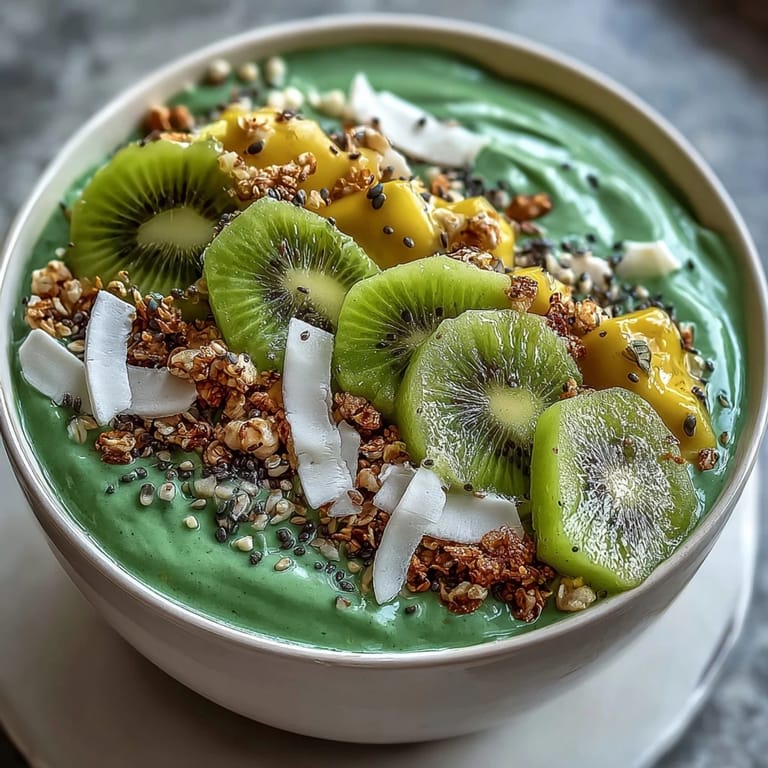
- Arrange kiwi slices, coconut flakes, hemp seeds, and granola across the surface in whatever way makes it look appetizing to you. There's no wrong way here—just aim for a mix of colors and textures so each spoonful hits different.
- Finish and serve:
- Scatter fresh mint leaves on top if you're using them, then hand someone a spoon immediately while everything is still cold and crisp.
 Save to Pinterest
 My partner once made this bowl in the dark because I'd mentioned craving it the night before, and watching him carefully arrange those toppings while I pretended to sleep was one of those small moments that reminded me how the right breakfast food becomes a love language. It wasn't about the nutrition or the Instagram-worthy colors—it was just that he'd cared enough to get it right.
Why Frozen Fruit Changes Everything
Frozen fruit isn't a shortcut—it's actually superior to fresh when you're making smoothie bowls because it's picked at peak ripeness and locked in that moment. Fresh fruit often sits in storage long enough to lose some brightness, but frozen pineapple and mango taste like the best version of themselves. Plus, you get that essential thick texture that makes this a bowl instead of a drinkable mess.
The Chia Seed Magic
Those tiny chia seeds that seem insignificant are actually doing heavy lifting in two different ways here. In the smoothie base, they add nutrition and a subtle thickness that keeps everything cohesive, while in the topping, they absorb the coconut water and become this unexpectedly jammy mixture that feels gourmet in a way that surprises you.
Customization Without Losing the Soul of the Dish
The beauty of this bowl is that you can wake up on Tuesday and decide you want it with kale instead of spinach, or add a scoop of vegan protein powder without fundamentally breaking what makes it work. The tropical fruit base is flexible enough to carry different additions because those flavors are already strong and clear.
- Swap the spinach for kale if you want something earthier, but know it'll taste slightly more assertive so you might want an extra squeeze of lime.
- Add a scoop of vanilla or coconut vegan protein powder if you need more staying power, and blend it in with the base rather than sprinkling it on top.
- Keep extra toppings on hand—granola goes stale fast so buy it fresh and store it in an airtight container, and always have a lime around because that bright note makes the whole thing feel finished.
 Save to Pinterest
 This smoothie bowl has become my non-negotiable answer to mornings when everything feels overwhelming, because something about the tropical flavors and the ritual of careful layering reminds me that slow, intentional choices matter. Make one when you need to feel nourished and a little bit happy.
Questions & Answers
- → Can I substitute spinach with another green?
Yes, kale works well as an alternative, offering a similar nutrient profile and flavor depth.
- → How can I adjust the smoothie consistency?
Add more coconut milk for a thinner texture or reduce it to make it thicker and creamier.
- → What can I use instead of chia seeds?
Flaxseeds or hemp seeds can be used as nutritious alternatives with similar binding properties.
- → Is the granola necessary?
Granola adds crunch and texture but can be omitted or replaced with nuts or seeds as preferred.
- → How long should the mango chia topping sit?
Allow at least 5 minutes for the chia seeds to absorb moisture and thicken the topping.