 Save to Pinterest
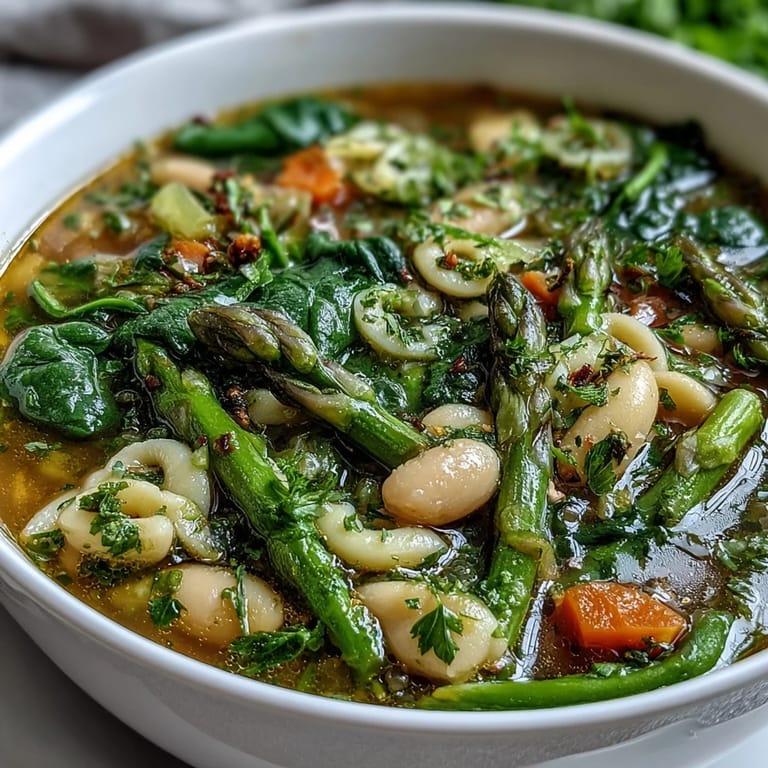
 There's something about the first warm day of spring that makes me want to fill a pot with vegetables and let them simmer until the whole kitchen smells like growing things. I discovered this minestrone on a Tuesday when I opened my fridge to find asparagus, a handful of peas, and the last can of white beans staring back at me—it felt like the universe was suggesting soup. What started as a way to use what I had on hand became the meal I now make every April without fail, watching the season unfold in each spoonful.
I made this for my neighbor last May when she mentioned missing Italian food from her grandmother's kitchen. Watching her face when she tasted it—that quiet moment of recognition—reminded me that sometimes the most meaningful meals are the simple ones. She's asked for the recipe at least a dozen times since, and now I think of her every time I trim the asparagus.
Ingredients
- Olive oil: A tablespoon to start your soffritto, the aromatic base that gives Italian soups their quiet richness and depth.
- Onion, carrots, and celery: This holy trinity is where all the flavor lives, so don't rush this step or skip dicing them evenly—it makes a real difference in how they soften together.
- Garlic: Just two cloves, minced fine, because garlic can easily overpower the delicate spring vegetables if you're not careful.
- Zucchini: Adds body and a subtle sweetness that balances the earthiness of everything else.
- Asparagus: Cut into one-inch pieces so it stays tender without disappearing into the broth, and add it late so it keeps its bright green color and slight snap.
- Fresh peas: Whether frozen or fresh, they bring sweetness and a little burst of color that feels like spring in your mouth.
- Baby spinach or Swiss chard: Wilts at the last second and adds iron and a subtle earthiness without any bitterness if you don't overcook it.
- White beans: Cannellini beans are traditional because they're creamy and mild, letting other flavors shine instead of fighting for attention.
- Small pasta: Ditalini or small shells work best because they nestle into the broth and cook at the same pace as the vegetables, avoiding those overcooked mushy pieces.
- Vegetable broth: Use low-sodium so you can season it yourself and taste what you're actually making, not just salt.
- Thyme and oregano: Dried herbs here because they distribute evenly and soften into the broth, creating a cohesive flavor rather than random herb bits.
- Bay leaf: Adds a subtle depth that you won't consciously notice but will absolutely miss if it's not there.
- Lemon zest and parsley: These go in at the very end to keep their brightness alive instead of cooking them away into nothing.
- Parmesan and extra virgin olive oil: Optional garnishes that feel like a little gift when you're actually in the mood for them.
Tired of Takeout? 🥡
Get 10 meals you can make faster than delivery arrives. Seriously.
One email. No spam. Unsubscribe anytime.
Instructions
- Build your base with the soffritto:
- Heat the olive oil in a large pot over medium heat and add your diced onion, carrots, and celery together. Let them soften for five minutes, stirring occasionally, until they smell sweet and the onion turns translucent—this is where patience starts paying dividends.
- Wake up the garlic:
- Stir in your minced garlic and cook for about a minute until it's fragrant but not browning. You want that garlicky aroma filling your kitchen, not burnt edges catching in your throat.
- Add the zucchini for body:
- Toss in the diced zucchini and cook for two more minutes, letting it start to soften and release some of its moisture into the pot.
- Pour in the broth and bring it to life:
- Add your vegetable broth along with the thyme, oregano, and bay leaf, then bring everything to a gentle boil over medium-high heat. The herbs will slowly perfume the liquid as it heats up.
- Add beans and pasta:
- Stir in the white beans and small pasta, then reduce the heat to a simmer and let everything cook together for about ten minutes. The pasta will soften and the broth will thicken slightly as the starch releases.
- Introduce the spring vegetables:
- Add your asparagus and peas and cook for another five to seven minutes until the pasta is tender and the vegetables are just cooked through. This is the moment the soup transforms from good to spring-bright.
- Finish with fresh ingredients:
- Stir in your spinach or Swiss chard, lemon zest, and fresh parsley, then cook for just two more minutes until the greens wilt down. Season with salt and pepper to taste, tasting as you go because you're the one who knows your palate.
- Serve with intention:
- Remove the bay leaf, ladle into bowls, and add a grating of Parmesan or a drizzle of good olive oil if you're in the mood. Either way, it's perfect.
 Save to Pinterest
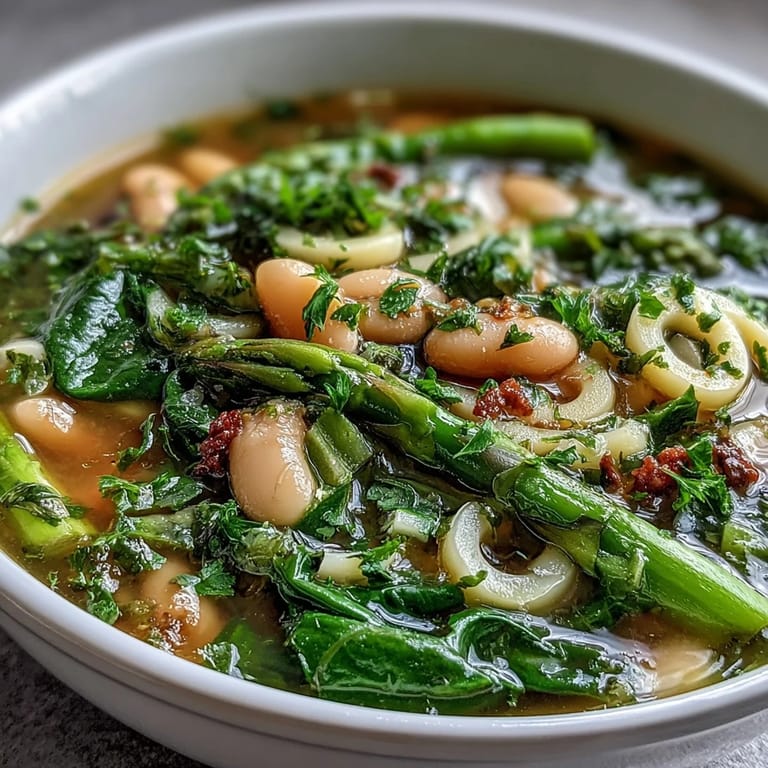
 There was an evening last spring when three friends came over unexpectedly, and this soup was already quietly simmering on my stove. Watching them sit down, spoons in hand, talking and laughing while something warm and nourishing did the work of bringing people together—that's when I understood why this recipe lives in my regular rotation. It's not fancy, but it's honest.
Timing and Rhythm
The beauty of this soup is that it moves at its own gentle pace, which means you're not standing there panicking about coordination. Once the broth is simmering, you can step away for a moment, breathe, taste a spoonful of broth if you want to. The vegetables cook slowly enough that you won't miss the window—they tell you when they're ready by softening and filling the air with that deep savory smell. It's one of those rare dishes where the timeline actually gives you space to enjoy the process instead of stressing through it.
Spring Vegetables and Substitutions
The magic of minestrone is that it's endlessly flexible, so if asparagus isn't at the market or you're craving something different, swap it out without guilt. Green beans work beautifully, or fava beans if you're feeling luxurious and have the patience to shell them. Fresh peas can become sugar snap peas or even snow peas if you want something with a little crunch. The only real rule is to add tender vegetables near the end and heartier ones earlier—the soup will guide you if you think about it for a second.
Making It Your Own
This is the kind of recipe that wants to live in your kitchen and change slightly with each season and with whatever you have on hand. Some days I squeeze fresh lemon juice in at the end instead of just zest, other times I add a pinch of red pepper flakes because I'm in that mood. I've made it vegan for friends and realized it loses nothing—it just becomes a different kind of delicious. The soup will tell you what it needs if you actually taste it as you go and trust your instincts.
- A squeeze of fresh lemon juice at the table adds brightness without needing to cook it into the pot.
- A small pinch of red pepper flakes during the simmer adds warmth without heat if you're careful with it.
- Crusty bread on the side isn't optional—it's essential for soaking up the last spoonfuls of broth that matter most.
 Save to Pinterest
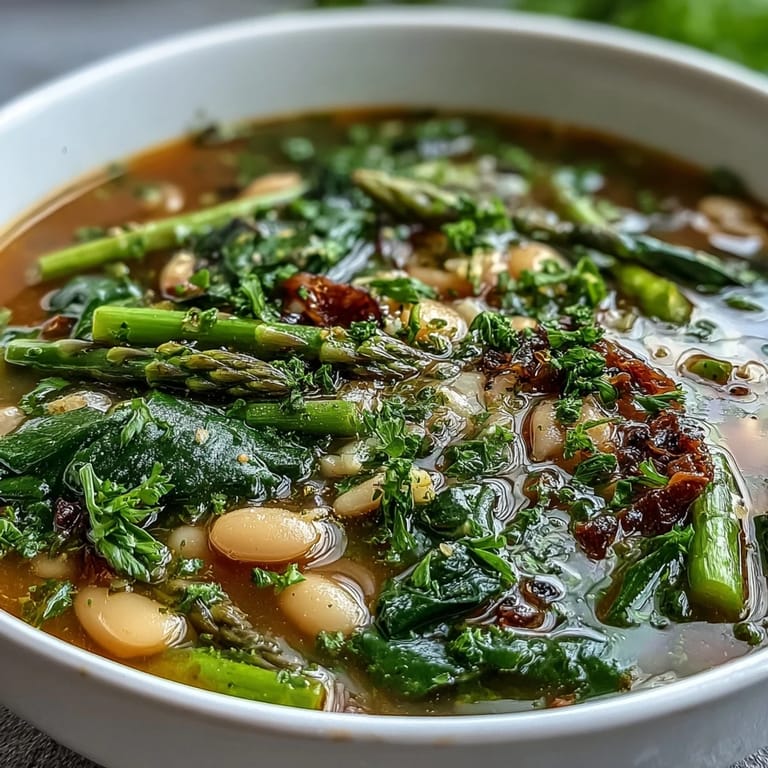
 This minestrone is the kind of meal that feels like a gift to yourself on days when you need something nourishing but don't have the energy for complicated. It's proof that simplicity, when done with intention and a few good ingredients, becomes something worth remembering.
Questions & Answers
- → Can I use different beans in this soup?
Yes, you can substitute cannellini beans with other white beans like Great Northern or navy beans without altering the flavor much.
- → Is there a vegan alternative to Parmesan garnish?
Plant-based cheeses or nutritional yeast can be used as a flavorful vegan alternative to Parmesan.
- → How can I make the soup gluten-free?
Use gluten-free small pasta varieties or omit pasta entirely for a naturally gluten-free version.
- → What fresh herbs work best in this dish?
Thyme, oregano, and fresh parsley enhance the broth’s aroma and complement the spring vegetables beautifully.
- → Can I add other vegetables to vary the soup?
Absolutely! Spring vegetables like fava beans, green beans, or Swiss chard can be swapped or added for variation.