 Save to Pinterest
 There's something about the first warm day of spring that makes you want to cook with your windows open, and that's exactly when my neighbor appeared at my kitchen door with a bundle of the most impossibly thin asparagus from her garden. I'd been planning to make something ordinary that evening, but those spears—so tender they practically bent like ribbons—demanded something better. That's how this tart came to life, born from pure circumstance and the kind of ingredient you can't ignore when it lands in your hands at just the right moment.
I made this tart for my sister's book club last April, and what I remember most isn't the compliments—though there were plenty—but how one of the members sat quietly for a moment after her first bite, genuinely surprised that something so simple could taste so complete. She asked for the recipe three times, which meant she was either being polite or truly won over, and I'm pretty sure it was the latter given the way she came back for seconds before anyone else had finished their first slice.
Ingredients
- Thin asparagus (about 400 g): Look for spears no thicker than a pencil because they cook evenly and stay tender; thicker ones turn woody in the center even when the tips seem done.
- Crème fraîche or ricotta (200 g): This is your base layer and it matters which one you choose—crème fraîche gives you tang and richness, while ricotta keeps things lighter and slightly fluffier.
- Gruyère or Parmesan cheese (100 g): Gruyère melts into creamy pools while Parmesan stays a bit more defined; I usually go Gruyère because it feels more forgiving and generous.
- All-butter puff pastry (1 sheet, about 250 g): Thaw it in the fridge overnight if possible because cold pastry puffs higher and stays more tender than room temperature versions.
- Fresh chives or dill (2 tbsp): These aren't just garnish—they're the green voice that keeps the whole tart from feeling heavy, so don't skip them or substitute with dried herbs.
- Lemon zest (1 tsp): This small amount brightens everything without making it taste citrusy, which I learned by accidentally using twice this amount once.
- Egg (1, lightly beaten): This is your pastry glosser and it's the difference between a matte finish and a professional-looking golden sheen.
- Salt, pepper, and optional garnishes: Taste as you build the layers because the cheese already carries salt, so you're really just balancing here.
Tired of Takeout? 🥡
Get 10 meals you can make faster than delivery arrives. Seriously.
One email. No spam. Unsubscribe anytime.
Instructions
- Get your oven ready and prep your workspace:
- Preheat to 200°C (400°F) and line your baking tray with parchment paper so the pastry slides off easily later. This step feels obvious but skipping it means wrestling with stuck pastry when you're already committed to the process.
- Roll and transfer the pastry with intention:
- If your sheet isn't pre-rolled, unfold it gently on a lightly floured surface and roll it into a rectangle about 25x35 cm, then transfer to your prepared tray. Work slowly enough that you're not fighting the pastry, but confidently enough that it doesn't tear.
- Score your border without cutting through:
- Create the cheese foundation:
- Mix your crème fraîche with half the grated cheese, the chives, lemon zest, salt, and pepper in a bowl. Taste it before spreading because this is where you catch any seasoning gaps.
- Spread and layer thoughtfully:
- Spread the cheese mixture evenly inside your scored border, leaving about 2 cm of space all around. This keeps the pastry border free to puff and crisp without obstruction.
- Arrange the asparagus with care:
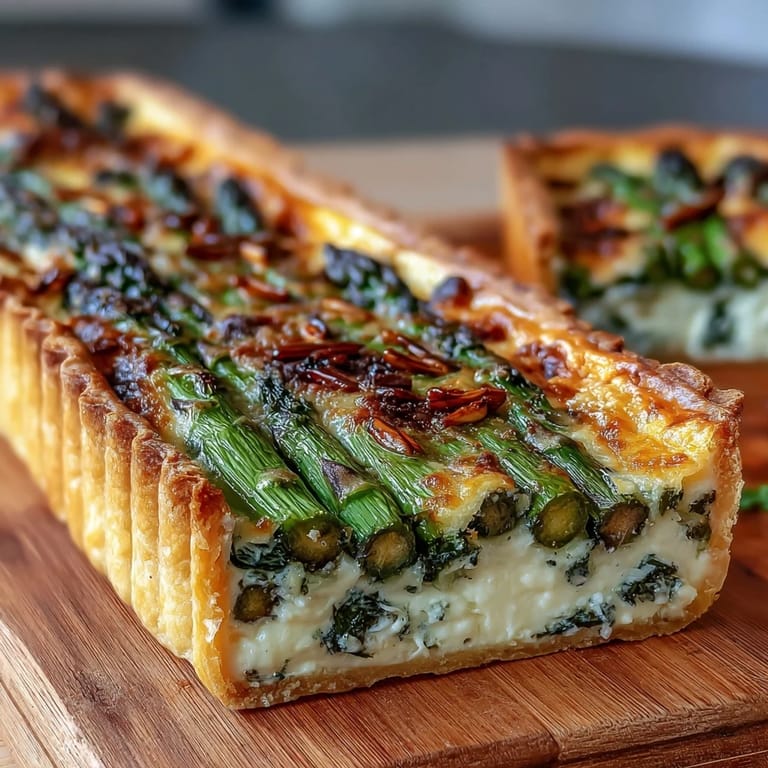
- Lay the spears over the cheese, alternating their direction if you want something that looks intentional. You can be decorative here or casual—both work, but the alternating pattern catches light beautifully.
- Brush and finish:
- Brush that egg wash over the pastry border with a pastry brush (or your fingers work in a pinch), then scatter the remaining cheese over the asparagus. This double cheese moment is what creates those golden, melted pockets.
- Bake with patience:
- Slide it into the oven for 20 to 25 minutes until the pastry is deeply golden and puffed and the asparagus tips are just tender when you press one gently. The exact time depends on your oven's personality, so stay near the kitchen the first time you make this.
- Cool, garnish, and serve:
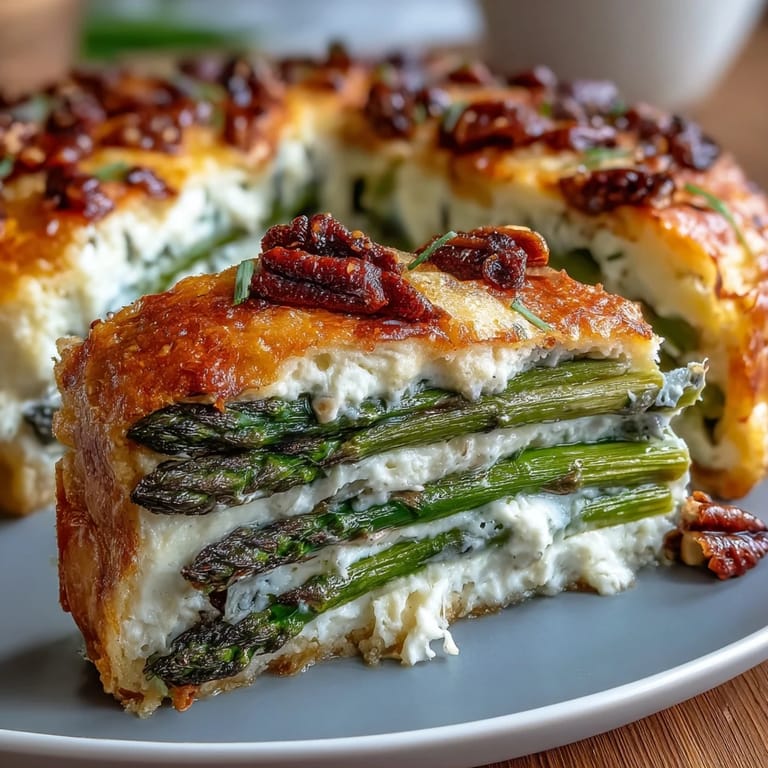
- Let it rest for a few minutes so the pastry sets slightly, then scatter with toasted pine nuts and microgreens if you have them. Serve warm or even at room temperature, which is when the flavors actually become clearer.
 Save to Pinterest
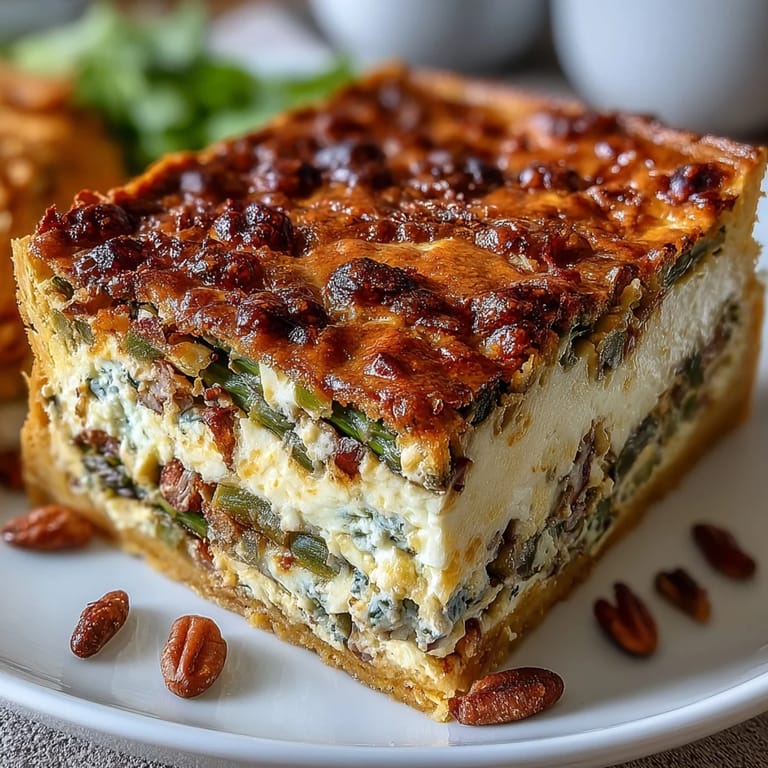
 The week after the book club, that same neighbor brought more asparagus and asked me to make the tart for her daughter's engagement dinner. Cooking it a second time, I realized it wasn't about the ingredients being special—it was about how the simplicity of each element let the others shine, and how the whole thing somehow felt like spring on a plate.
When to Make This Tart
This tart belongs to the moment when asparagus appears at the market and you want to celebrate it without overcomplicating things. It works as a first course before a light main, or as the main event with a salad and a glass of cold wine. I've made it for lunch, for dinner, for unexpected guests, and it never feels out of place because puff pastry and fresh vegetables are always welcome in any season of your day.
Building Flavor Layers
Every element here is building on the others quietly—the crème fraîche carries the asparagus and cheese, the lemon zest cuts through the richness without announcing itself, the chives add a whisper of green flavor rather than a shout. This is why timing matters too; if you bake it too long, the cheese becomes aggressive and the asparagus loses its delicate character. If you pull it out at the right moment, everything tastes like itself but somehow better because it's standing next to the right companions.
Variations and Moments
Some versions include a thin layer of prosciutto for richness, which transforms the entire mood from vegetarian-light to indulgent-luxe. Goat cheese in place of ricotta gives you tang and a slightly different texture, and honestly, goat cheese feels more like something you'd serve in summer when you want acidity on your plate. A scatter of toasted breadcrumbs adds texture if you want something crunchy against the soft pastry, and it catches the light beautifully when it browns.
- Try this with other spring vegetables like thinly sliced leeks or baby zucchini layered in with the asparagus for variation.
- Make it ahead through step 7, cover it loosely with plastic wrap, and bake it within a few hours for flexibility with timing.
- Serve with a crisp white wine like Sauvignon Blanc or Pinot Grigio because the acidity echoes the lemon and balances the cheese.
 Save to Pinterest
 This tart taught me that spring cooking doesn't need complexity to feel special, just good ingredients and the sense to stay quiet and let them work. Make it whenever you want to feel like you're cooking with intention, even if it only takes 40 minutes from start to finish.
Questions & Answers
- → How do I prevent the puff pastry from becoming soggy?
Score a border around the pastry to create a raised edge, and prick the center with a fork to allow steam to escape. Also, baking the tart on parchment paper helps achieve a crisp base.
- → Can I substitute the cheeses used in the tart?
Yes, you can swap Gruyère or Parmesan with other hard cheeses like Asiago, and ricotta can be replaced with goat cheese for a tangier flavor.
- → What herbs complement the asparagus in this dish?
Fresh chives or dill add a delicate herbal note that pairs well with the asparagus and creamy cheese base.
- → Is it possible to prepare this tart ahead of time?
Yes, assemble the tart and refrigerate it before baking. Bake shortly before serving for best texture and flavor.
- → What are good serving suggestions for this tart?
Serve warm or at room temperature alongside a crisp white wine such as Sauvignon Blanc or Pinot Grigio for a balanced pairing.