 Save to Pinterest
 My neighbor showed up one Saturday morning with an armload of vegetables and a mischievous grin, insisting we abandon our planned pancakes for something completely different. We spread out every bowl I owned across the counter and started mashing chickpeas while her kids raided my spice drawer. The kitchen smelled like roasted eggplant and garlic by the time we finally sat down, and nobody missed the syrup. That chaotic, joyful morning taught me that brunch doesn't need to follow a script.
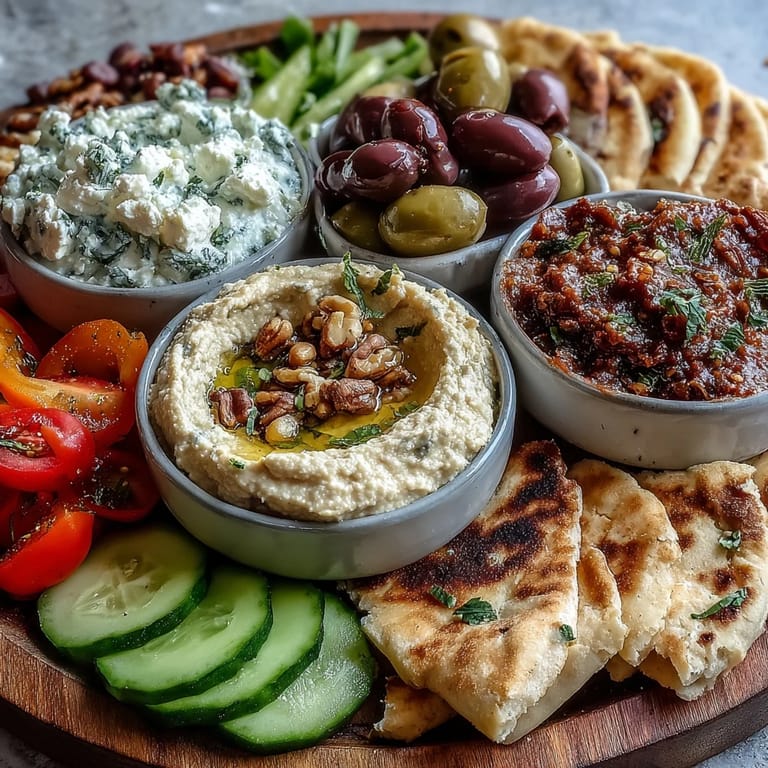
I made this board for a book club meeting where half the group had dietary restrictions I'd scribbled on a napkin and promptly lost. Watching everyone build their own plates, swapping olives for nuts and piling cucumber onto flatbread, I realized I'd accidentally solved the problem. Nobody felt left out, and the conversation flowed easier when hands were busy assembling little bites. The empty platter at the end told me everything I needed to know.
Ingredients
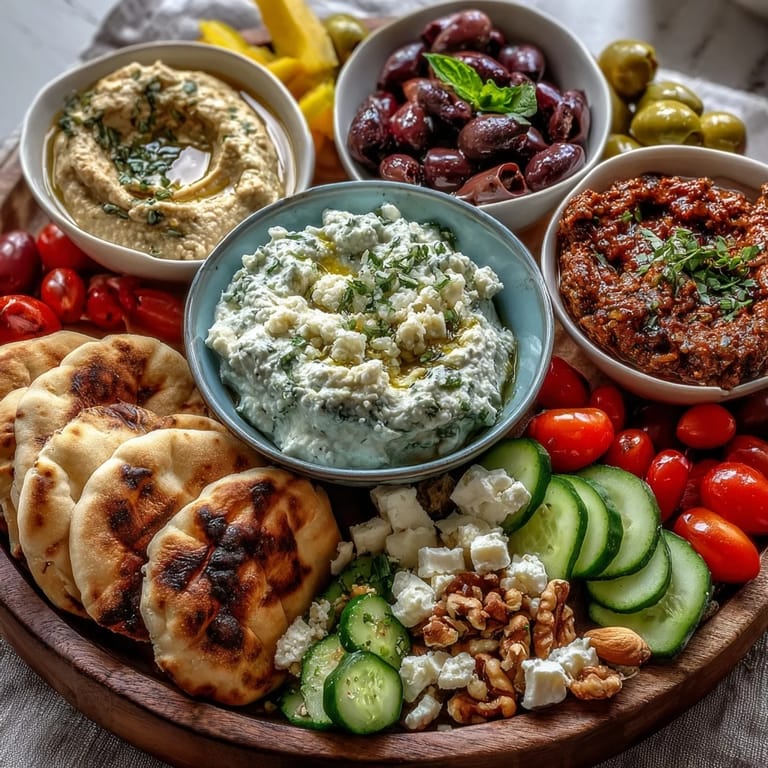
- Hummus: Homemade tastes brighter and creamier than most store versions, and you control the garlic intensity, which matters more than you'd think.
- Tzatziki sauce: Squeeze that grated cucumber hard in a clean towel or your sauce turns into soup, a lesson I learned after ruining my first batch.
- Baba ganoush: Roasting the eggplant until the skin blackens gives you that smoky depth that makes people ask for the recipe.
- Roasted red pepper dip: Store-bought works beautifully here and saves time without sacrificing the overall experience.
- Cucumber: Thick rounds hold up better than thin slices and provide a sturdy vehicle for heavier dips.
- Cherry tomatoes: Halving them releases just enough juice to keep things bright without making the board messy.
- Bell pepper: Any color works, but I like mixing red and yellow for visual contrast that feels intentional.
- Assorted olives: A mix of briny kalamata and milder green varieties gives guests options and adds pops of color.
- Feta cheese: Crumbled, not cubed, distributes more evenly and clings to vegetables better.
- Mixed nuts: Toasting them for five minutes transforms their flavor, though raw works if you're pressed for time.
- Pita breads and flatbreads: Warm them briefly before serving so they're pliable and inviting, not stiff and cold.
- Olive oil: A final drizzle ties everything together and makes the herbs glisten.
- Fresh herbs: Oregano and parsley add fragrance and a last-minute burst of green that feels alive.
Tired of Takeout? 🥡
Get 10 meals you can make faster than delivery arrives. Seriously.
One email. No spam. Unsubscribe anytime.
Instructions
- Blend the hummus:
- Combine chickpeas, tahini, lemon juice, garlic, and salt in your food processor, then let it run until the mixture turns silky. Drizzle in cold water a tablespoon at a time until you reach a texture that's smooth but still holds its shape on a spoon.
- Mix the tzatziki:
- Stir together Greek yogurt, the well-drained grated cucumber, minced garlic, olive oil, fresh dill, and a pinch of salt, then cover and refrigerate for at least an hour. This resting time lets the flavors marry and the garlic mellow, which prevents that raw bite.
- Roast and blend the baba ganoush:
- Pierce the eggplant with a fork, roast it at 400 degrees Fahrenheit until the skin wrinkles and the flesh collapses, then scoop out the soft interior and blend with tahini, olive oil, lemon juice, and salt. The smoky aroma filling your kitchen is half the reward.
- Transfer dips to bowls:
- Spoon each dip into its own small bowl or ramekin, keeping portions generous but not overflowing. This makes refilling easy and keeps the board looking tidy as guests dig in.
- Arrange dips on the board:
- Place the bowls on your serving platter first, spacing them out so they anchor the layout. Everything else will fill in around them naturally.
- Add fresh vegetables:
- Tuck cucumber rounds, cherry tomato halves, and bell pepper strips into the gaps between bowls, creating little clusters rather than rigid lines. The goal is abundance, not symmetry.
- Scatter olives and feta:
- Drop olives and crumbled feta across the board in small piles, letting them tumble into crevices. This randomness looks more inviting than careful placement.
- Fill in with nuts:
- Use the remaining spaces for mixed nuts, which add texture and fill visual gaps. They also give non-vegetable eaters something to reach for.
- Arrange breads around the platter:
- Fan out pita triangles and flatbread strips along the edges, leaning some against bowls for height. Warm bread is irresistible, so serve it soon after arranging.
- Drizzle and garnish:
- Finish with a generous drizzle of olive oil over the dips and a scattering of fresh herbs across the whole board. The oil catches the light and the herbs smell incredible when guests lean in.
- Serve immediately:
- Set the board on the table and step back, letting guests explore at their own pace. Encourage mixing flavors and warn them that the baba ganoush disappears fast.
 Save to Pinterest
 The first time I served this, my brother-in-law, who claims to hate eggplant, ate half the baba ganoush before realizing what it was. His face when I told him was priceless, and now he requests it every time he visits. Food has this sneaky way of changing minds when you stop announcing ingredients and just let people taste.
Timing Your Prep
Making all three dips from scratch the day before transforms this from a frantic morning scramble into a calm assembly job. I learned to roast the eggplant while making dinner the night before, then blend everything while my coffee brews. The dips actually improve overnight as flavors deepen, and you'll thank yourself when guests arrive early and you're not elbow-deep in chickpeas.
Customizing for Your Crowd
I've swapped feta for vegan cheese, added marinated artichokes when my sister visits, and tucked in sun-dried tomatoes when the farmers market has them. This board adapts to dietary needs without feeling like a compromise, and guests appreciate being able to build their own experience. The core structure stays the same, but the details can shift to match who's coming and what's in season.
Serving and Pairing
A crisp white wine works beautifully here, but so does sparkling water with lemon if you're keeping things alcohol-free. I like setting out small plates and napkins nearby so people can graze without hovering awkwardly over the board. The platter stays at room temperature well for about two hours, which gives you flexibility if brunch runs long.
- Refill the flatbreads halfway through if your crowd is large, since they vanish faster than the dips.
- Keep extra olive oil and herbs nearby for a quick refresh if the board starts looking picked over.
- Leftover dips make excellent sandwich spreads or quick lunches with fresh vegetables for days afterward.
 Save to Pinterest
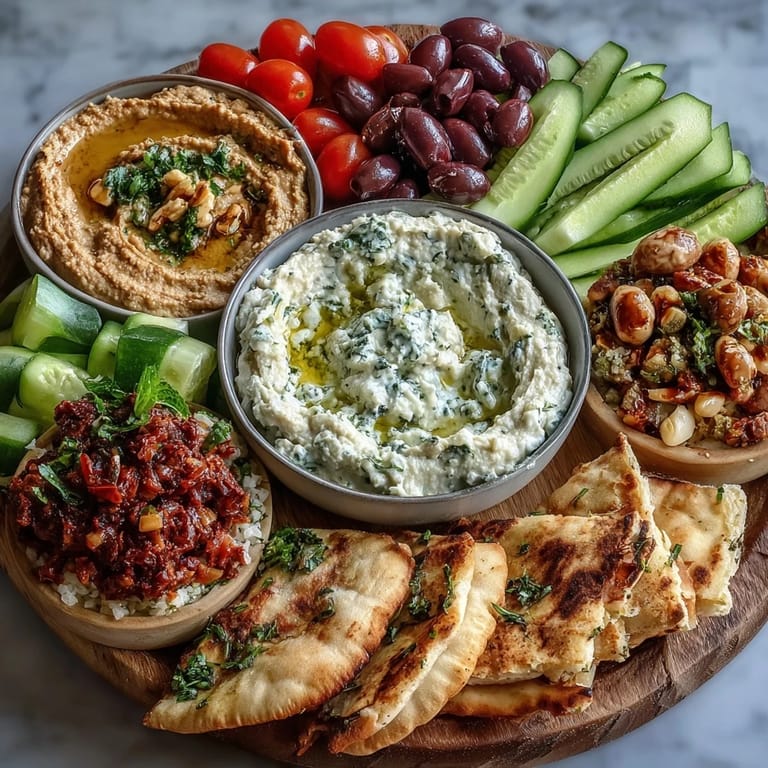
 This board turns brunch into a lingering, hands-on experience where conversation matters as much as the food. Watching people discover their favorite combinations, whether it's hummus with bell pepper or tzatziki on warm pita, reminds me why I love cooking for others.
Questions & Answers
- → Can I make the dips ahead of time?
Yes, all dips can be prepared up to 24 hours in advance. Store them in airtight containers in the refrigerator and bring to room temperature 30 minutes before serving for the best flavor.
- → What can I substitute for homemade dips?
High-quality store-bought versions work perfectly well. Look for authentic Mediterranean brands at specialty stores or the international section of your grocery store for the best taste.
- → How do I keep the vegetables fresh on the board?
Prepare vegetables just before assembling the board. Keep cucumber and bell peppers chilled until ready to serve, and pat them dry to prevent excess moisture on the platter.
- → Can this be made vegan?
Absolutely. Replace the Greek yogurt in tzatziki with coconut yogurt, omit the feta cheese or use a plant-based alternative, and ensure your flatbreads are dairy-free.
- → What other items can I add to the board?
Consider adding marinated artichoke hearts, sun-dried tomatoes, dolmas, roasted chickpeas, radishes, or fresh herbs like mint and basil for additional variety and color.
- → How should I serve the flatbreads?
Warm the flatbreads briefly in the oven or on a griddle just before serving. Cut them into triangles or strips for easy dipping and arrange them around the edges of the board.